Canada Rejects U.S. Lumber Demands as Tariffs Deepen Historic Housing Shortage
OTTAWA — Canada has delivered a firm rejection of U.S. demands to ease restrictions on softwood lumber exports, opting instead for a $5 billion strategic overhaul that prioritizes domestic supply and diversifies international markets. The decision, announced by Prime Minister Mark Carney, accelerates a structural shift in North American timber trade that is intensifying an already severe housing crisis in the United States.
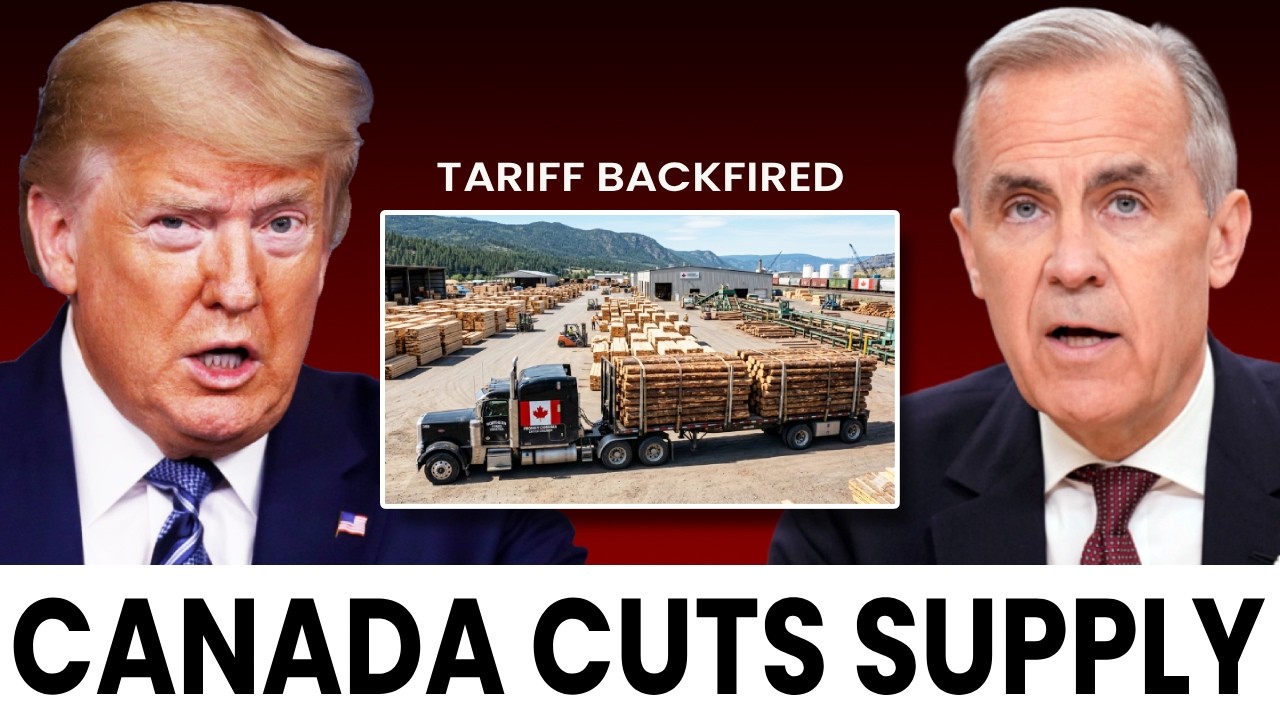
The escalation began when President Donald Trump imposed an additional 10 percent tariff on Canadian softwood lumber, layering it atop existing duties that range from 35 percent to as high as 47.65 percent depending on the producer. Companies such as Canfor faced the highest rate of 47.65 percent, while West Fraser was assessed at 26.47 percent. The policy, framed by the White House as necessary to protect American mills and reduce reliance on foreign supply, has instead triggered a rapid realignment of Canadian production and export patterns.
Rather than concede, Ottawa responded with a multifaceted plan designed to insulate the industry from U.S. market volatility. At its core is a mandatory “Buy Canada” procurement policy that requires federal agencies, crown corporations and publicly funded projects to prioritize Canadian-sourced lumber. The directive covers infrastructure, public housing, military facilities and government buildings — sectors that collectively represent billions in annual construction spending. By creating a guaranteed domestic buyer, the policy provides mills with stable demand and predictable pricing even as U.S. access narrows.
Financial support accompanied the mandate. The Business Development Bank of Canada launched loans between $2 million and $5 million for small and medium-sized producers, with favorable terms and extended repayment periods. Larger firms gained access to expanded credit facilities. Regional programs followed: Ontario committed $20 million for forest access roads and $10 million for sawmill support; British Columbia allocated $2.5 million for manufacturing modernization; and Prairie provinces introduced tailored aid packages. Total federal and provincial funding for tariff-response initiatives rose from $450 million to $1 billion over three years.
The immediate toll was significant. Twenty-two mills closed permanently, eliminating roughly 5,600 jobs, while about 50 facilities faced temporary curtailments. Yet the closures were strategic. Producers such as West Fraser, Canfor and Interfor shuttered higher-cost operations and concentrated output in efficient, modern plants. Government-backed loans bridged revenue gaps during restructuring, and the domestic procurement rule ensured a captive market for the remaining capacity.
Analysts tracking the sector note that the changes are likely permanent. Once modernization costs are embedded in production, prices rarely revert to pre-tariff levels. The “Buy Canada” mandate has no automatic expiration, and newly established trade relationships in Europe and Asia are unlikely to reverse. British Columbia has redirected approximately 10 percent of its exports toward the United Kingdom, which imports roughly 2.5 billion board feet annually and faces supply constraints after Russian export bans. Japan and South Korea are also targeted, with mills investing in equipment to meet specific grading and dimension standards. Pacific shipping infrastructure, already developed for liquefied natural gas, provides logistical advantages.
The United States now confronts a structural supply gap. Annual lumber consumption hovers near 70 billion board feet, while domestic production stands at approximately 58 billion. The shortfall of roughly 12 billion board feet has historically been filled by Canadian imports. Even with recent capacity additions, American mills cannot close the deficit quickly enough. Framing lumber composite prices have climbed to $872 per thousand board feet, with forecasts holding in the mid-$500s to low $600s through the coming year — far above the $450–$500 range of recent history.
The housing sector bears the brunt. The United States faces a shortage of about 4.5 million homes, according to Zillow, a figure that has risen from 4.3 million in recent periods. The National Association of Home Builders estimates that new tariffs add approximately $6,000 to the cost of a typical new home — a conservative projection assuming temporary disruption. With supply chains permanently redirected and tariffs entrenched, that impact could prove far higher. Mortgage rates near 6 percent offer some financing relief, but they cannot offset material costs that push entry-level homes beyond reach for many buyers.

Treasury Secretary Scott Bessent has floated declaring a national housing emergency, acknowledging the trajectory as unsustainable. Annual housing starts last year reached about 1.36 million units, with forecasts now trending toward 1.2–1.3 million. Closing the deficit while matching population growth would require roughly 2 million homes annually for a decade — a target increasingly out of reach as construction slows.
Canada, having absorbed short-term pain, emerges with a restructured industry less vulnerable to U.S. political cycles. Domestic demand is locked in through policy, export partnerships are expanding, and mills are concentrating on efficiency. The United States, by contrast, navigates elevated input costs without a viable path to restore previous trade volumes.
The contrast is stark. Ottawa has transformed a trade dispute into an opportunity to build resilience and diversification. Washington faces a housing challenge that grows more entrenched with each month of constrained supply. As lumber prices settle at structurally higher levels, the consequences will be measured not only in board feet but in the affordability of homes for a generation of American families.\