In the space of a few sentences, President Trump managed to turn one of the quietest corners of the Atlantic alliance into one of its loudest stress tests.
At a White House event on January 9, he spoke of U.S. control of Greenland not as an abstract idea—something for academics, strategists, or future administrations to debate—but as a fait accompli. “We are going to do something on Greenland whether they like it or not,” he said, casting the island’s fate as a hard-edged national security imperative and warning that if Washington did not act, “Russia or China” would. And then, as if anticipating objections from Denmark and Greenland’s own elected leaders, he added a line that sounded less like diplomacy than an ultimatum: he preferred “the easy way,” but if that failed, “we’re going to do it the hard way.”
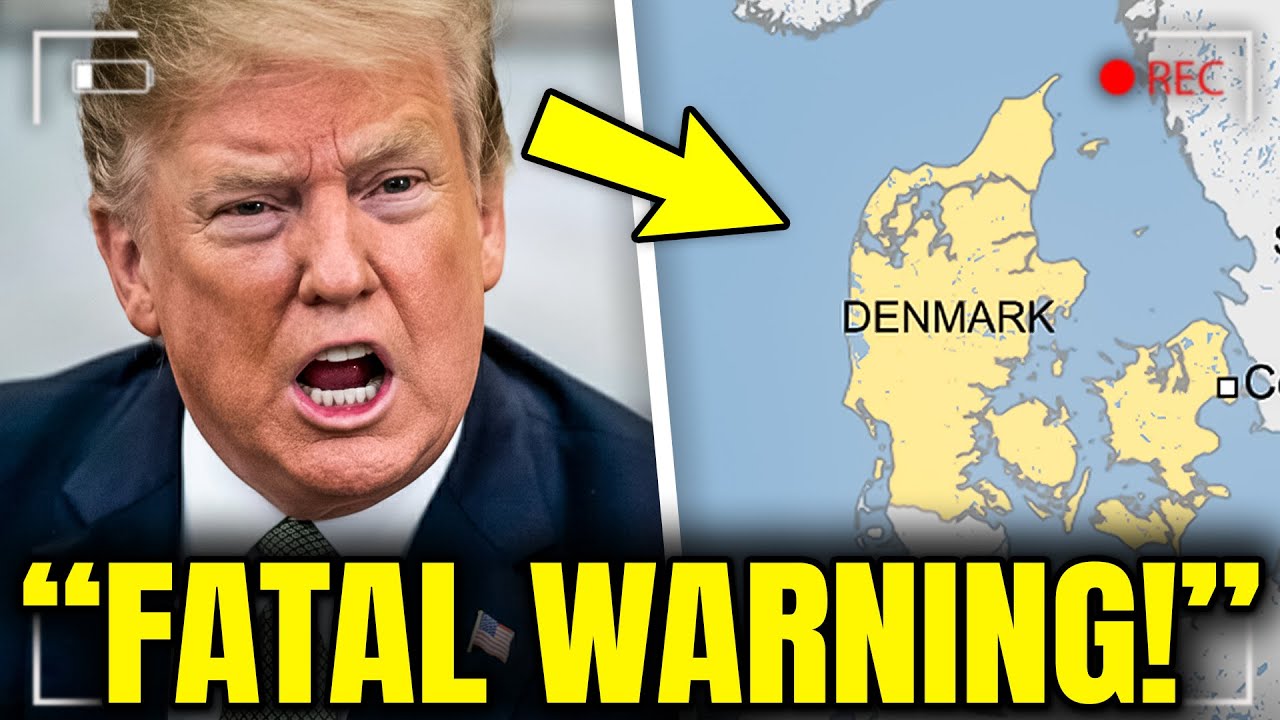
Greenland is not merely a white expanse on a map; it is an autonomous territory within the Kingdom of Denmark, and Denmark is a NATO ally. Which means that Trump’s language—especially the suggestion that the United States might take Greenland by force—doesn’t land as chest-thumping rhetoric in Copenhagen or Nuuk. It lands as a threat aimed at the legal and political architecture that has kept the alliance coherent since the Cold War: the assumption that disputes inside the family get handled through negotiation, not intimidation.
That architecture is not theoretical. The United States already has extensive defense rights in Greenland through a 1951 agreement with Denmark, created explicitly so Washington could help defend Greenland and the NATO area by establishing and operating “defense areas” while still recognizing Danish sovereignty. It is a document built for partnership: the flags of both countries fly over the defense areas; responsibilities are worked out “by agreement”; Denmark reserves the right to use the areas “in cooperation” with the United States; and U.S. activity is framed as support to NATO plans, not ownership.
This is what makes Trump’s posture so destabilizing to allies who have, for decades, treated U.S. power as something both formidable and predictable. Washington already has access. Washington already has a foothold. Washington already has a framework. What Trump is introducing is not capability but coercion—an argument that access is insufficient unless it is backed by control.
Greenlandic leaders, for their part, have tried to be blunt. In recent days they have reiterated that Greenland “is not for sale,” emphasizing that “our country belongs to the Greenlandic people.” Political leaders in Greenland have also warned that they do not want to be Americans and have described Trump’s pressure as an affront to self-determination rather than a sincere offer of partnership.
For Europe, the danger is not just the specific dispute—it is what the dispute implies about the reliability of the United States inside NATO. The alliance’s deterrence is supposed to face outward. The nightmare scenario is not merely Russia testing NATO’s cohesion, but NATO members beginning to game out contingencies involving one another.
That is why, when NATO’s secretary general is asked about Trump’s Greenland talk, the reaction often looks like controlled evasion: deflect to broader Arctic security challenges; emphasize shared concerns about Russia and China; underline existing agreements; reassure everyone that cooperation is already possible. It is not hard to see the logic. The job of a NATO leader is to prevent panic, avoid feeding escalation, and keep the focus on collective threats. But the sidestep is also revealing: it acknowledges, without saying so, that a direct clash between allies is too politically explosive to handle in sound bites.
Behind the scenes, the dilemma for Denmark and Greenland is straightforward and cruel. If they downplay Trump’s words, they risk normalizing them. If they answer in kind, they risk amplifying the prospect of a crisis that neither side can fully control. But there are moments when ambiguity becomes impossible to sustain—when a superpower frames another country’s territory as a prize, and “hard way” hangs in the air like a threat waiting for a calendar date.

Trump’s defenders insist this is strategy: the Arctic is warming, sea routes are opening, and Russia and China are increasingly active in the region. All of that is true, and it is precisely why Denmark and Greenland have long accepted a significant U.S. role. The point is not whether Arctic security matters. It is whether the United States can pursue it without converting an alliance problem into an annexation story.
Because once an American president starts speaking about allied territory the way he speaks about leverage in a negotiation—pressuring, baiting, threatening—he changes what smaller nations must plan for. Security becomes less about radar coverage and more about political risk: What if the next demand is larger? What if the next “deal” comes with consequences for refusing? What if the alliance’s strongest member begins to treat consent as optional?
In that sense, the Greenland confrontation is less a one-off controversy than a case study in how power erodes trust. Denmark has been a serious NATO contributor for decades, fighting alongside the United States and accepting burdens that far exceeded its size. In an alliance, that history is supposed to count. When it is met with public talk of taking territory, it sends a message heard well beyond Copenhagen: loyalty may not buy respect; it may simply buy time.
There is also a domestic American angle that allies understand better than Washington sometimes does. Trump is not simply arguing about Greenland. He is arguing about a worldview in which sovereignty is negotiable if the balance of power allows it, and where transactional politics replaces the patient maintenance of alliances. That worldview has consequences not because it is loud, but because it forces everyone else to behave as if the loudest possibility is also the most plausible.
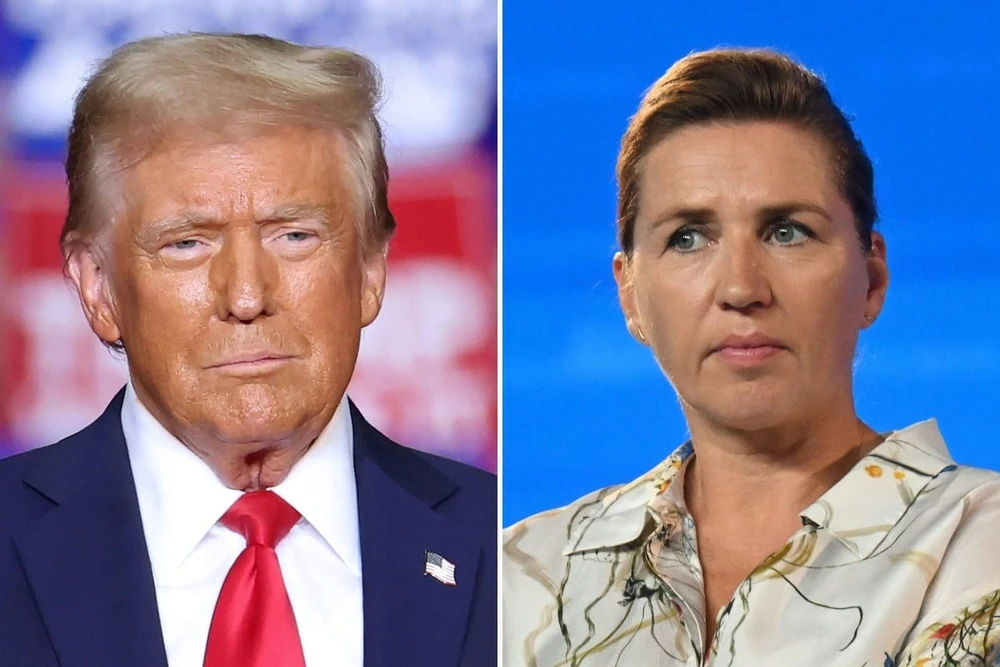
The irony is that the United States already holds what it says it needs: a legal route to expand its presence, deepen basing arrangements, and modernize Arctic defenses with Denmark’s cooperation. The 1951 agreement exists precisely to avoid the kind of rupture Trump now risks creating. And Greenland’s leaders have already made clear that sovereignty is not a bargaining chip.
What remains is a test of restraint—of whether Trump’s words are merely pressure tactics or the opening lines of a policy that treats alliance partners as obstacles. For NATO, the question is existential in a quieter way: whether the alliance can remain an alliance when one member speaks as if force is an acceptable tool inside the club.
In the Arctic, the ice is thinning. In the politics of the West, so is the margin for error.






