🔥 BREAKING: SAMUEL L. JACKSON PLAYS PREVIOUSLY UNAIRED TRUMP AUDIO — NINE SECONDS SHIFT THE ROOM ⚡
A viral YouTube video this week promises a dramatic cultural showdown: Samuel L. Jackson unveiling “hidden audio” of Donald Trump at a nationally televised charity gala, triggering what the narrator describes as a nine-second reaction that “shocked the room” and set off a political firestorm.
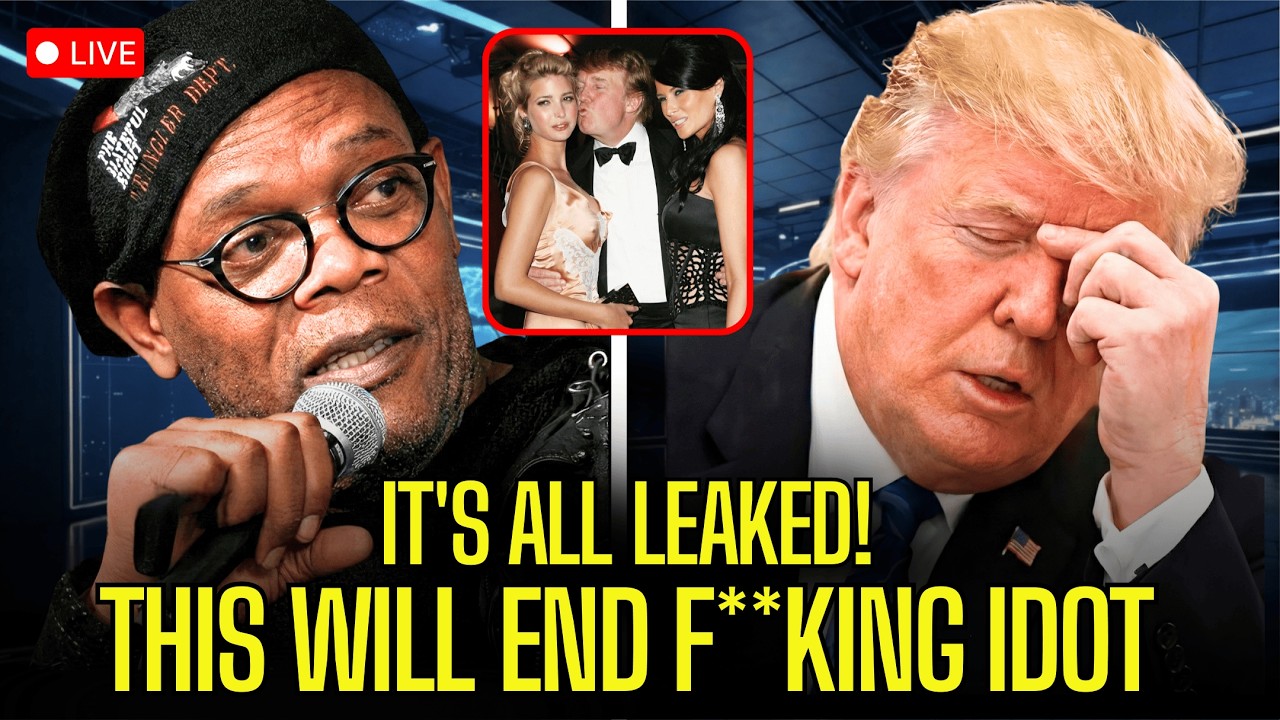
There is no evidence that such an event took place.
No reputable news organization has reported on a Los Angeles gala in which Mr. Jackson released a secret recording of Mr. Trump. No broadcast transcript, event footage or independent confirmation supports the existence of the described audio clip or the televised confrontation that followed. Instead, the video appears to be part of a growing genre of highly produced political storytelling online: dramatic narratives constructed around public figures, blending real past remarks with fictionalized scenarios.
Still, the video’s popularity — and the plausibility it conveys — reveal much about the intersection of celebrity, politics and digital media in 2026.
The video opens with genuine archival-style clips of Mr. Jackson responding to past comments attributed to Mr. Trump. In interviews over the years, Mr. Jackson has reacted with humor when told that Mr. Trump criticized him, once quipping that he checks his bank account and laughs. Those exchanges are part of the public record and reflect the long-running pattern of Mr. Trump publicly feuding with entertainers who mock or criticize him.
From there, however, the narrative pivots into an elaborate fictional scene.
According to the video, Mr. Jackson was scheduled to deliver routine remarks at a televised charity gala supporting arts programs in public schools. Mr. Trump, the narrator claims, had recently insulted the actor online, calling him overrated and accusing him of appearing in too many television commercials — a characterization consistent with the former president’s familiar rhetorical style.
At the gala, the video says, Mr. Jackson began with polite acknowledgments before shifting tone. He reportedly spoke about discipline and the importance of thinking before speaking. Then, in a moment framed as cinematic and deliberate, he allegedly removed a flash drive from his jacket and signaled for an audio clip to be played on a large screen behind him.

The recording — labeled “clip 00009” in the video’s telling — purportedly captured Mr. Trump speaking candidly about rally crowds and managing critics, suggesting a detached, strategic view of public opinion. The narrator emphasizes that the clip contained no profanity, but that its tone conveyed “cold arrogance.” The audience, we are told, fell silent.
Moments later, the video claims, Mr. Trump appeared via remote feed, visibly angry as the broadcast continued.
The structure is carefully crafted: a prestigious setting, a calm and respected cultural figure, a hidden recording, a moral indictment delivered in measured tones. It is political theater in its purest form — but theater nonetheless.
In recent years, online platforms have become fertile ground for what media scholars call “synthetic political narratives.” These productions use real personalities, fragments of authentic footage and plausible tensions to construct entirely new events. High-quality editing, authoritative voice-over and dramatic pacing give the impression of documented reality, even when key elements are invented.
The appeal is clear. Mr. Trump’s public persona — combative, quick to insult, often reactive to perceived slights — lends itself easily to dramatic storytelling. Mr. Jackson, known for his commanding screen presence and measured delivery, provides a compelling counterweight in narrative form. The imagined confrontation satisfies a familiar arc: bluster meets composure; provocation meets restraint.
Yet without independent verification, the gala and the audio clip remain fictional.
That has not stopped the video from circulating widely. In the attention economy, emotional payoff often outweighs factual grounding. A short, evocative clip — particularly one promising a powerful figure caught off guard — can travel rapidly across social media feeds before viewers pause to question its sourcing.
The phenomenon reflects broader shifts in how political information is consumed. Traditional gatekeepers — newsrooms, editors, broadcast standards — once filtered what reached mass audiences. Today, algorithmic distribution rewards engagement, not verification. A narrative that triggers outrage or satisfaction is more likely to be amplified than a sober correction.
For Mr. Trump, public feuds with entertainers are hardly new. Throughout his political career, he has sparred with actors, musicians and comedians, often using social media to escalate disputes. For celebrities, responding can be a strategic calculation: engage and risk fueling the conflict, or ignore and deny it oxygen.
The YouTube video imagines a third option — a carefully orchestrated public reckoning backed by documentary proof. It is a scenario tailored to contemporary appetites for accountability and spectacle.
But in the absence of corroboration, it remains a story told for effect rather than an event grounded in record.
As audiences navigate an increasingly blurred landscape of fact and fabrication, the viral success of such productions offers a cautionary note. The presence of recognizable faces and familiar tensions does not guarantee authenticity. In a media environment where performance and politics often overlap, the most dramatic moment is not always the one that occurred — only the one most compellingly told.






