Judge Dismisses Classified Documents Case Against Trump as Hush Money Conviction Reshapes the Legal and Political Landscape
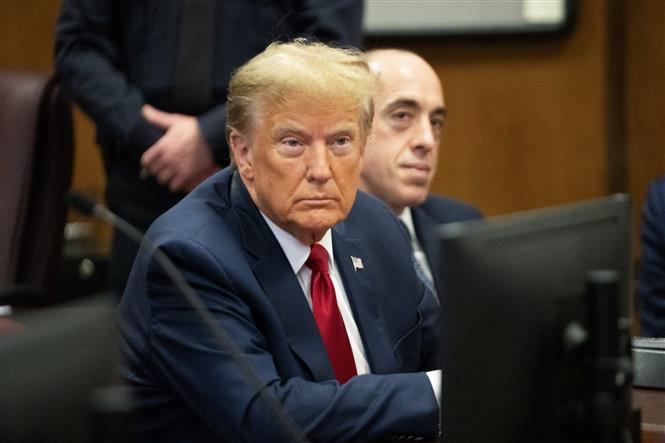
A federal judge in Florida on Monday dismissed the criminal case accusing Donald Trump of unlawfully retaining classified documents after leaving the White House, abruptly ending one of the most consequential prosecutions ever brought against a former American president, according to reports from Reuters and Agence France-Presse.
The decision removes a major source of legal jeopardy for Mr. Trump, who had been charged with mishandling sensitive national security materials found at his Mar-a-Lago estate, including documents stored in boxes in unsecured areas such as a bathroom and shower. Prosecutors had alleged that Mr. Trump repeatedly refused requests from the National Archives to return the records and later obstructed government efforts to recover them.
Yet even as the classified documents case was dismissed, Mr. Trump’s broader legal exposure — and the political consequences of it — remained far from resolved. In New York, Mr. Trump stands convicted on 34 felony counts related to falsifying business records in connection with hush money payments made during the 2016 presidential campaign, a verdict that continues to reverberate through American politics.
Taken together, the two developments underscore the unusual and unprecedented legal position of Mr. Trump: a former — and now again sitting — president who has seen one major criminal case collapse while another has resulted in a felony conviction that remains on the books.
A Sudden End to the Documents Case
The Florida ruling centered on the prosecution brought by Special Counsel Jack Smith, who had charged Mr. Trump under the Espionage Act and related statutes. The case focused on classified materials recovered during an FBI search of Mar-a-Lago in 2022, images of which — showing documents strewn among boxes — became emblematic of the investigation.
Legal analysts on social media and cable news said the dismissal reflected deep skepticism from the court about the structure of the prosecution and unresolved constitutional questions surrounding the appointment and authority of the special counsel. While the Justice Department has not ruled out an appeal, the ruling represents a significant setback for federal prosecutors and removes, at least for now, the prospect of a federal trial over classified records.
Mr. Trump celebrated the decision on his social media platform, Truth Social, calling it “a total vindication” and repeating his long-standing claim that the case was politically motivated.
Democrats and several former national security officials countered that the dismissal did not amount to a determination of innocence. “This was not a finding that the conduct was appropriate,” one former prosecutor wrote on X. “It was about legal and procedural questions, not the underlying facts.”
The Hush Money Case Still Looms
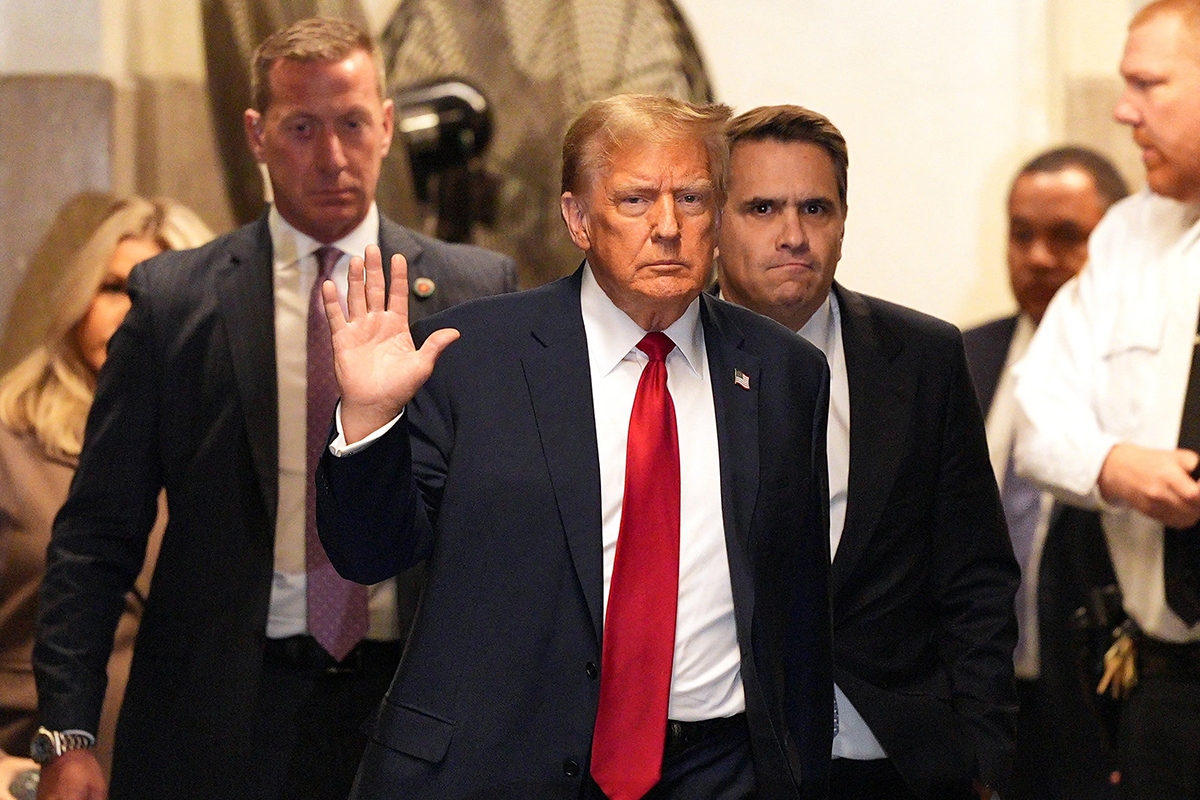
While the classified documents case has now been dismissed, the conviction in New York remains a defining element of Mr. Trump’s legal reality.
In that case, brought by the Manhattan district attorney, a jury found Mr. Trump guilty of falsifying business records to conceal reimbursements to his former lawyer, Michael D. Cohen, who paid $130,000 to the adult film actress Stormy Daniels shortly before the 2016 election. Prosecutors argued that the payments were designed to suppress damaging information from voters and were disguised through false invoices and ledger entries.
The jury convicted Mr. Trump on all 34 counts after a trial that featured testimony from Ms. Daniels, Mr. Cohen and former Trump Organization employees, as well as documentary evidence including checks signed by Mr. Trump.
In January, the judge imposed what is known under New York law as an unconditional discharge, a sentence that carries no jail time, fines or probation. The conviction, however, remains in effect, making Mr. Trump the first president in U.S. history to hold a felony conviction.
Judge Juan Merchan said at the time that the sentence reflected the extraordinary circumstances of sentencing an incoming president, while emphasizing that the jury’s verdict and the finding of guilt were not undone.
Political Fallout and Competing Narratives
On social media and in campaign messaging, Democrats have seized on the conviction as evidence that Mr. Trump is unfit for office and benefits from a system that shields powerful figures from consequences faced by ordinary defendants.
“This is not about politics,” Representative Jamie Raskin of Maryland wrote on X. “A jury of citizens found him guilty beyond a reasonable doubt. That matters.”
Republicans, by contrast, have largely dismissed the New York case as partisan overreach. Speaker Mike Johnson has described it as a “weaponization” of the justice system, a phrase echoed by conservative commentators and Trump allies across right-leaning media platforms.
Polling analysts have noted that while Mr. Trump’s core supporters remain unmoved, the conviction appears to have had a measurable effect on independent and suburban voters, particularly in swing states. Several viral social media threads from political strategists have warned that down-ballot Republican candidates may struggle to distance themselves from the case.
What Comes Next
The dismissal of the classified documents case does not prevent prosecutors from seeking to revive it on appeal, nor does it affect other investigations that have been delayed or narrowed. Legal experts caution that Mr. Trump’s legal exposure may change again once he leaves office, though such questions remain speculative and politically fraught.
For now, the contrasting trajectories of the two cases — one dismissed, the other resulting in a conviction — highlight the complexity of applying criminal law to a figure who has reshaped American politics and challenged long-standing norms.
As one prominent legal scholar wrote on social media Monday night, “History will likely remember this moment not for a single ruling, but for the unresolved tension it exposes: between the rule of law and the reality of presidential power.”
For Mr. Trump, that tension now defines both his presidency and his legacy — a reality unlikely to fade as the nation heads deeper into a polarized election cycle.






