Trump Lashes Out After Jimmy Kimmel Highlights Praise for Press Secretary Karoline Leavitt
LOS ANGELES — President Donald Trump reacted with fury after late-night host Jimmy Kimmel aired a clip of Trump lavishing praise on his 28-year-old press secretary, Karoline Leavitt, in a manner that many viewers found uncomfortably personal. Kimmel’s simple, deadpan question — “Does the White House have HR?” — turned the segment into a viral moment, drawing laughter in the studio and sharp criticism from the White House.
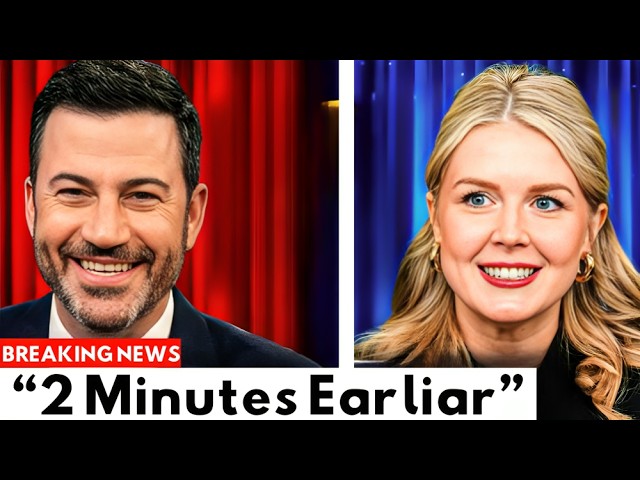
The controversy began when Kimmel played footage of Trump aboard Air Force One, where the president described Leavitt as a “star” and singled out her “face,” “brain” and “those lips.” “The way they move, they move like a machine gun,” Trump said, adding that he had never had a better press secretary and had no intention of replacing her. The remarks, delivered with evident enthusiasm, were met with awkward silence in the original context and prompted immediate online commentary when rebroadcast.
Kimmel let the clip play uninterrupted, allowing the audience to absorb the words in full. He then looked directly into the camera and asked the one question that cut through the spin: “Does the White House have HR?” The line drew immediate laughter, reframing Trump’s comments as a textbook example of inappropriate workplace behavior. In a normal office, Kimmel suggested, such language from a superior about a junior employee’s appearance would trigger human resources protocols.
The punchline landed because it required no embellishment. Kimmel did not mock Leavitt personally; he focused on the power imbalance — a president in his 70s publicly appraising the physical attributes of a young subordinate on government time and government property. The question stripped away partisan framing and reduced the moment to a basic workplace standard: if this happened anywhere else, someone would be called to explain themselves.
Trump responded swiftly and angrily on Truth Social, calling Kimmel “horrible” and a “failed comedian” who relied on “cheap shots.” White House officials, including Leavitt herself, issued statements insisting no pressure had been applied to ABC and that the decision to address the clip was purely the network’s. Yet the damage was done. The segment spread rapidly across platforms, with clips garnering millions of views and spawning memes that juxtaposed Trump’s words with standard HR training materials.
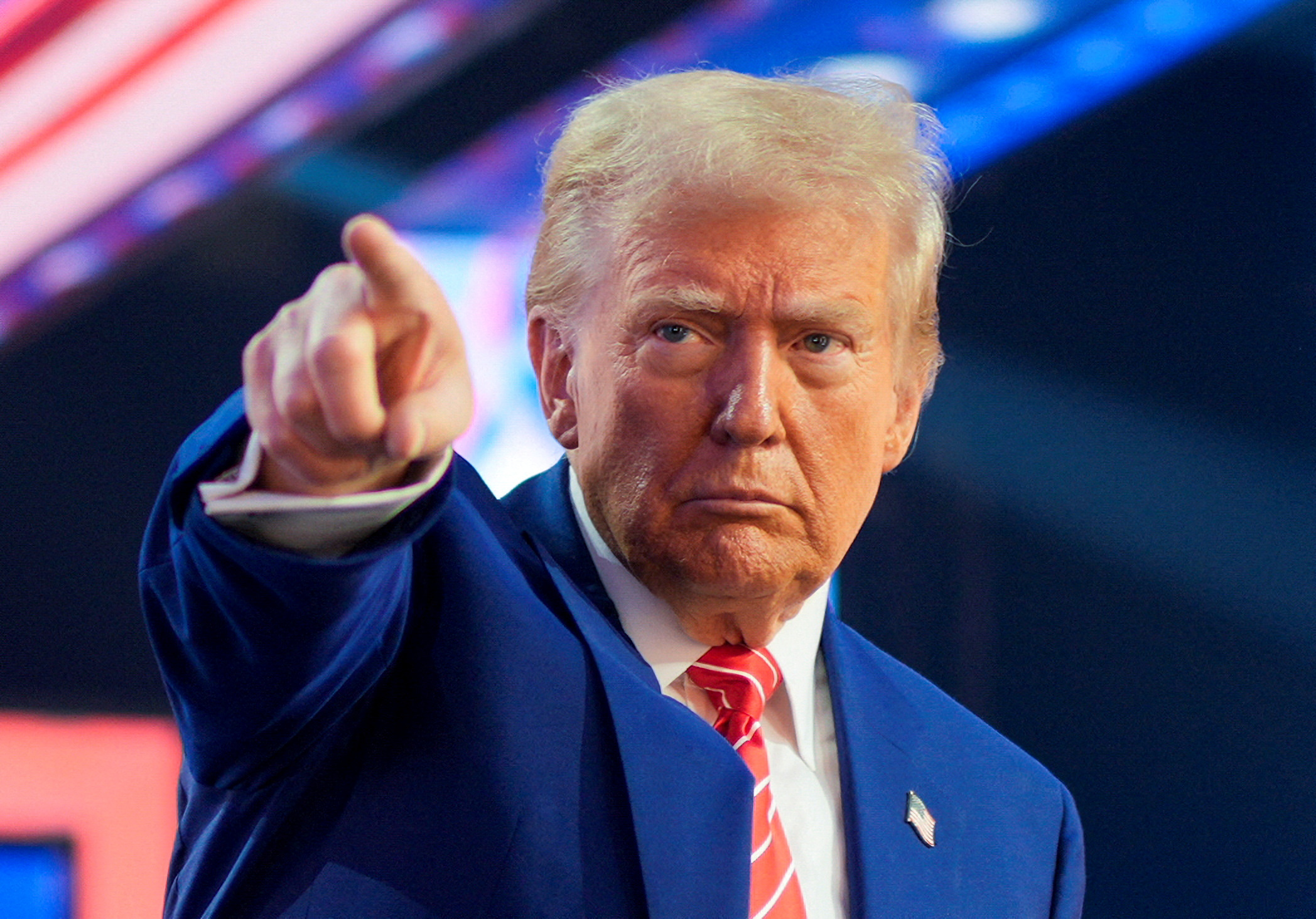
Leavitt, who has become a fixture in the briefing room since early 2025, has drawn attention for her combative style and rapid-fire responses to reporters. Critics have long noted her youth and inexperience relative to the role, but Trump has repeatedly defended her, often in glowing personal terms. The Air Force One remarks were not isolated; they fit a pattern of public comments that have raised eyebrows among observers inside and outside the administration.
The episode also revived discussion of Leavitt’s earlier media appearances. In June 2024, while still a campaign spokeswoman, she clashed with CNN’s Kasie Hunt, prompting the anchor to end the segment abruptly after Leavitt accused Democrats of catering to “Hamas terrorists, illegal aliens, and violent criminals.” The exchange became a defining moment, cementing her reputation as a confrontational voice for the administration.
Kimmel, who returned from a brief suspension in late 2025, has leaned harder into fact-based satire since his reinstatement. The Leavitt segment exemplified his current approach: play the tape, add minimal commentary, and let the audience draw its own conclusions. The HR line required no elaboration; it simply held up a mirror to behavior that, in any other context, would demand accountability.
ABC has not commented publicly on the segment or Trump’s subsequent attacks, but industry sources say the network anticipated pushback. Late-night shows have long navigated White House criticism, yet the personal nature of this exchange — centered on a young staffer’s appearance rather than policy — has drawn particular attention from media ethicists and workplace experts.
For the White House, the fallout is twofold. First, the clip reinforces perceptions of an administration where personal loyalty and appearance can overshadow professional conduct. Second, it places Leavitt in an unenviable spotlight: a press secretary whose boss’s public comments about her looks have become fodder for late-night comedy. Defenders argue the praise was innocuous and that Kimmel’s framing was partisan overreach. Critics counter that the remarks crossed a line no workplace policy would tolerate.
As the clip continues to circulate, the episode underscores a persistent tension in Trump-era media relations: when a president’s own words become the punchline, rebuttal alone rarely changes the narrative. Kimmel did not need to invent a scandal; he simply replayed one and asked the most ordinary question imaginable. In doing so, he reminded viewers that even the highest office is still an office — and some rules apply no matter who sits at the top.