House Oversight Committee Subpoenas Attorney General Pam Bondi Over Epstein Files as War Powers Debate Intensifies
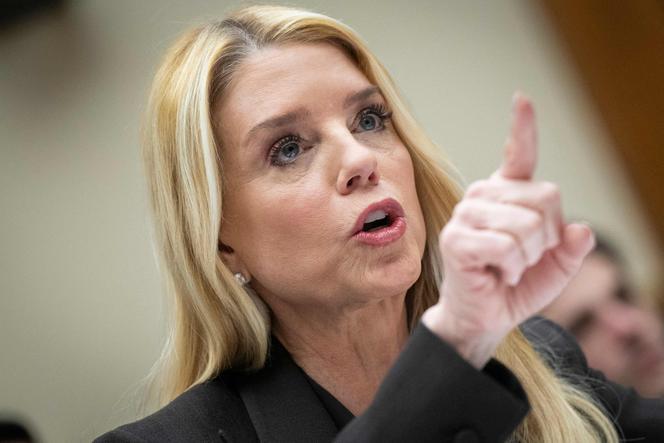
WASHINGTON — The House Oversight Committee voted along party lines on Wednesday to subpoena Attorney General Pam Bondi to testify about the Justice Department’s handling of Jeffrey Epstein-related documents, escalating scrutiny over allegations that key files implicating former President Donald Trump were withheld from public release.
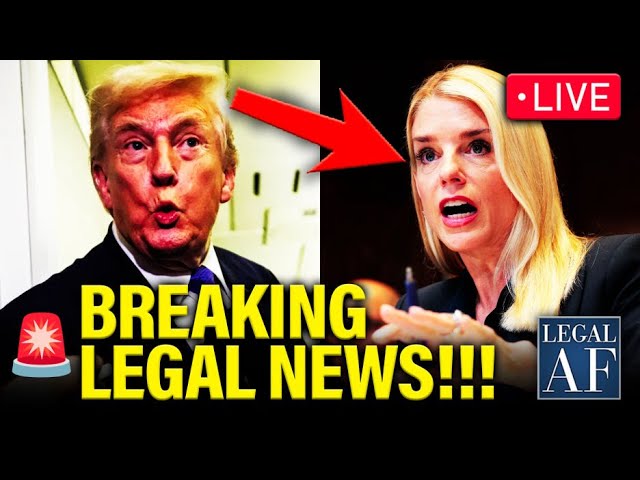
The move comes amid mounting pressure on the Trump administration as it wages an expanding military campaign against Iran — a conflict many lawmakers and legal scholars now describe as unauthorized and potentially unconstitutional. Bondi, who served as one of Trump’s defense attorneys during his first impeachment trial, faces questions about why thousands of pages remain unreleased, including FBI 302 interview summaries that reportedly contain credible allegations of sexual abuse involving a minor and Trump. Multiple investigative outlets have identified at least one set of redacted documents that appear to have been deliberately removed before public disclosure.
Representative Jamie Raskin, the top Democrat on the committee, called the subpoena “a necessary step toward transparency in one of the most serious trafficking investigations in modern history.” He noted that Trump’s name appears in the files more frequently than any other individual — by some counts over a million times across various records — yet significant portions remain sealed. Bondi has previously testified before Congress that no evidence of wrongdoing by Trump exists in the files, a claim Democrats say is contradicted by the very documents she oversees.
The Justice Department has not yet responded publicly to the subpoena, but administration officials have signaled they view the request as politically motivated. Bondi’s predecessor in the role, Todd Blanche — another former Trump defense attorney — has faced similar criticism for his handling of the Epstein matter. Legal experts say the attorney general could face contempt proceedings or even criminal exposure if she defies the subpoena without a valid privilege claim, though Trump could attempt to invoke executive privilege or issue a pardon preemptively.
The Epstein controversy unfolds against the backdrop of a separate constitutional crisis: the ongoing military operation in Iran. Trump ordered strikes without prior congressional authorization, prompting debate over whether the action violates Article I of the Constitution, which reserves the power to declare war for Congress. The War Powers Resolution of 1973 requires notification within 48 hours and limits unauthorized action to 60 days unless Congress approves an extension — a deadline that is rapidly approaching.
Several lawmakers, including some Republicans, have introduced a resolution to terminate U.S. involvement. Even if it passes both chambers, Trump has vowed to veto it. Critics argue the administration’s shifting justifications — from an “imminent nuclear threat” (which Trump previously claimed had been “obliterated”) to ballistic missiles and regime change — lack coherence and fail to meet the statutory threshold for unilateral action.
Casualties are mounting. At least six U.S. service members have been killed, with tens of thousands more at risk in fortified positions under sustained Iranian drone and missile attacks. Iran’s retaliation has spread the conflict beyond its borders, striking the U.S. embassy in Saudi Arabia and luxury hotels in Gulf states. Qatar has suspended natural gas production, oil tanker insurance costs have skyrocketed, and commercial air travel across the region remains severely restricted, stranding thousands of American citizens with no clear evacuation plan.
The war has also fractured Trump’s political coalition. Prominent conservative voices — Tucker Carlson, Meghan Kelly, Matt Walsh, and Marjorie Taylor Greene — have publicly condemned the campaign as a betrayal of “America First” principles and a return to the “forever wars” Trump once denounced. Polling shows deep public disapproval — 59 percent in some surveys — with support for the strikes at roughly 27 percent. Even within Republican ranks, enthusiasm is eroding at a time when midterm turnout could prove decisive.
Trump has dismissed the criticism as irrelevant to the broader MAGA base, insisting “MAGA loves what I’m doing” and boasting of “virtually unlimited supplies of weapons.” Yet the growing dissent from figures who once anchored his media ecosystem suggests a deeper strategic frustration: the anti-interventionist strand of the movement that helped propel him to power feels betrayed by yet another Middle East entanglement.
The convergence of these crises — one involving potential obstruction of justice in a historic trafficking investigation, the other a constitutionally fraught war — has placed the administration under unprecedented pressure. Bondi’s testimony, if it occurs, could force new disclosures about the handling of Epstein files. Simultaneously, Congress’s war powers debate will test whether lawmakers can reclaim authority over military action or whether the executive will continue to expand its reach unchecked.

For now, both controversies remain fluid. The subpoena is a formal demand for answers, but compliance is far from guaranteed. The Iran campaign is expanding, with no clear endgame in sight. What unites the two is the growing perception that accountability — whether for withheld documents or unauthorized war — remains elusive at the highest levels of government.