In the public imagination, the American military is often treated as an extension of presidential will — an instrument that moves when ordered, strikes when directed, and salutes when commanded. But history tells a more complicated story. The armed forces are bound not only to civilian leadership, but to law, treaties, and constitutional limits. When those boundaries are tested, friction emerges. And in recent days, that friction has moved into the open.
President Donald Trump has spent the past week escalating rhetoric about military power abroad, particularly in connection with Greenland, Venezuela, and Cuba. At the same time, senior military officials, according to multiple reports and lawmakers’ statements, have resisted what they view as unlawful or strategically reckless directives. The result has been a visible clash between presidential ambition and institutional restraint — one that appears to have unsettled the White House itself.
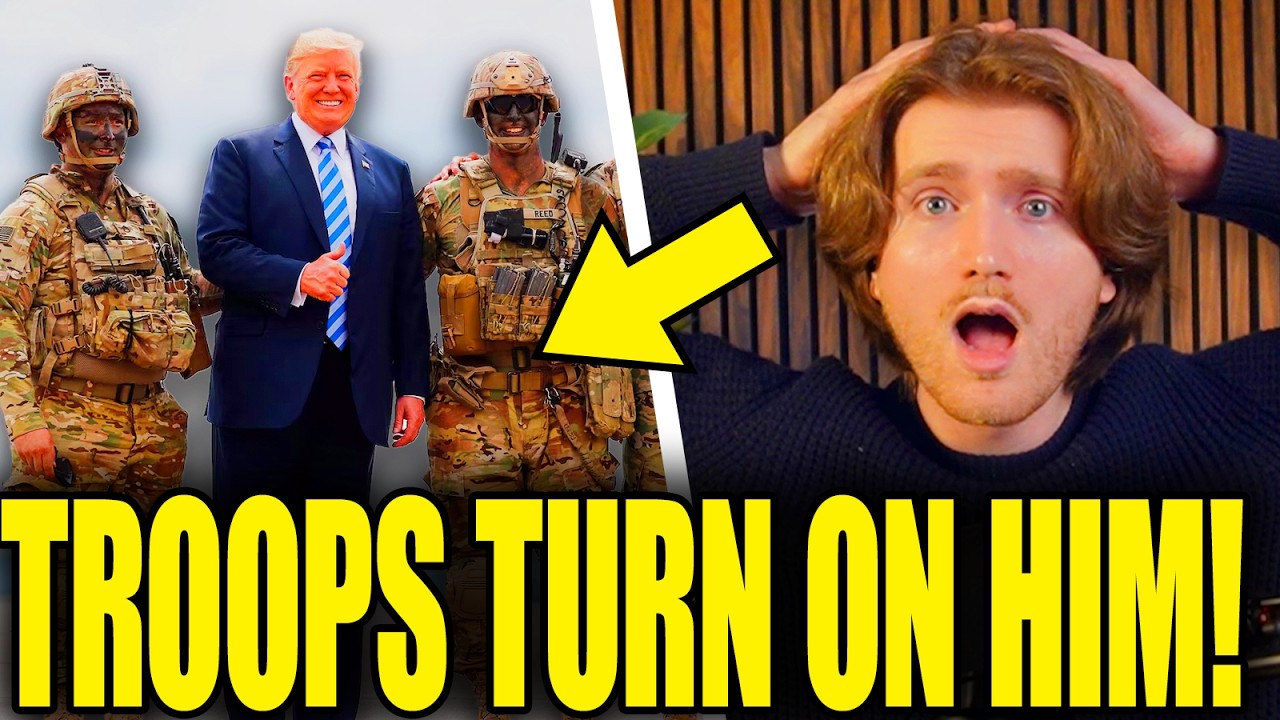
Late-night and early-morning posts on Trump’s Truth Social account have reflected mounting agitation. In rapid succession, the president has threatened economic and military consequences for Cuba, declared Venezuela to be under U.S. “protection,” and continued to float the possibility of acquiring Greenland, including by force. While such statements are often dismissed as bluster, they have been taken seriously by allies, lawmakers, and — crucially — the military leadership tasked with executing any such orders.
That seriousness was captured bluntly by Chris Murphy, who warned that a military move against Greenland would amount to war with Europe itself. Greenland is an autonomous territory within the Kingdom of Denmark, a NATO ally. Under Article 5 of the NATO treaty, an attack on one member is considered an attack on all. In plain terms, a U.S. invasion of Greenland would place the United States in direct conflict with its own alliance.
“It sounds absurd to even have to say this out loud,” Murphy said in recent remarks, “but this is what we are talking about: the United States potentially at war with NATO.”
Military officials, according to reporting in British and American outlets, have reached similar conclusions — though more quietly. Requests to draw up invasion plans for Greenland, first reported by the Daily Mail and echoed by diplomatic sources, have reportedly been met with resistance inside the Pentagon. Senior officers have raised concerns about legality, congressional authorization, and alliance obligations. While contingency planning is a routine military function, officials appear wary of crossing from planning into political signaling or operational readiness without a lawful basis.
This internal resistance marks a critical distinction. Generals do not typically defy presidents outright. Instead, they invoke process: legal review, treaty interpretation, congressional consultation. These mechanisms are not acts of rebellion; they are the system working as designed. Yet for a president who has repeatedly expressed frustration with institutional limits, such resistance can feel personal — even insubordinate.

The friction has been amplified by Trump’s broader geopolitical posture. His recent posts targeting Cuba — including threats to cut off financial flows and warnings to “make a deal before it is too late” — suggest a willingness to conflate economic pressure, military dominance, and regime change rhetoric. At the same time, the administration’s actions in Venezuela, including the use of military force without a formal declaration of war, have heightened concerns that escalation is becoming normalized.
But foreign policy is only part of the picture. The timing of Trump’s most aggressive rhetoric has coincided with renewed scrutiny of the government’s handling of the Jeffrey Epstein files — a subject that has returned to the political foreground after months of delay.
Trump and his allies campaigned on promises of transparency, insisting that all Epstein-related documents would be released. Yet more than a year into the administration, only a small fraction of the files have been produced. Lawmakers from both parties have questioned why fewer than 15,000 documents have emerged from a pool said to exceed two million, and why statutory deadlines were missed.
Oversight committees have now formally asked the Justice Department’s inspector general to investigate whether the delay was caused by incompetence, deliberate obstruction, or misconduct. That request, notably, is bipartisan. The chairman of the Senate Judiciary Committee, Dick Durbin, has joined Democrats in calling for answers.
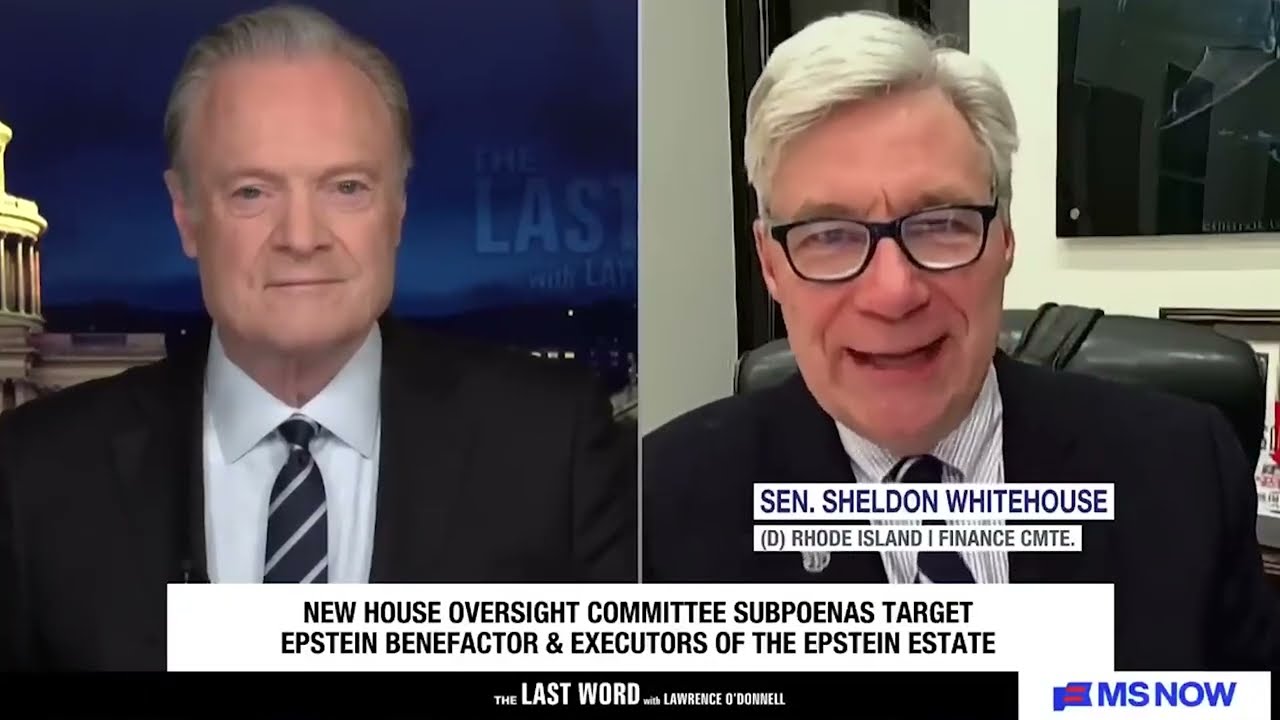
In the House, members have begun to push further. Subpoenas targeting individuals financially connected to Epstein, including longtime patron Les Wexner, are now under discussion. The focus, as several lawmakers have put it, is simple: follow the money.
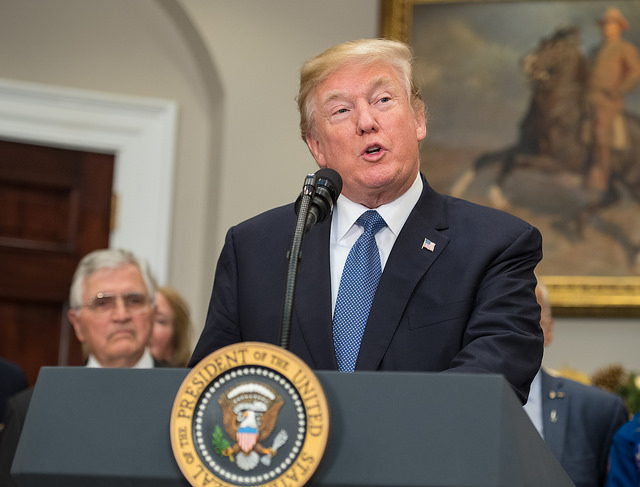
What troubles critics is not merely the delay, but the contrast between rhetoric and action. An administration that promised disclosure has instead produced opacity. And as attention returns to that discrepancy, Trump’s sudden fixation on territorial acquisition and military dominance looks, to skeptics, like an attempt to redirect the national conversation.
Not every foreign policy dispute is a distraction, and not every escalation is cynical. But patterns matter. When a president facing legal and political pressure pivots toward dramatic external confrontations — especially ones that test alliances and international law — observers are right to ask why.
Inside the military, that question takes on added weight. Officers swear an oath not to a president, but to the Constitution. Their obligation is not to carry out every order, but to carry out lawful ones. If senior commanders believe an action would violate treaties, lack congressional authorization, or destabilize global security, they are duty-bound to raise objections.
That reality has long frustrated Trump, who has openly criticized generals he views as insufficiently loyal. During his first term, he cycled through defense secretaries and clashed repeatedly with military leadership. His second term, by many accounts, has intensified that tension.
The danger is not only institutional, but strategic. When allies begin planning for scenarios in which the United States itself becomes a potential threat, trust erodes rapidly. Denmark’s leaders have made clear that Greenland is not for sale. European governments have reaffirmed their support for Danish sovereignty. NATO’s leadership has worked carefully to de-escalate the rhetoric without legitimizing it.
Yet words alone cannot fully contain the damage. The mere suggestion that the United States might use force against an ally forces others to prepare — and preparation, once begun, is hard to reverse.
For now, Greenland remains Danish territory. NATO remains intact. And U.S. military leaders, at least according to available reporting, continue to act as a brake on presidential overreach rather than an accelerant.
But the episode has exposed a fragile balance. A presidency that treats power as transactional and institutions as obstacles will eventually collide with the structures designed to prevent catastrophe. When that happens, the question is not only whether the system holds — but how much strain it can endure before something gives.
The coming weeks may offer an answer.






