When Outrage Failed: How CBS Stood by Stephen Colbert—and Changed Late-Night Television
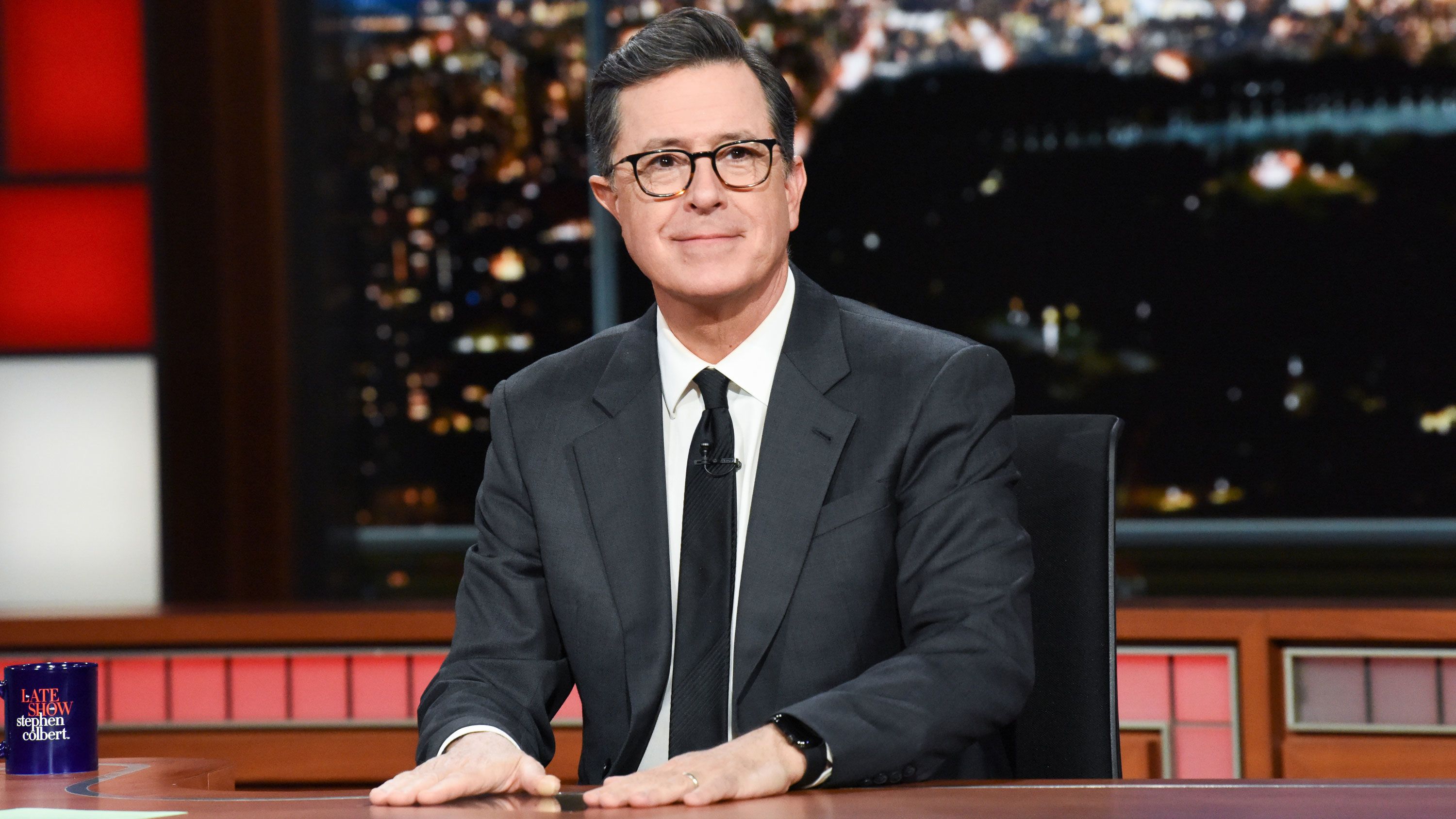
In May 2017, a single late-night monologue ignited one of the most intense culture-war flashpoints in modern American television. What began as a crude joke on The Late Show with Stephen Colbert quickly escalated into a national controversy involving social-media campaigns, advertiser anxiety, political outrage, and regulatory scrutiny. Within days, many observers were confident the outcome was inevitable: Stephen Colbert would be punished, suspended, or fired.
None of that happened.
Instead, CBS made a decision that reshaped the trajectory of late-night television and offered a revealing lesson about outrage politics, institutional power, and the limits of public pressure in the digital age.
A Joke That Crossed a Line—for Some
The controversy centered on a monologue in which Colbert mocked President Donald Trump, using language that referenced Trump’s perceived deference to Russian President Vladimir Putin. The joke was deliberately provocative and far cruder than what audiences were accustomed to hearing on broadcast television.
Reaction was immediate and fierce.
Within hours, the hashtag #FireColbert began trending across Twitter and Facebook. Conservative commentators denounced the monologue as obscene and inappropriate, arguing it violated broadcast decency standards. Online petitions calling for Colbert’s firing amassed hundreds of thousands of signatures. CBS affiliates were inundated with complaints, emails, and phone calls from viewers demanding consequences.
President Trump himself weighed in, amplifying the backlash and framing the moment as evidence of media bias against conservatives.
“This wasn’t just criticism,” said one media analyst at the time. “It was an organized attempt to force institutional action through public outrage.”
Advertisers, Activists, and Regulatory Pressure
As the controversy intensified, attention shifted to the business and regulatory consequences. Advocacy groups warned advertisers about associating with the show. Media trade publications reported that some sponsors were monitoring the situation closely, wary of reputational damage.
More significantly, the Federal Communications Commission confirmed it had received thousands of complaints related to the broadcast and would review them. Cable news outlets speculated openly about fines or sanctions, while some pundits suggested CBS might pressure Colbert into an apology or temporary suspension.
In the ecosystem of modern media scandals, the pattern was familiar: public outrage leads to advertiser concern, which leads to corporate distancing, which leads to disciplinary action.
But CBS did something unexpected.
The Silence That Spoke Loudest
For days, CBS said nothing.
There was no apology tour, no public rebuke, no announcement of internal review. The network’s silence fueled speculation. Some believed negotiations were underway behind closed doors. Others assumed CBS was waiting for the controversy to cool before acting.
When a statement finally came, it stunned both critics and supporters.
CBS announced it was standing fully behind Stephen Colbert. The network emphasized its commitment to creative expression and confirmed there would be no suspension, no disciplinary action, and no removal of its host.
The response from conservative media was swift and furious. Calls for boycotts spread across right-leaning platforms. “CBS Is Dead to Me” trended briefly on social media. Viewers vowed to abandon the network entirely.
CBS did not reverse course.
The FCC’s Decision—and the Collapse of the Campaign
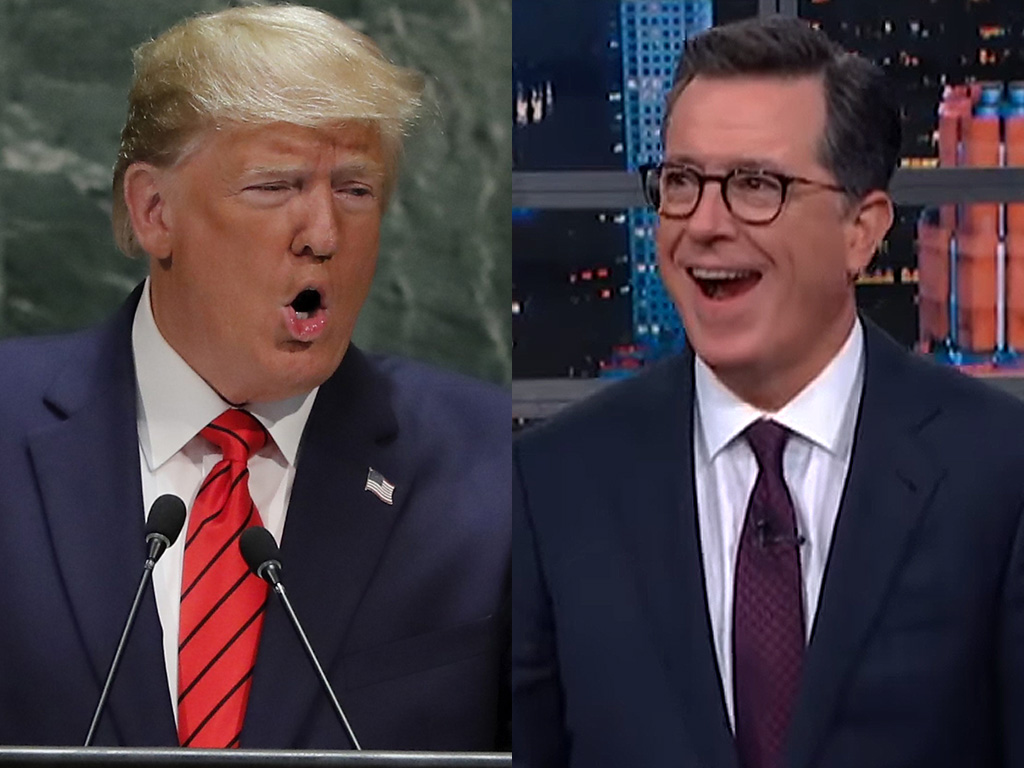
The final blow to the outrage campaign came when the FCC concluded its review. After examining the complaints, the agency announced it would take no action. There would be no fines, no violations, and no penalties. The case was closed.
For many Trump supporters, the ruling felt like a betrayal. The expectation of accountability—built through days of commentary and online mobilization—collapsed in a single announcement.
The attempt to remove Colbert had failed.
Ratings, Revenue, and the Economics of Controversy
When Colbert returned to the air, he addressed the controversy directly. “I’m still here,” he told the audience. The applause was thunderous. He followed with a line that quickly circulated online: “To everyone who tried to get me fired—thanks for the publicity.”
The numbers supported the joke.
In the weeks following the controversy, The Late Show experienced a significant ratings surge. New viewers tuned in. Clips from the monologue circulated widely across YouTube, Twitter, and Facebook. Colbert soon became the most-watched host in late-night television, surpassing competitors on rival networks.
Advertisers returned.
What many critics had framed as a reputational disaster became a commercial success.
Media executives and analysts were blunt in their assessments: CBS’s decision was not emotional loyalty—it was strategic calculation.
“Attention is currency,” said one former network executive. “Controversy drives attention. Attention drives viewership. Viewership drives revenue.”
A Broader Lesson About Outrage Politics
The Colbert episode has since become a case study in how modern outrage campaigns function—and how they sometimes fail.
For activists and viewers who believed mass pressure would force institutional compliance, the outcome was sobering. Rather than shrinking Colbert’s platform, the campaign expanded it. Rather than isolating CBS, the backlash strengthened the network’s negotiating position with advertisers and affiliates.
The episode revealed a paradox of the digital age: attempts to silence speech through amplification can produce the opposite effect.
“It showed the limits of outrage,” said a media sociologist. “Not all institutions respond the same way. Some are built to absorb pressure—and even profit from it.”
Enduring Implications

Years later, the 2017 controversy still resonates. It exposed how media power operates not just through speech, but through restraint—through silence, timing, and refusal to react on an outrage cycle’s schedule.
CBS waited. The outrage peaked. The regulators declined to act. The ratings rose.
For critics, the episode remains a cautionary tale about overreach. For defenders of free expression, it stands as evidence that institutions can resist political pressure without collapsing. And for the media industry, it underscored a hard truth: controversy is not always a liability. Sometimes, it is an asset.
In an era when viral backlash often feels decisive, the Colbert affair offered a reminder that influence is not measured by volume alone. Power, in modern media, often belongs to those who know when not to respond.






