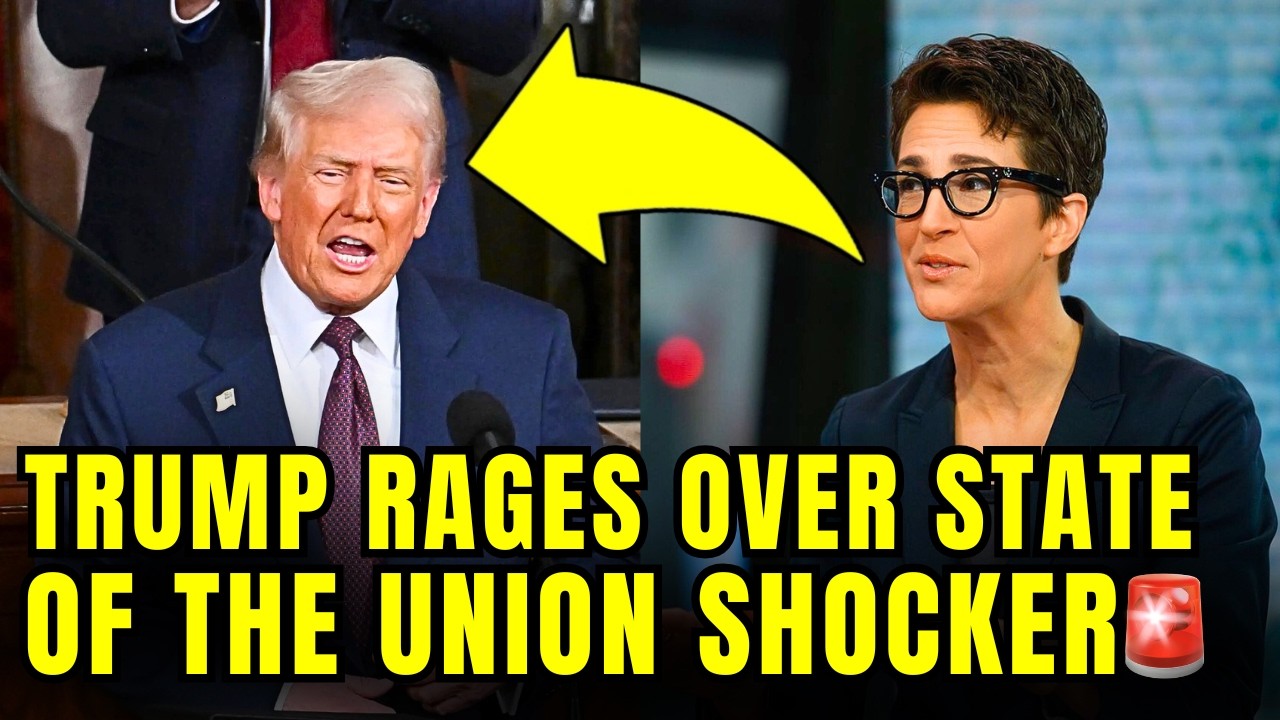
As Washington prepared for the annual State of the Union address, an unusual political conversation began circulating across media outlets and online discussions: who would be chosen as the “designated survivor.” The topic gained renewed attention after political commentator Rachel Maddow highlighted the tradition during a recent broadcast, offering viewers an explanation of the long-standing but often overlooked protocol.
The concept of the designated survivor is not new. It has been part of U.S. government security planning for decades. During major events such as the State of the Union, when the president, vice president, members of Congress, Supreme Court justices, military leaders, and cabinet officials gather in the same location, one cabinet member is deliberately kept away from the event. The purpose is simple but serious: if an unexpected catastrophe were to occur at the gathering, that individual would be responsible for helping re-establish leadership and continuity in the federal government.
Although the practice is rooted in Cold War–era planning, it remains a standard precaution in modern times. Maddow described the idea as somewhat unusual and even unsettling, noting that the scenario behind it assumes a worst-case disaster affecting the entire leadership structure at once. Still, she emphasized that the policy reflects how governments prepare for even the most unlikely emergencies.
Why the Choice Draws Curiosity
According to Maddow’s discussion, the identity of the designated survivor often becomes a point of curiosity among political observers. While the role carries enormous theoretical responsibility, the person selected is typically someone whose department is less central to the specific event or whose absence would not disrupt the proceedings.
That pattern has led to speculation every year about which cabinet member might be selected. Sometimes the decision attracts little attention, but in other years it becomes a topic of conversation in political media, particularly when observers begin evaluating the potential candidates.
Maddow pointed out that the decision can involve practical considerations rather than symbolic ones. In many cases, the designated survivor is chosen from among officials who are not expected to play a prominent role during the address itself. As a result, the selection can appear surprisingly low-profile despite the enormous hypothetical responsibility attached to the position.
Political Context Ahead of the Speech
The conversation about the designated survivor comes at a time when political attention is already focused on the State of the Union itself. The address traditionally serves as a major moment for a president to outline policy goals, highlight achievements, and shape the political narrative moving forward.
In the lead-up to the speech, analysts and commentators have been closely watching public opinion data and political dynamics surrounding the administration. Polling trends and public reaction often shape expectations for the address, influencing how both supporters and critics interpret the message delivered from the House chamber.
During the broadcast segment referenced in the discussion, polling analysis suggested that public sentiment among independent voters could play a key role in the broader political climate surrounding the event. Political commentators frequently examine these numbers to assess how a president’s message might resonate beyond their core base of support.
A Moment of Political Theater
Beyond policy and polling, the State of the Union has long been viewed as a moment of political theater. The event combines constitutional tradition with carefully choreographed messaging, bringing together leaders from across the federal government in a highly visible setting. For media figures and political analysts, it provides an opportunity to discuss not only the substance of the speech but also the symbolism surrounding it.
Maddow’s commentary reflected that broader perspective, highlighting how even lesser-known traditions like the designated survivor contribute to the unique character of the event. While the idea behind the role may seem dramatic, it underscores the government’s commitment to maintaining continuity under any circumstances.
Looking Ahead
As anticipation builds for the State of the Union, the identity of the designated survivor will likely remain a small but intriguing detail within a much larger political moment. The address itself will dominate headlines, focusing attention on policy priorities, political strategy, and the administration’s vision for the coming year.
Yet discussions like Maddow’s remind audiences that behind the pageantry and speeches lies a complex system designed to safeguard government stability. Even in a ceremony known for its symbolism and political messaging, practical contingency planning remains quietly in place.
In the end, the tradition of the designated survivor serves as a reminder that national leadership events involve more than public appearances. They also reflect decades of institutional planning aimed at ensuring that the machinery of government continues to function—no matter what happens.






