The Forensic Trap: How Ted Lieu’s ‘Military Precision’ Exposed the Structural Contradictions in Kash Patel’s Epstein Testimony
WASHINGTON — In the high-stakes theater of the House Judiciary Committee, where grandstanding often masks a lack of evidence, a recent 30-minute exchange has redefined the 2026 oversight cycle. Representative Ted Lieu, a former military prosecutor and JAG officer, moved beyond the rhythmic sparring of Washington to deliver what observers are calling a “logical demolition” of FBI Director Kash Patel’s testimony regarding the Jeffrey Epstein archives.

The confrontation, which has since dominated legal circles and digital platforms, centered on a fundamental rupture between the Bureau’s public narrative and its documented internal activity. For those seeking transparency, Lieu’s interrogation proved that the truth rarely emerges through a single dramatic confession, but through the patient accumulation of contradictions that eventually collapse under their own weight.
The ‘Summary’ Contradiction
The interrogation began not with an attack, but with a seemingly procedural inquiry. Lieu asked Patel to explain how investigative files move through the FBI’s chain of command. Patel confirmed that the most “important investigations” reach the Director’s desk for personal review.
However, the trap was sprung when Lieu connected this standard to the Epstein case. Patel admitted that while the case was of “substantial national importance,” he had not personally reviewed the full investigative file, but had instead relied on “summaries” prepared by subordinates.
“If any case qualified as important, this one certainly did,” Lieu noted, highlighting the inherent contradiction. If the system dictates that the Director reviews the most critical files, why was the most notorious trafficking case in modern history relegated to a “highlights package”?
The ‘47 Names’ Revelation
The most explosive element of the exchange involved the introduction of a previously undisclosed internal FBI assessment from January 2025. Lieu referenced a draft report that categorized individuals referenced in the files under the heading “high-profile names.”
The number attached to that category was 47.
According to the testimony, these 47 individuals spanned politics, business, media, and academia. While Patel emphasized that a “draft report” is preliminary and does not establish criminal guilt, the existence of such a category contradicts the often-repeated official line that investigators found “nothing of substance” during their review.
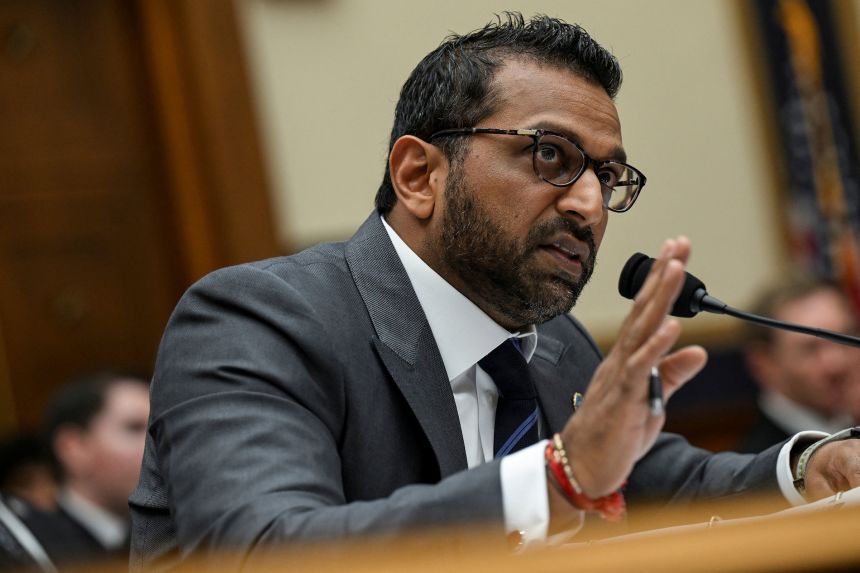
“The existence of such a category suggests that the investigative material contained references to people whose identities carried weight far beyond the average criminal case,” Lieu argued. The question shifted from whether names existed to why they disappeared from the final narrative presented to Congress.
The Resource Disparity
Lieu further highlighted the “operational skepticism” surrounding the probe by comparing resource allocations. He noted that while the FBI assigned more than 4,000 agents to the January 6th investigations, the re-examination of the Epstein network—involving hundreds of victims—was reportedly handled by a team of roughly 10 people.
Patel defended the small team as a matter of “investigative specificity,” but the disparity in scale suggested to critics that the Bureau’s commitment was not proportional to the magnitude of the crimes or the public demand for accountability.
The ‘Never’ Threshold
The hearing reached its moral crescendo when the conversation turned to the ultimate release of the files. For years, the public has been promised transparency. However, when asked if the full, unredacted record would ever be shared, Patel admitted that certain materials would “never” be released to the public.
“When a government institution tells the public that part of the truth will remain sealed forever,” Lieu countered, “the obvious question is who those barriers protect.”
Institutional Fallout
The “Lieu Interrogation” did not result in an immediate indictment, but it has created a permanent record of institutional evasion. By securing an admission that 47 high-profile names were flagged and then “managed” out of the final public report, Lieu has provided a roadmap for future subpoenas.
As the 2026 oversight cycle continues, the transcript of this hearing stands as a reminder that “justice is not measured solely by whether a case file is closed.” It is measured by whether the system demonstrates a willingness to pursue the truth, regardless of the “proximity to power” of those named in the files. The 47 names remain buried, but the logic used to hide them has never been more visible.






