Late-Night Satire, White House Spin, and a Presidency Under Pressure

WASHINGTON — In the modern American presidency, few roles are as exposed, as unforgiving, or as revealing as that of White House press secretary. Standing between power and the public, the press secretary is both messenger and shield, tasked with defending policy, explaining crisis, and absorbing criticism that might otherwise land directly on the president.
For Caroline Leavitt, the youngest press secretary in U.S. history, that pressure has intensified sharply in recent weeks, as congressional hearings, media scrutiny, and late-night satire converged into a broader debate about truth, power, and political performance in President Trump’s second term.
A White House Framing an Economic Comeback
The administration’s core argument remains economic. Senior officials point repeatedly to falling inflation, declining gasoline prices, and tax changes they say will increase take-home pay. Inflation, which peaked during the Biden administration amid global supply disruptions, has eased significantly, according to government data, now hovering closer to the Federal Reserve’s target range.
The White House credits deregulation, expanded domestic energy production, and aggressive messaging around “affordability” for the shift. In briefings, Leavitt has emphasized wage growth, lower fuel prices, and projected increases in tax refunds for 2026, arguing that the administration is delivering on campaign promises.
Democrats dispute both the causes and the framing, arguing that inflation’s decline reflects global trends and Federal Reserve policy rather than presidential action. But even critics acknowledge that economic sentiment, particularly around gas prices, has improved.
Capitol Hill: Hearings Turn Combative
While the White House touts progress, congressional hearings have become increasingly confrontational. Republicans convened sessions intended to highlight immigration enforcement and border security achievements. Instead, Democrats used their time to spotlight civil liberties concerns, deaths involving law enforcement, and the human consequences of aggressive immigration policy.
Representative Jasmine Crockett of Texas delivered one of the most widely circulated moments, chastising colleagues for what she described as selective outrage and moral inconsistency. Her remarks, clipped and shared millions of times across social media platforms, underscored how hearings now function as much for online audiences as for legislative oversight.
Such exchanges illustrate a broader shift: Congress as performance space, where viral moments often eclipse policy outcomes.
Late-Night Television Enters the Arena
Into this environment stepped Jimmy Kimmel, whose late-night monologues have become a focal point of administration frustration. Kimmel has devoted extended segments to fact-checking White House statements, replaying briefing footage, and mocking what he portrays as contradictions between rhetoric and reality.
His commentary on Leavitt has been especially pointed — not merely critiquing policy claims, but questioning the culture of loyalty and patronage within the Trump administration. One line, referencing her marriage to an older real-estate developer who previously supported her congressional campaign, ricocheted across media ecosystems, generating both backlash and applause.
Supporters of the administration denounced the remarks as personal and inappropriate. Critics countered that Kimmel was highlighting perceived hypocrisy in an administration that emphasizes “traditional values” while rewarding loyalty over experience.
The FCC Controversy
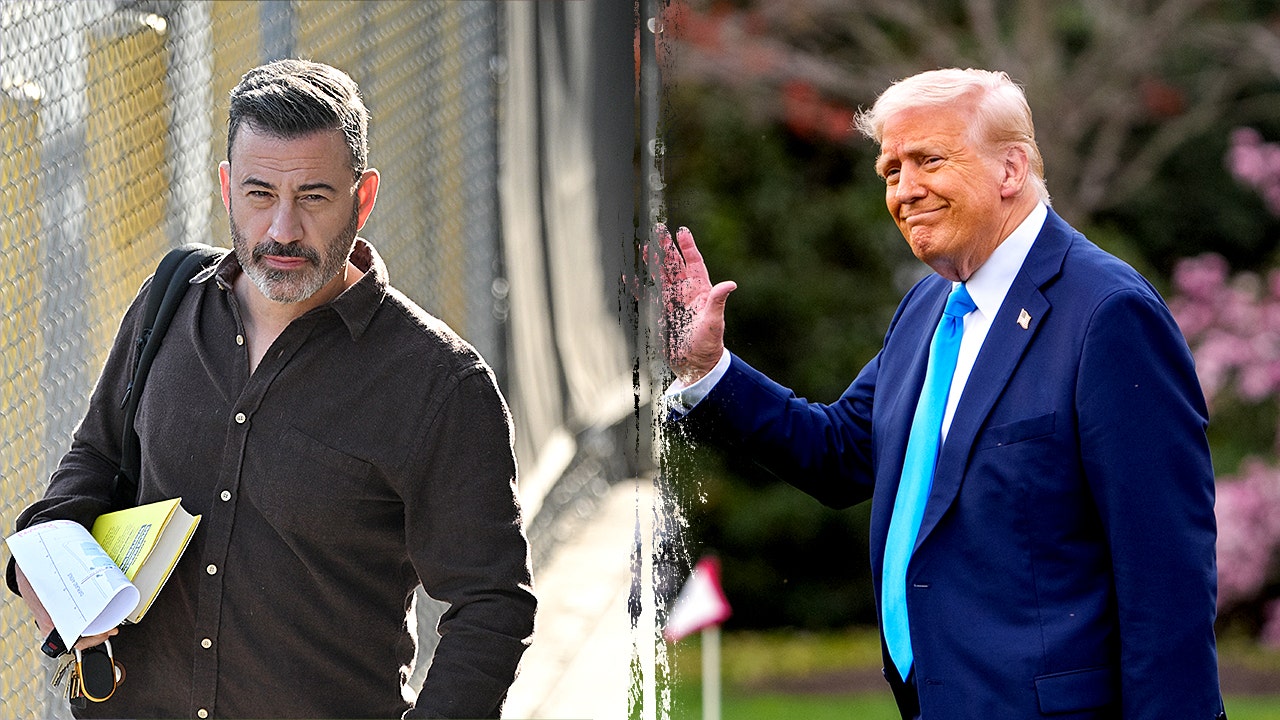
Tensions escalated further when ABC temporarily suspended Jimmy Kimmel Live! following pressure from conservative activists and public statements by Federal Communications Commission Chairman Brendan Carr, who criticized the show’s rhetoric and raised questions about broadcast standards.
The White House denied involvement, with Leavitt stating that the decision was made solely by network executives. Media watchdog groups, however, pointed to Carr’s public remarks as an implicit threat, warning that government pressure on entertainment programming raised First Amendment concerns.
The episode revived long-standing anxieties about political influence over media — particularly in an era when regulatory agencies are led by presidential appointees and public criticism can carry institutional consequences.
Gender, Power, and Public Scrutiny
Leavitt’s visibility has also reopened debates about how female political figures are scrutinized. Supporters argue that criticism of her personal life reflects a double standard rarely applied to male officials. Critics respond that her role as chief spokesperson, not her gender, places her squarely in the public arena.
Complicating matters are comments attributed to President Trump himself. At a recent press availability, he reportedly described Leavitt’s appearance and speaking style in ways that drew uncomfortable reactions even among allies. The remarks, replayed on cable news and late-night television, reinforced concerns about workplace culture within the administration.
A Broader Pattern of Narrative Control
What emerges from these episodes is a presidency deeply invested in narrative dominance. From economic statistics to cultural skirmishes, the administration treats messaging not as a supplement to governance, but as governance itself.
Late-night comedians, social media influencers, and congressional sound bites are no longer peripheral — they are central battlegrounds. The White House briefing room, once the domain of institutional press, now accommodates podcasters and online personalities, reflecting a media ecosystem fractured into ideological niches.
For the administration, this fragmentation is both risk and opportunity. Supporters hear affirmation; critics hear provocation. Neutral ground is increasingly rare.
The Stakes Ahead
As the election cycle accelerates, the role of figures like Leavitt will only grow more consequential. She is not merely defending policies; she is defending a worldview in which loyalty, confrontation, and spectacle are strategic assets.
Whether that approach ultimately persuades undecided voters or merely hardens existing divisions remains an open question. What is clear is that the lines between governance, entertainment, and ideological combat have blurred to a degree unseen in previous administrations.
In that sense, the conflict between the Trump White House and its critics — from Capitol Hill to late-night television — is less about any single spokesperson or comedian, and more about the future shape of American political discourse itself.






