Prince William’s Stark Warning on Political Turbulence Sparks Global Debate

In a moment that quickly captured international attention, Prince William delivered a rare and unusually direct message during a public forum, warning that political instability and institutional breakdown can create conditions where democratic systems are placed under extraordinary strain. His remarks, delivered calmly but with unmistakable gravity, have since fueled widespread discussion across political and media circles.
The event itself had been expected to focus on global cooperation and governance challenges. Instead, it took a striking turn when Prince William addressed what he described as a growing pattern of political polarization and erosion of public trust in institutions.
“Don’t you see what’s coming, or are you just afraid to say it out loud?” he asked the audience, his voice measured but firm.
The room reportedly fell silent as the Prince continued, speaking without dramatic gestures or raised volume. Observers noted that the tone of the speech differed from the typically cautious public remarks associated with senior members of the British royal family.
A Rarely Direct Royal Intervention

Members of the British royal family traditionally avoid direct commentary on contemporary political disputes. However, Prince William framed his remarks not as partisan criticism but as a broader warning about the fragility of democratic systems when accountability weakens.
According to those present, he described a pattern in which political crises can escalate when institutions lose credibility and responsibility is abandoned.
“When responsibility disappears and institutions stop protecting the truth, that’s when dangerous actors take advantage,” William said, emphasizing that chaos in politics is often not random but the result of deliberate actions or failures within leadership structures.
While he did not outline specific policies, his comments were widely interpreted as reflecting concern about global democratic stability, a topic that has increasingly appeared in speeches by international leaders, academics, and policy experts.
The Debate Over Crisis Politics
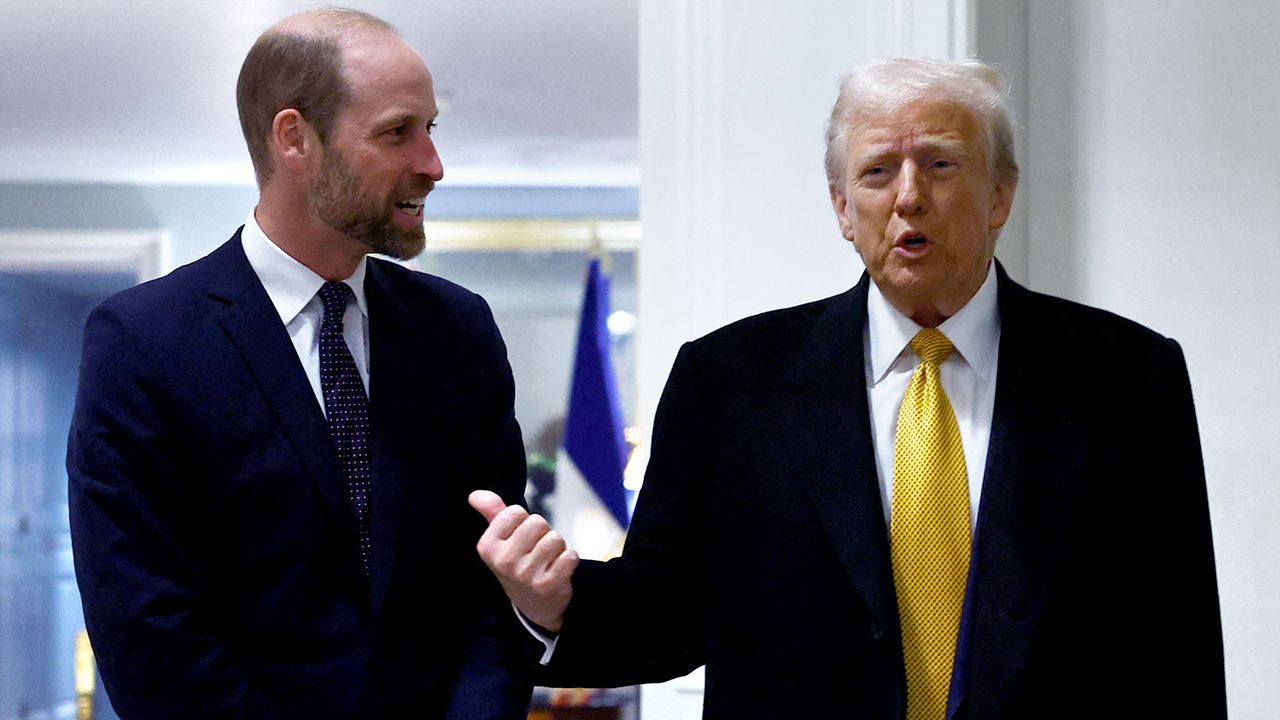
Political analysts note that warnings about “crisis politics” have become more common in recent years. Around the world, scholars studying democratic resilience have pointed to moments when emergency powers or political turmoil create opportunities for leaders to consolidate authority.
Some observers linked Prince William’s comments to ongoing debates surrounding former U.S. president Donald Trump and the broader political climate in the United States. Trump has remained one of the most polarizing figures in modern American politics, and discussions about the strength of democratic institutions have frequently surfaced during and after his presidency.
However, William did not mention specific political campaigns or electoral events in detail, focusing instead on the broader consequences of institutional breakdown.
“He is not trying to win an election. He is trying to erase it,” the Prince reportedly said during the speech, a line that quickly circulated on social media and in international news coverage.
The Weight of Democratic Norms
The Prince also referenced the potential dangers of normalizing extraordinary political measures.
Discussions about emergency powers, martial law, and electoral disruption have occasionally appeared in political commentary during periods of intense national conflict. Experts often stress that such scenarios remain highly unlikely in stable democracies but warn that institutional norms must remain strong to prevent political abuse.
William’s remarks appeared to echo that perspective, suggesting that complacency can allow democratic safeguards to weaken over time.
“People often believe certain things are impossible until they suddenly happen,” he said, according to attendees.
Reactions Across the Political Spectrum
Reactions to the speech have been mixed. Some commentators praised the Prince for speaking candidly about democratic risks at a time when public trust in institutions is under pressure globally.
Supporters argue that figures with international visibility can play an important role in drawing attention to threats facing democratic governance.
Critics, however, questioned whether a senior royal should speak so openly about politically sensitive matters, particularly when they involve foreign political figures or contentious policy debates.
The British monarchy’s traditional stance of political neutrality has long been considered central to its constitutional role. Because of that, even broadly worded comments about political stability can generate significant scrutiny.
A Message Beyond Politics
Despite the controversy, many analysts believe the broader message of the speech extends beyond any single country or political figure.
Prince William appeared to frame the issue as one of civic responsibility and institutional integrity—two themes that have become central to modern discussions about democracy worldwide.
As global political tensions continue to shape public debate, the Prince’s remarks have become part of a larger conversation about how societies protect democratic systems during periods of uncertainty.
Whether interpreted as a warning, a philosophical reflection, or a call for vigilance, the speech has undeniably sparked renewed discussion about the resilience of democratic institutions in the modern era.
And as the hall reportedly fell silent following his final remarks, the moment underscored a question that political observers around the world continue to grapple with: how strong are the safeguards that protect democracy when the pressures on them begin to grow.






