🚨 SHOCKING: Military Generals CAN’T HOLD IT IN After Trump’s NEW PLAN Is Revealed — sources say reactions behind closed doors were not what the White House expected 😳
WASHINGTON — Remarks by Donald Trump suggesting the United States could seize Greenland “one way or another” have prompted renewed concern among U.S. allies, resistance from senior military officials, and fresh questions about the former president’s approach to international law, NATO, and American power.
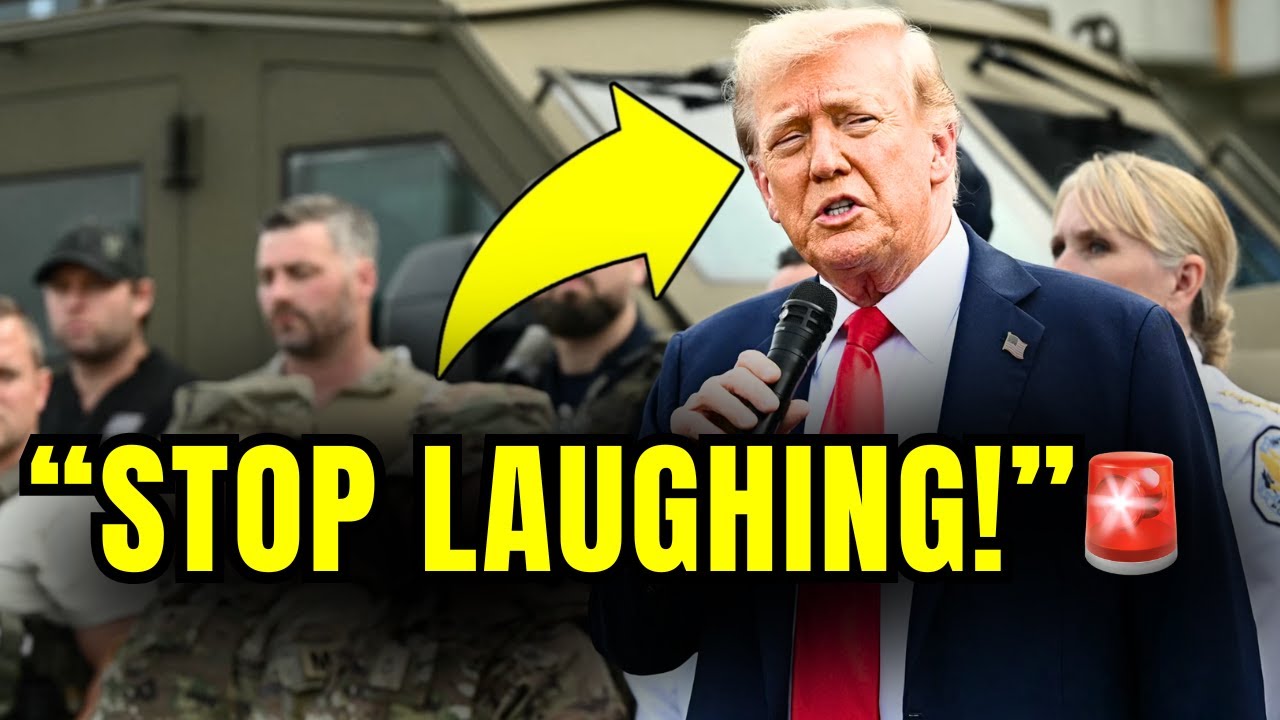
In recent public comments and interviews, Mr. Trump reiterated his long-standing interest in Greenland, an autonomous territory governed by Denmark, saying the United States would pursue control of the island “whether they like it or not.” His remarks were echoed by close advisers, including Stephen Miller, who questioned Denmark’s legal claim over the territory and described U.S. dominance within the NATO alliance as justification for a more aggressive posture.
Greenland, the world’s largest island, holds significant strategic value. Its location in the Arctic makes it critical to missile defense, shipping routes, and emerging competition over mineral resources. While the United States already maintains a military presence there, Danish officials and Greenlandic leaders have repeatedly rejected any notion of annexation, emphasizing that Greenlanders have the right to determine their own future.
Residents of the island have expressed unease in response to the rhetoric. In televised interviews, Greenlandic citizens described growing anxiety and a sense that their autonomy was being openly dismissed by powerful foreign leaders. “I don’t sleep very well,” one resident said, citing fear that Greenland’s wishes would be ignored.
The remarks have also raised alarm within NATO. Mr. Trump has repeatedly framed alliance commitments as conditional, suggesting that the United States might refuse to defend allies who fail to meet defense spending targets. In one widely circulated clip, he recalled telling a NATO leader that he would not protect a delinquent member state and would instead “encourage” Russia to act as it pleased.
Those comments, critics say, undermine the core principle of collective defense that defines NATO. They have also intensified concerns that Mr. Trump’s approach aligns, intentionally or not, with the strategic interests of Vladimir Putin, particularly as the war in Ukraine continues.
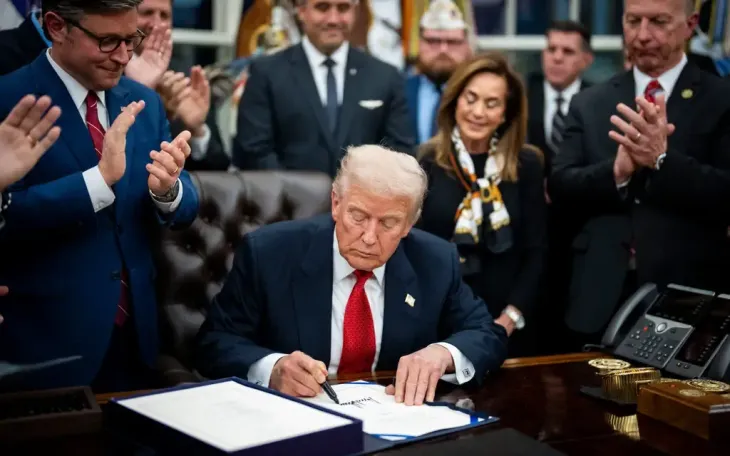
Behind the scenes, senior U.S. military officials have reportedly pushed back. According to reporting by the Daily Mail, Mr. Trump instructed elements of the Joint Special Operations Command to draft contingency plans for a potential invasion of Greenland. Current and former defense officials, speaking anonymously, said the proposal was viewed as both illegal and lacking any conceivable support from Congress.
“The generals think the plan is crazy and illegal,” one diplomatic source told the newspaper, adding that military leaders were attempting to redirect Mr. Trump’s attention elsewhere. Another source reportedly compared managing the proposal to “dealing with a five-year-old.”
Danish leaders have responded sharply. Prime Minister Mette Frederiksen warned that any U.S. military action against Greenland would effectively end the NATO alliance. Defense analysts agree that such an act would be unprecedented: an attack by one NATO member against another over sovereign territory.
Some diplomats have speculated that provoking such a rupture may itself be the objective. A diplomatic cable cited in the British report suggested that occupying Greenland could force European nations to abandon NATO, achieving indirectly what Congress would never authorize directly: a U.S. withdrawal from the alliance.
Legal scholars note that any attempt to seize Greenland by force would violate international law, the United Nations Charter, and long-standing norms governing sovereignty and self-determination. “There is no plausible legal framework under which such an action could be justified,” said one former Pentagon legal adviser.
For many observers, the episode reflects a broader pattern in Mr. Trump’s worldview: a transactional approach to alliances, skepticism of multilateral institutions, and a willingness to use military threats as leverage in diplomatic disputes. Critics argue that this posture risks destabilizing global order at a moment when multiple conflicts — from Ukraine to the Middle East — already strain international cooperation.
As the debate continues, officials in Washington, Copenhagen, and Nuuk have emphasized that Greenland is not for sale, annexation, or coercion. Whether the rhetoric represents serious policy intent or political posturing, analysts say, the reaction it has provoked underscores how fragile alliances can become when foundational norms are openly questioned.






