War Over Iran Enters a New Phase as U.S. and Israeli Strikes Target Military Infrastructure
WASHINGTON — A sweeping series of U.S. and Israeli airstrikes inside Iran has entered a new and more consequential phase, according to defense officials, shifting from attacks on active military assets to a broader campaign aimed at dismantling the country’s long-term missile production and command capabilities.
Over the past several days, American and Israeli aircraft have conducted hundreds of coordinated strikes across Iranian territory, including targets in and around Tehran. U.S. Central Command officials said the campaign has focused heavily on underground ballistic-missile infrastructure, radar installations and key military command facilities that form the backbone of Iran’s strategic deterrent.

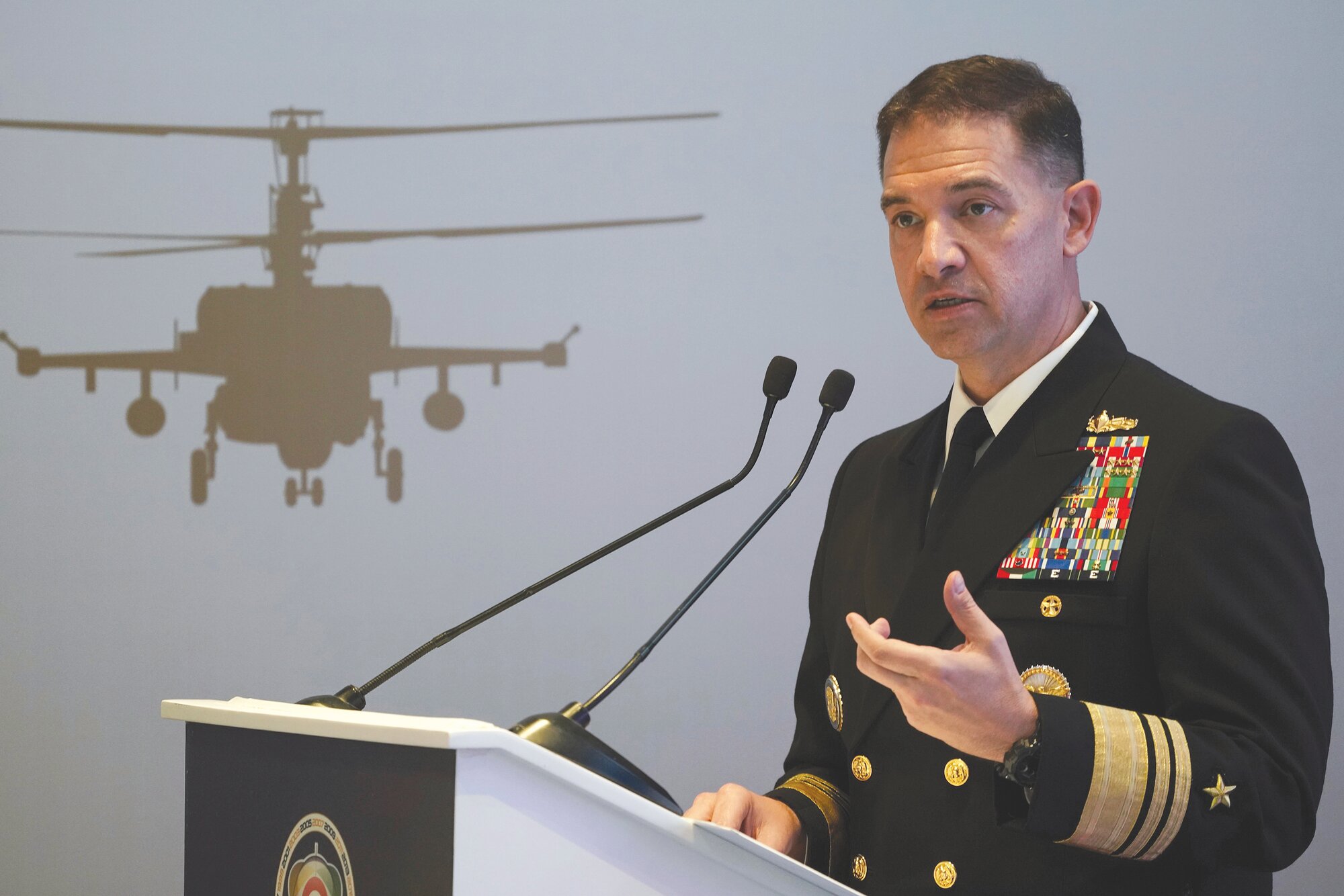
Senior military officials said the tempo of operations has intensified sharply. In a briefing with reporters, Adm. Brad Cooper, the commander overseeing U.S. operations in the region, said American bomber forces had struck nearly 200 targets across Iran within a 72-hour window. Many of those strikes, he said, were carried out by B-2 Spirit stealth bombers using heavy penetrator munitions designed to destroy hardened underground facilities.
“These weapons were built to reach targets that were deliberately buried deep underground,” Cooper said. “What we are doing now is not simply degrading existing capabilities but preventing them from being regenerated.”
The targets included underground missile launch complexes in mountainous terrain near Tehran where Iran had reportedly stored some of its most protected ballistic systems. Defense analysts say the destruction of those sites represents a significant blow to Iran’s remaining ability to launch long-range missiles.
The strikes have also expanded beyond missile launchers to include facilities tied to Iran’s military command and communications network. U.S. officials confirmed that a major Iranian space-operations center — responsible for relaying satellite data used for military coordination and reconnaissance — was destroyed in a recent strike.
The loss of that system, analysts say, could significantly impair Iran’s ability to monitor American and Israeli operations in the region.
“It’s a major disruption to their battlefield awareness,” said Michael Eisenstadt, a military analyst at the Washington Institute for Near East Policy. “Without reliable satellite and communications infrastructure, coordinating military responses becomes much more difficult.”
Israeli officials say their own air force has played a major role in the campaign. In a statement released earlier this week, the Israeli military said dozens of fighter jets participated in coordinated strikes against military installations in Tehran and other strategic locations.
Israeli commanders also confirmed that a fighter aircraft engaged and shot down an Iranian jet over the capital — an aerial encounter that defense experts say underscores the growing disparity between the two countries’ air capabilities.
Iran’s air force, built largely around aircraft purchased before the 1979 revolution, has struggled to maintain operational readiness amid decades of sanctions and limited access to spare parts.
At the same time, the destruction of large portions of Iran’s air-defense network has left significant gaps in its ability to challenge aircraft operating over its territory, according to Western intelligence assessments.
Still, the conflict is rapidly widening beyond a straightforward air campaign.
American intelligence officials say Russia has been providing Iranian commanders with satellite data and other intelligence that could help Tehran track U.S. military movements across the region. Several U.S. officials, speaking on condition of anonymity because of the sensitivity of the information, said the intelligence sharing appears to include surveillance of American naval vessels and air bases.
Those developments have raised alarm within the Pentagon, particularly after a drone attack earlier this week struck a U.S. military facility in Kuwait, killing several American service members.
While officials have not publicly linked the attack directly to Russian intelligence, some analysts believe Tehran’s ability to identify the target suggests outside assistance.
“This raises the possibility that the conflict is becoming part of a broader geopolitical confrontation,” said Seth Jones, a defense expert at the Center for Strategic and International Studies. “Once you have external powers supplying intelligence or material support, escalation becomes far more difficult to control.”
China is also closely watching the conflict, according to American intelligence assessments. Beijing, which relies heavily on energy imports from the Persian Gulf, has reportedly urged Iran to keep shipping routes open through the Strait of Hormuz, a vital artery for global oil markets.
At the same time, U.S. officials believe Chinese companies could eventually provide financial or technical assistance to help Iran rebuild parts of its missile infrastructure if the war drags on.
For now, however, the military balance appears to be shifting decisively in favor of the United States and Israel.
Pentagon officials say the campaign has significantly reduced Iran’s ability to launch missiles, operate naval forces or coordinate complex military operations. The next stage of the strategy, they say, will focus on dismantling the industrial networks that produce missile components, electronics and other weapons systems.
The objective, officials say, is not only to win the current confrontation but also to ensure that Iran cannot quickly rebuild the capabilities it has lost.
Whether that strategy succeeds — or whether the conflict expands further with the involvement of other powers — remains uncertain.
What is clear, military officials say, is that the war has entered a far more consequential stage, one that could shape the balance of power in the Middle East for years to come.






