**🚨 Green Groups Outraged, While Critics Warn the Push for Net Zero May Be Colliding with Economic Reality**
A fierce debate is raging across Europe and North America as environmental organizations launch a wave of protests against what they call “dangerous backsliding” on climate commitments, while economists, business leaders, and conservative politicians argue that the aggressive pursuit of net-zero emissions by 2050 is slamming headlong into harsh economic and practical limits. The clash has intensified in recent weeks, fueled by rising energy prices, industrial shutdowns, and growing public fatigue with the costs of the green transition.
At the heart of the outrage from green groups is a series of policy moves and corporate decisions that appear to dilute or delay ambitious decarbonization targets. In the European Union, the European Commission’s recent proposal to extend carbon-permit deadlines for heavy industry and relax some methane-emission rules for agriculture has been branded a “betrayal” by Greenpeace, Friends of the Earth, and Extinction Rebellion. Demonstrators blocked major highways in Brussels, Berlin, and Paris last week, chanting “No more excuses — act now!” and unfurling banners reading “Net Zero or No Future.”

In the United Kingdom, the Labour government’s decision to delay the ban on new gas boilers until 2035 and offer temporary exemptions for energy-intensive manufacturers has drawn sharp rebukes from the Climate Change Committee and youth activist Greta Thunberg, who accused ministers of “caving to fossil-fuel lobbying.” Similar anger has erupted in Canada, where Prime Minister Mark Carney’s administration approved the $318 million Northern Ontario Energy Bypass Project — a new natural-gas pipeline — despite warnings from Sierra Club Canada and 350.org that it “locks in fossil-fuel infrastructure for decades.”
Environmental leaders frame these developments as existential threats. “Every delay, every loophole, every new gas pipeline is measured in lives lost to heatwaves, floods, and wildfires,” said Jennifer Morgan, executive director of Greenpeace International, in a widely shared statement. “We cannot negotiate with physics. The science is clear: we must halve emissions by 2030 or face irreversible tipping points.”
Yet a growing chorus of critics — including prominent economists, energy experts, and center-right politicians — warns that the headlong rush toward net zero is colliding with economic reality in ways that could undermine public support and even set back climate progress. The International Energy Agency’s latest World Energy Outlook projects that global clean-energy investment must triple to $4 trillion annually by 2030 to meet Paris Agreement goals — a figure that dwarfs current spending and would require massive public subsidies at a time when many governments face ballooning deficits and high interest rates.
In the United States, the Biden-era Inflation Reduction Act’s $369 billion in green incentives has driven record investment in solar, wind, and batteries, but critics point out that manufacturing costs for renewables remain stubbornly high, supply chains are vulnerable to geopolitical shocks, and grid upgrades lag far behind deployment. Republican lawmakers and business groups argue that forcing utilities to retire coal and gas plants prematurely has contributed to regional power-price spikes and reliability concerns, as seen in Texas during recent winter storms and California’s rolling blackouts.
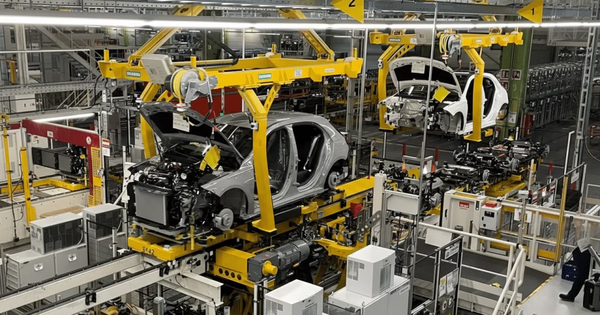
Across the Atlantic, the UK’s ambitious target of decarbonizing the power sector by 2035 has collided with skyrocketing electricity bills — among the highest in Europe — and the shuttering of domestic steel and cement plants unable to afford green-hydrogen retrofits. The British steel industry, once a global powerhouse, now employs fewer workers than it did a decade ago, with Tata Steel’s Port Talbot blast furnaces set for closure despite £500 million in government subsidies. “We’re not against net zero,” said a spokesperson for UK Steel, “but we cannot ask industries to bear costs that make them uncompetitive globally while China continues to build new coal plants at record pace.”
Canada offers another cautionary tale. While Carney’s government touts the bypass project as a bridge to renewables, critics like the Fraser Institute argue that expanding gas infrastructure entrenches fossil-fuel dependence rather than phasing it out. Meanwhile, Alberta’s oil sands producers face mounting carbon taxes and export restrictions, prompting warnings that jobs and provincial revenues could collapse without viable alternatives in place.
The economic critique centers on three core concerns: affordability, reliability, and global equity. Households in Germany, the UK, and parts of the U.S. now spend a larger share of income on energy than they did a decade ago, fueling populist backlash. Grid operators warn that intermittent renewables require massive backup capacity — often gas peakers or batteries that remain expensive — to prevent blackouts. And developing nations, led by India and Brazil, continue to insist that rich countries must deliver on promised $100 billion annual climate finance before expecting them to sacrifice growth for emissions cuts.
Public opinion is shifting. Polls in the UK show net-zero support dropping from 80% in 2021 to around 55% today when costs are mentioned. In the U.S., a Pew survey found 41% of Americans believe climate policies are hurting the economy more than helping. Even some former green advocates now call for a more pragmatic approach: prioritizing adaptation, nuclear revival, carbon capture, and international cooperation over unilateral targets that risk deindustrialization.
Green groups counter that the real economic disaster would be unchecked climate change — trillions in damages from extreme weather, agricultural collapse, and mass migration. They accuse critics of “fossil-fuel talking points” and insist that the transition, while painful in the short term, will create millions of jobs in clean tech, efficiency, and renewables.
As protests continue and governments grapple with balancing ambition against feasibility, the net-zero debate has entered a pivotal phase. The question is no longer whether the world needs to decarbonize — the science is settled — but how fast, at what cost, and who pays the price. If the collision between climate goals and economic reality is not carefully managed, the backlash could derail progress for years to come.