Selective Justice? How Eric Swalwell Used Chilling Death Threat Recordings to Confront Pam Bondi’s DOJ
WASHINGTON — In the wood-paneled chambers of a House oversight hearing, where bureaucratic language often serves as a shield, Representative Eric Swalwell (D-CA) delivered a masterclass in forensic interrogation this week. Using a series of verified recordings and DOJ declination memos, the California Democrat moved beyond the rhythmic sparring of Washington to confront Attorney General Pam Bondi with a timeline of threats that have fundamentally shifted the narrative of “government weaponization.”

The confrontation, which has since dominated legal and political circles, centered on a “binary contradiction” in how the Department of Justice handles violent intimidation.
The Anatomy of a Threat: ‘Hunt Him Down’
Representative Swalwell began the interrogation not with a policy question, but with the transcripts of his own voicemail inbox. He read back the words of an individual who called his district office in June 2025, promising to “hunt him down” and toss him over the Golden Gate Bridge.
“Donald Trump’s Department of Justice in the Northern District of California declined to prosecute,” Swalwell stated, his voice carrying the calm weight of a legal brief. He followed this with a May 2025 Twitter interaction from a different individual who stated plainly, “Now I’m going to kill you.” Again, the DOJ in the Southern District of Texas declined to prosecute.
The strategy was surgical. By establishing that the threats were specific, credible, and directed at a sitting member of Congress, Swalwell bypassed the standard defense of “limited resources” or “evidentiary thresholds.”
The ‘Pew Pew’ Recordings and the Health Defense
The turning point of the hearing occurred when Swalwell introduced messages received between May and December 2025, which included simulated gunfire sounds—”Pew, pew”—and threats to shoot his wife and children in the head.
“The Department of Justice has not charged this individual,” Swalwell noted, “citing that he is a prolific caller and has health conditions.” He then produced his own investigative findings showing the caller claimed he would “employ others” to carry out the violence.
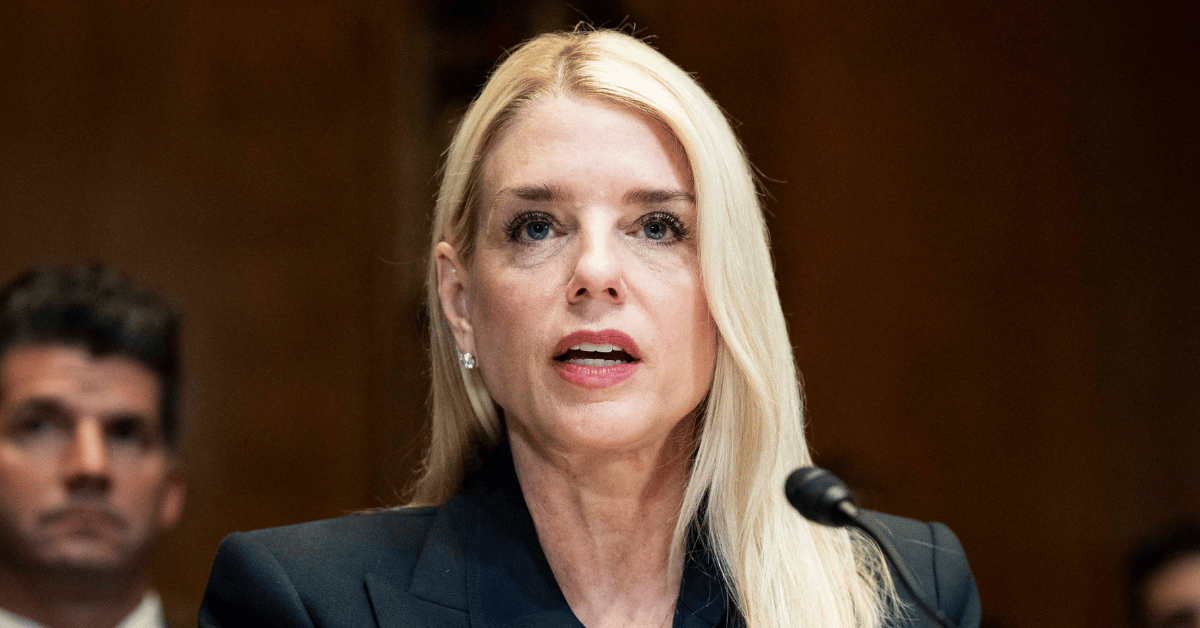
Analysts noted that the most damaging aspect of the exchange was the psychological framing. Swalwell argued that while he is “in the arena,” his children are not, and the DOJ’s refusal to investigate these threats stands in stark contrast to the Department’s aggressive pursuit of the President’s “enemies list.”
The Epstein and Retaliation Pivot
The interrogation further revealed a massive discrepancy in the Bureau’s transparency regarding the Jeffrey Epstein files. Swalwell pressed Bondi on why FBI Director Kash Patel claimed not to know how many times the President’s name appeared in the files, while Bondi herself acknowledged the frequency was significant.
“Is it a thousand times? 500? 100?” Swalwell asked. The silence and subsequent deflections from the witness table were described by observers as “structurally devastating.” It reinforced Swalwell’s broader point: that the DOJ has become a tool for “selective enforcement”—protecting the President’s reputation while ignoring the safety of his critics.
Institutional Fallout
The hearing concluded not with a resolution, but with the formal entry of the threat transcripts into the permanent congressional record. By presenting a documented trail of violent intimidation that the DOJ refused to prosecute, Swalwell has provided a roadmap for potential future inquiries into the politicization of the Justice Department.
As the 2026 oversight cycle continues, the “Pew Pew” exchange remains the defining artifact of the debate over judicial integrity. In the halls of Washington, where policy is often debated in the abstract, the presence of a witness’s own family’s safety on the line has proved to be the loudest statement of all. Swalwell’s message was clear: once the DOJ begins choosing which lives are worth protecting based on political affiliation, the rule of law has already been surrendered.






