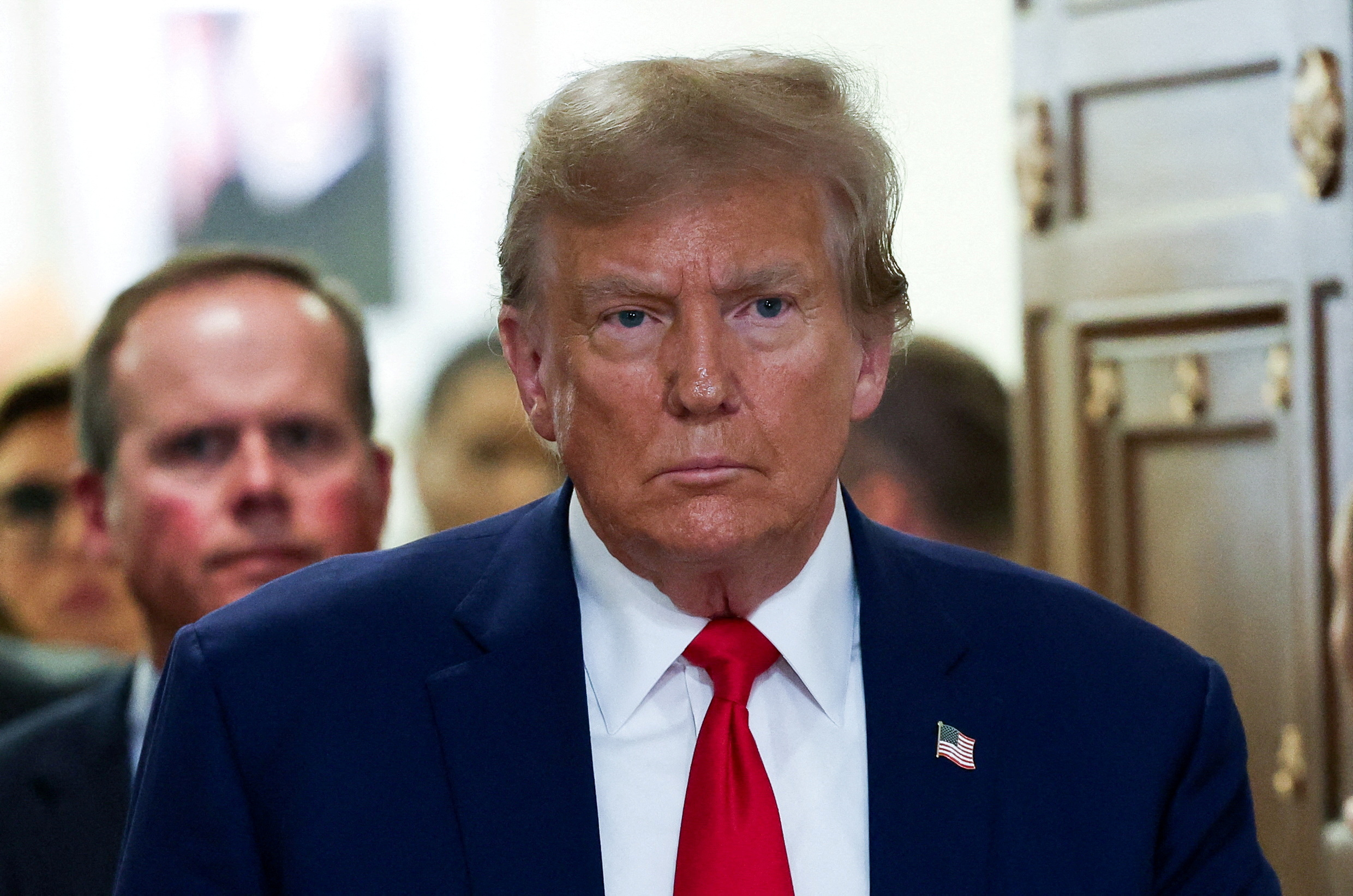
A dramatic post circulating across social media claims that late-night host Stephen Colbert delivered an unscheduled “3 a.m. emergency monologue” after allegedly receiving a threatening message from former U.S. president Donald Trump.
The viral narrative describes an unusual broadcast interruption, a silent studio, and a moment in which Colbert supposedly read a direct message live on air warning him to “drop this story.”

According to the widely shared version of events, the broadcast took place shortly after 3:00 a.m. in Washington, where Colbert reportedly appeared on set without a jacket, tie, or teleprompter, holding his phone as if the message had just arrived moments earlier.
The post claims that he opened the broadcast immediately with a warning rather than an explanation, telling viewers that he had received a direct message from Trump’s verified account at 1:51 a.m.
In the dramatic description circulating online, Colbert pauses before reading the message aloud slowly to the audience, emphasizing every word in a moment that supporters of the story say transformed a routine overnight broadcast into a stunning confrontation.
The message described in the viral post reads like a cinematic threat: a short sentence telling the host to stop pursuing a story before he “crosses a line.”
:max_bytes(150000):strip_icc():focal(742x313:744x315)/stephen-colbert-late-show-012726-2-e8a9da783b284008993571c9d01286bf.jpg)
Following the alleged reading of the message, the narrative claims the studio fell silent while Colbert calmly framed the situation as an example of political pressure directed at journalism.
He reportedly described the message not as criticism but as intimidation, suggesting that the warning was connected to an ongoing investigation involving financial disclosures, donor communications, and unexplained phone calls.
The post then describes the host telling viewers that the message was not the first attempt to discourage the reporting, referencing sources withdrawing cooperation and sudden silence from contacts who had previously communicated with journalists.
According to the viral story, Colbert emphasized that the latest message was different because it was explicit and direct.
The narrative claims he then addressed the audience with a declaration that any pressure affecting his work, the network, or the investigation should be understood as coming from outside journalism rather than within it.
He allegedly concluded the segment by placing his phone on the desk, refusing to read another incoming message that appeared on the screen moments later.
The dramatic ending described in the post includes a long silence from the control room followed by a final statement from the host declaring that journalism does not answer to power but instead questions it.
The story concludes by claiming that hashtags related to the confrontation began trending worldwide within minutes of the broadcast.
However, despite the vivid storytelling and widespread sharing of the narrative, there is currently no verified evidence that such a 3 a.m. emergency broadcast occurred on American television.
No major network has confirmed an overnight interruption of programming featuring Stephen Colbert delivering the alleged monologue, and no credible reporting has documented a direct message from Donald Trump matching the description in the viral post.
Another inconsistency within the story further suggests that the narrative may be fictionalized or heavily exaggerated for dramatic effect.
The post claims the broadcast occurred on the ABC network, yet Colbert’s late-night program is actually broadcast on CBS, making the scenario described in the viral post structurally unlikely.
These discrepancies highlight a broader pattern common in high-engagement political content online.
Viral narratives often blend recognizable public figures with dramatic storytelling techniques that resemble scenes from television dramas or films rather than documented real-world events.

The structure of the story follows a familiar formula used frequently in viral political posts.
First, a powerful political figure allegedly attempts to intimidate or silence a journalist or media personality.
Second, the targeted individual responds publicly in a moment of unexpected courage or composure.
Third, the confrontation ends with a symbolic declaration about the role of journalism in democracy.
This storytelling structure is effective because it taps into widely shared cultural beliefs about the relationship between media and political power.
Audiences often view journalists as figures who challenge authority by asking difficult questions, while political leaders are sometimes portrayed as attempting to control narratives or influence coverage.
When a viral post presents a dramatic clash between those roles, readers are immediately drawn into the story even before verifying whether the event actually occurred.
The use of precise timestamps, vivid studio details, and quotes presented as direct dialogue adds another layer of realism that encourages rapid sharing.
Readers may assume the story reflects a real broadcast moment simply because it includes such specific elements.
In reality, those details are often part of a narrative technique designed to make fictional or exaggerated events feel authentic.
The viral post’s final element — a call to read the “full story in the comments” — also reflects a common engagement strategy used in social media storytelling.
:max_bytes(150000):strip_icc():focal(749x0:751x2)/Stephen-Colbert-attends-the-WSJ-Magazine-2025-Innovator-Awards-122225-099d49ba548f4f519c8ee7623714bc7d.jpg)
By promising additional revelations elsewhere, the post encourages readers to interact with the content and continue spreading it across their networks.
This method can generate massive online traffic even when the original narrative lacks independent confirmation.
The widespread sharing of the Colbert story illustrates how modern political discussion often moves faster than traditional verification processes.
Within minutes of appearing online, dramatic claims can reach millions of readers who react emotionally before checking whether the event has been reported by credible news organizations.
Once the discussion begins, the story itself becomes less important than the reactions it produces.
Supporters of the narrative may celebrate the host’s supposed courage in confronting political pressure.
Critics may argue that the story represents exaggerated media dramatization.
Others may question whether any part of the story is factual at all.
In this way, the viral narrative becomes a catalyst for broader debates about journalism, political influence, and the role of media personalities in public life.
Ironically, the most revealing aspect of the entire episode may be the speed with which the story spread despite the absence of confirmation.
It demonstrates how strongly audiences respond to narratives about journalists confronting powerful political figures.
The idea of a lone broadcaster standing up to pressure resonates deeply with many readers because it reflects long-standing cultural ideals about freedom of the press.

At the same time, the popularity of such stories also reveals how easily dramatic storytelling can blur the line between verified reporting and viral entertainment.
In today’s digital media environment, the difference between those two categories is not always immediately clear to audiences encountering content in fast-moving social feeds.
That is why media literacy has become an essential skill for navigating modern information ecosystems.
Readers benefit from checking whether major news organizations confirm an event, whether the described broadcast matches known programming schedules, and whether the quotes attributed to public figures appear in reliable sources.
When those steps are taken in the case of the viral Colbert narrative, the conclusion becomes clear: the dramatic 3 a.m. emergency monologue described in the post does not appear to be supported by verified reporting.
Yet the story’s massive reach still reveals something important about the public conversation surrounding journalism and political power.
Even fictionalized or exaggerated narratives can spark meaningful debates about accountability, media independence, and the pressures faced by journalists.
In that sense, the viral post functions less as a news report and more as a reflection of the tensions people perceive between media institutions and political authority in modern society.
And as long as those tensions remain part of public life, stories portraying dramatic confrontations between journalists and powerful leaders will likely continue capturing attention across the internet.






