Trump’s Declassification Defense Crumbles After Kash Patel’s Immunity Testimony Shakes Mar-a-Lago Documents Narrative
A central pillar of Donald Trump’s defense in the Mar-a-Lago classified documents investigation appears to have quietly collapsed—far from television cameras and political rallies—inside a federal grand jury room in Washington, D.C.
For nearly two years, Trump allies repeatedly pointed to one key figure to validate the claim that the former president had legally declassified the documents he took from the White House: Kash Patel. A loyal Trump confidant and former national security official, Patel was widely portrayed by Trump’s supporters as the insider who could confirm that Trump had issued a sweeping “standing order” to declassify records before leaving office.
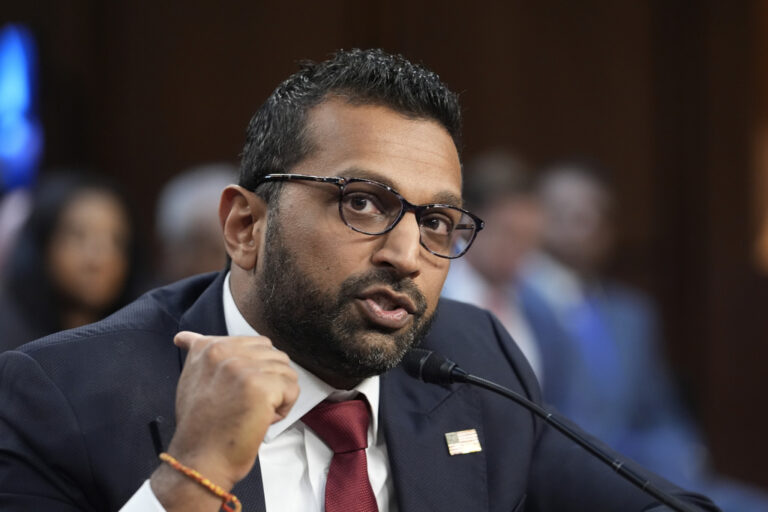
But that narrative faced a decisive test when the Justice Department secured a court order granting Patel immunity in exchange for his testimony before a federal grand jury investigating the handling of classified documents found at Mar-a-Lago.
According to reports from NBC News and The New York Times, federal prosecutors sought the immunity order after Patel invoked his Fifth Amendment right against self-incrimination when subpoenaed in October. A federal judge ultimately approved the immunity arrangement, forcing Patel to testify under oath while protecting him from prosecution based on that testimony.
The legal maneuver fundamentally changed the stakes.
Once granted immunity, Patel could no longer refuse to answer questions by invoking the Fifth Amendment. He was required to testify under oath—subject to potential perjury charges if he provided false statements. The result, legal analysts say, produced testimony that failed to support the sweeping declassification narrative that had circulated publicly for years.
According to individuals familiar with summaries of the testimony, Patel did not confirm the existence of the alleged “standing declassification order.” In addition, he reportedly acknowledged that formal declassification procedures were not followed for the documents taken to Trump’s Florida residence.
Those two points strike at the heart of Trump’s defense.
Under federal classification rules, declassification generally requires specific documentation, communication with originating agencies, and formal record-keeping. While a president holds broad authority over classification decisions, experts note that undocumented intentions or informal claims typically fail to meet the procedural standards required to legally change the status of classified material.
If Patel’s testimony indeed acknowledged that such procedures were not followed, it undermines the argument that the documents were legally declassified before leaving the White House.
Just as significant is the legal effect of Patel’s sworn testimony itself.
Statements given before a grand jury under immunity become part of the official investigative record and are locked in under penalty of perjury. That means Patel cannot later offer a dramatically different account in public interviews or future proceedings without risking criminal exposure.
Legal experts often describe this as a “perjury lock”—a mechanism prosecutors use to ensure key witnesses cannot shift their story once it has been formally recorded under oath.
In Patel’s case, that lock creates a potential dilemma for Trump’s legal strategy. If Patel were called to testify in any future court proceedings, his sworn grand jury statements could be used to challenge any conflicting claims about declassification.
Complicating matters further are questions surrounding Patel’s credibility.
A memo from the Senate Judiciary Committee reportedly described him as an unreliable witness and cited prior court findings that criticized earlier testimony related to the January 6 investigation as “illogical” and unsupported by evidence. Such findings could provide prosecutors with additional tools to challenge Patel’s reliability if he were ever called to testify in court.
Meanwhile, Patel—now serving as FBI director—has recently drawn attention for another controversial decision tied to the same investigation.
Multiple reports indicate that at least 10 FBI employees involved in the original Mar-a-Lago documents probe have been dismissed, including agents, supervisors, and support personnel. Sources familiar with the situation have described the firings as potential retaliation against officials who worked on the investigation into Trump’s handling of classified records.
The FBI has issued limited public comment beyond statements attributed to Patel, but the firings have triggered pushback from the FBI Agents Association, which warned that dismissing personnel connected to major investigations could weaken the bureau’s institutional independence.
Critics argue the move risks keeping the Mar-a-Lago controversy in the national spotlight rather than closing the chapter on it.
Every dismissal tied to the investigation, analysts say, reminds the public that the case once produced criminal charges against a former president—charges that Trump has consistently denied and labeled politically motivated.
For prosecutors, however, the key development may remain Patel’s compelled testimony.
By granting immunity, the Justice Department traded the possibility of prosecuting Patel for something potentially more valuable: sworn testimony from the very insider Trump allies once described as the definitive witness supporting the declassification claim.
If Patel’s testimony indeed contradicts that narrative, it represents a striking reversal of the role he once played.
The figure who was expected to serve as the defense’s strongest shield may now stand as one of the prosecution’s most consequential sources of evidence.
And because his account is permanently recorded under oath, it cannot easily be revised—no matter how the political narrative surrounding the Mar-a-Lago documents continues to evolve.






