Let us be clear about one thing from the outset.
The following analysis examines a hypothetical media scenario, not a confirmed historical event. But its power lies precisely in why such a moment would feel so destabilizing if it ever occurred.
Imagine a late-night studio where the familiar rhythms of American television suddenly stop working.
No jokes to reset the mood.
No laughter to drain tension.
No host rushing in to save the guest.
Only silence, documents, and unanswered questions.
In this hypothetical scenario, David Letterman would not merely be risking his credibility. He would be risking the one thing television is designed to protect at all costs: control of the room.
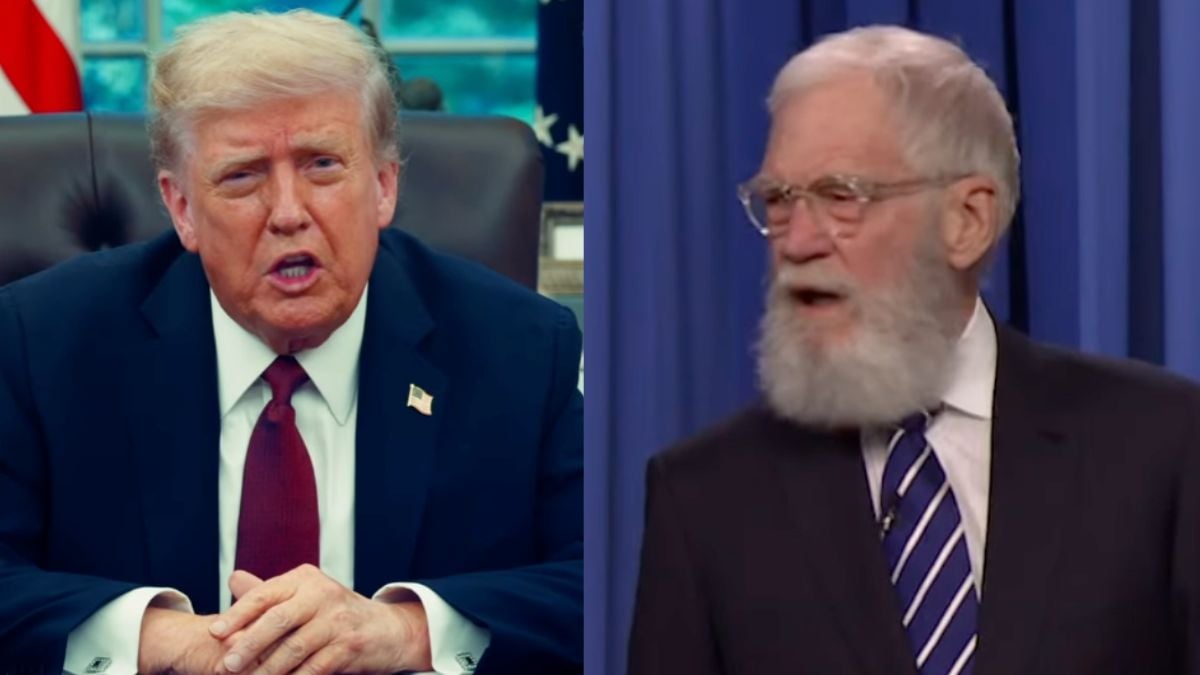
The Power Trump Usually Relies On
For decades, Donald Trump has dominated media appearances using a consistent strategy. When challenged, he increases volume. When cornered, he floods the space with insults, repetition, and motion. When facts approach danger, humor or outrage is deployed to dissolve them.
And it usually works.
Television thrives on rhythm. Hosts interrupt to keep pace. Audiences laugh to release discomfort. Producers cut away before silence becomes dangerous.
The guest survives not because questions lack force, but because the format rescues them.
Why Silence Would Change Everything
In our hypothetical scenario, the shift begins not with accusation, but with restraint.
Letterman does not argue.
He does not escalate.
He does not chase Trump’s insults.
He simply refuses to fill the space Trump is trying to dominate.
This matters because Trump’s power is performative. It requires reaction. It requires friction. When noise meets noise, volume wins.
But when noise meets stillness, something else happens.
The audience stops laughing out of habit and starts listening out of discomfort.
Silence becomes forensic.
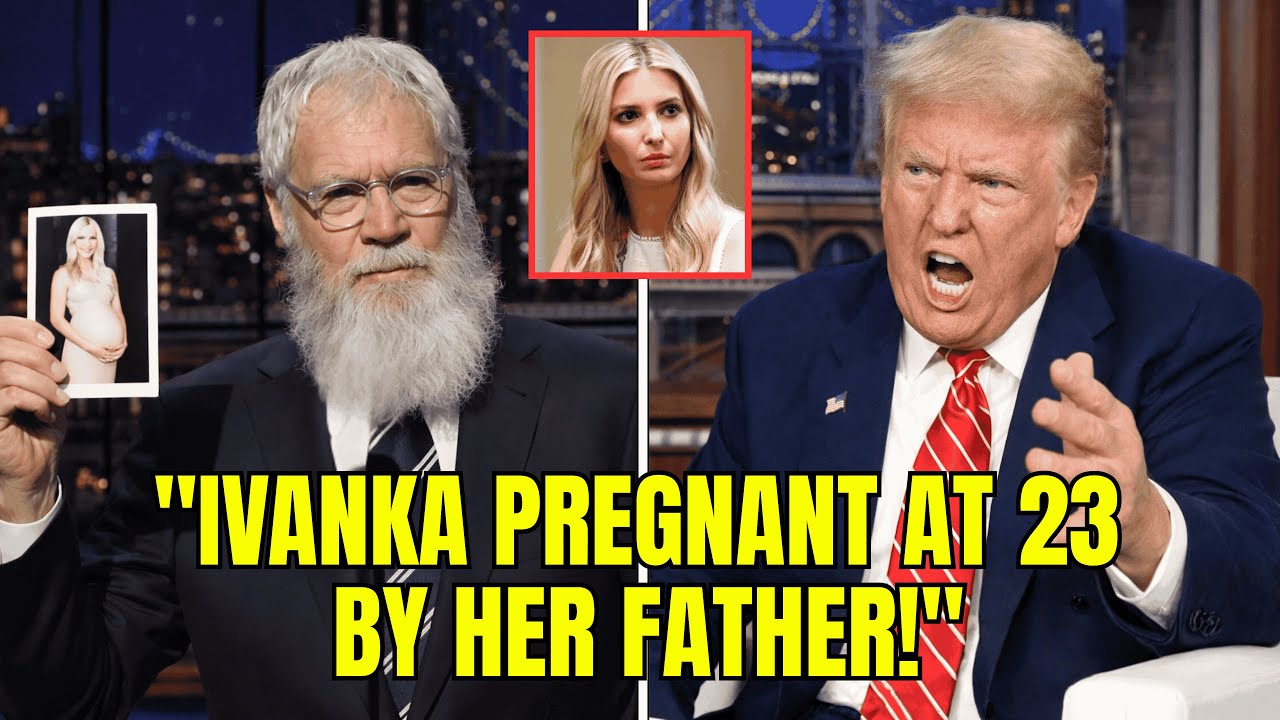
Documents Without Conclusions Are More Dangerous Than Accusations
In this scenario, Letterman introduces materials carefully—described not as proof, not as conclusions, but as documents. That distinction is crucial.
Proof demands belief.
Documents demand attention.
Dates. Gaps. Absences. Timelines.
No claim is made explicit. No narrative is spoon-fed. Instead, the audience is asked to notice patterns. This is precisely what makes the moment volatile.
Trump’s usual defenses—“fake,” “witch hunt,” “obsessed,” “lawsuit”—depend on framing the exchange as partisan or emotional. But documents do not argue. They sit.
And sitting evidence cannot be shouted down.
Why Volume Stops Working
As the hypothetical exchange continues, Trump escalates—louder voice, sharper gestures, faster repetition. Historically, this is where control returns.
But here, the audience does not follow.
They do not clap on cue.
They do not laugh on instinct.
They wait.
That waiting is the crack.
When volume increases but reaction decreases, power inverts. The speaker begins to sound frantic rather than dominant. The accusations start repeating. The rhythm collapses.
Trump is no longer shaping the room. He is reacting to it.
The Strategic Use of Questions Without Accusations
One of the most destabilizing elements in this hypothetical moment is the absence of direct allegations.
Instead of “Explain this,” the question becomes:
“Why then?”
“Why silence?”
“Why this gap?”
These questions do not corner. They transfer responsibility.
Trump is not asked to confess. He is asked to clarify. And when clarification does not arrive, the silence grows heavier than any claim.
This is the opposite of cable-news confrontation. It is not adversarial. It is procedural.
And procedure is Trump’s weakest terrain.
Why Threats Lose Their Effect
At this stage in the scenario, Trump turns to a familiar weapon: legal threats.
“I’ll sue.”
“This is illegal.”
“You’re crossing a line.”
These threats once ended conversations. But here, they arrive too late.
Threats work when the room believes the speaker still controls the frame. In this imagined exchange, control has already shifted to the timeline, the documents, and the unanswered gaps.
The threats sound loud—but structurally irrelevant.
The Moment Control Is Lost
What ultimately makes this hypothetical broadcast explosive is not revelation. It is irreversibility.
Nothing dramatic is announced. No verdict is declared. No accusation is finalized.
Instead, responsibility quietly moves from the host to the guest.
“If this is false,” the logic implies, “show the truth.”
That sentence does not accuse. It inverts burden.
And once burden shifts, volume cannot shift it back.
Why This Scenario Resonates So Strongly
The reason this hypothetical moment feels believable—and unsettling—is because it exposes a deeper truth about modern media.
Power is not lost when someone is proven wrong.
Power is lost when the format stops protecting them.
Trump has survived countless controversies because media environments are designed to keep moving. This scenario imagines what would happen if one didn’t.
No rescue jokes.
No pacing cuts.
No emotional exits.
Just sequence, silence, and time.
Conclusion: Why This Hypothetical Matters
This is not about whether such a broadcast ever occurred. It is about why imagining it feels so disruptive.
It reveals how fragile performative dominance becomes when denied rhythm, when denied reaction, when denied rescue.
In this hypothetical moment, Trump does not lose an argument. He loses control of space.
And for a figure who has ruled rooms by filling them with sound, silence becomes the most dangerous force of all.