WASHINGTON — A tense House Judiciary Committee hearing took an unexpected turn this week when Representative Ted Lieu introduced an audio recording that briefly halted proceedings and triggered a wave of questions across Washington about its contents and implications.
The moment occurred during a routine oversight session examining federal investigative priorities and the handling of records connected to the Jeffrey Epstein case. For more than an hour, the hearing followed the familiar rhythm of congressional questioning: lawmakers alternating between policy concerns, investigative procedures and disputes over document disclosures.
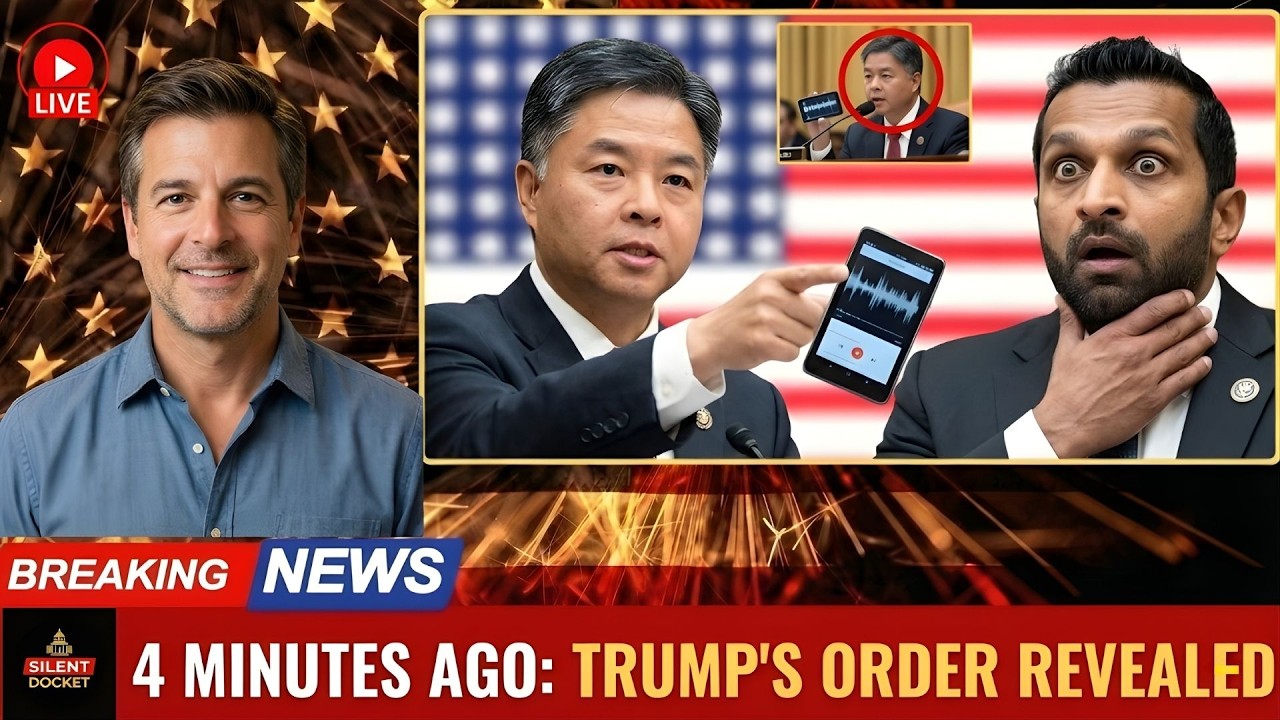
But shortly after 11 a.m., Lieu shifted the direction of the hearing.
Standing before the committee with only a small audio device and a single page of notes, the California Democrat said he wanted to address a conversation that he alleged had taken place weeks earlier inside FBI headquarters.
Lieu described the recording as a short clip obtained through a confidential source and said it had been reviewed by independent audio analysts before being presented to the committee.
The announcement immediately drew objections from attorneys representing FBI Director Kash Patel, who was appearing as the hearing’s primary witness.

Patel’s legal team argued that the committee should not allow the recording to be played publicly without first establishing a full chain of custody and giving the defense an opportunity to review the material.
Committee Chairman Jim Jordan acknowledged the objection but ruled that the recording could be introduced after Lieu submitted documentation supporting its authenticity.
Lieu then pressed play.
According to several people in the hearing room, the brief audio clip lasted less than a minute but instantly changed the atmosphere inside the chamber. Lawmakers, staff members and reporters in attendance described the room as falling unusually quiet as the recording ended.
For several seconds afterward, the hearing stalled as members appeared to process what had been played.
Lieu then asked Patel directly whether the voice on the recording was his.
Patel did not immediately answer the question. His attorneys again objected, arguing that the director could not authenticate a recording that he had not been allowed to review fully with counsel.

Lieu responded that identifying one’s own voice was a straightforward question and pressed the witness again.
After a brief exchange between attorneys and the committee, Patel declined to comment on the recording’s authenticity during the public hearing, saying he had not had the opportunity to examine the material in context.
Lieu subsequently presented a printed transcript of the recording and informed the committee that copies of the audio had already been submitted to several oversight bodies, including the Justice Department’s inspector general and the Senate Intelligence Committee.
He then asked Patel a final question regarding whether anyone in the executive branch had directed him to limit or halt investigative activity connected to Epstein-related matters during the early days of his tenure.
At that point, Patel’s attorney informed the committee that his client would invoke his Fifth Amendment right against self-incrimination and would not answer further questions related to the recording.
The exchange immediately became the most discussed moment of the hearing.
Within minutes, clips from the confrontation began circulating online, while legal analysts and former prosecutors weighed in on the unusual circumstances surrounding the presentation of audio evidence during a congressional oversight session.
Experts noted that while congressional hearings often involve documents, emails and testimony, it is far less common for lawmakers to introduce audio recordings without prior disclosure.
“This is an uncommon tactic,” said one former federal prosecutor who reviewed the exchange. “Congressional committees do have investigative powers, but the use of surprise evidence can quickly raise legal and procedural questions.”
Others said the key issue will ultimately be whether the recording can be independently verified and whether additional context exists beyond the short clip played in the hearing.
The House Oversight Committee is now considering whether to subpoena additional materials connected to the recording, including longer versions of the audio and internal communications referenced during the questioning.
If those subpoenas move forward, investigators may attempt to determine the full context of the conversation referenced by Lieu and whether the statements heard in the recording correspond to any documented directives within the federal investigative system.
For now, the brief exchange has left lawmakers on both sides of the aisle demanding further clarification.
What began as a routine oversight hearing has now opened a new line of inquiry — one that could expand into a broader investigation depending on what additional evidence emerges in the coming weeks.






