Canada Reacts to Doug Ford’s U.S. Nuclear Announcement: Why the Process Matters More Than the Deal
The announcement by Doug Ford, Ontario’s premier, of a “historic” nuclear cooperation agreement with the United States has triggered a wave of political scrutiny across Canada. While nuclear energy itself remains a familiar and long-established component of Canada’s power landscape, the controversy surrounding this episode has less to do with reactors and more to do with governance, jurisdiction, and institutional precedent.
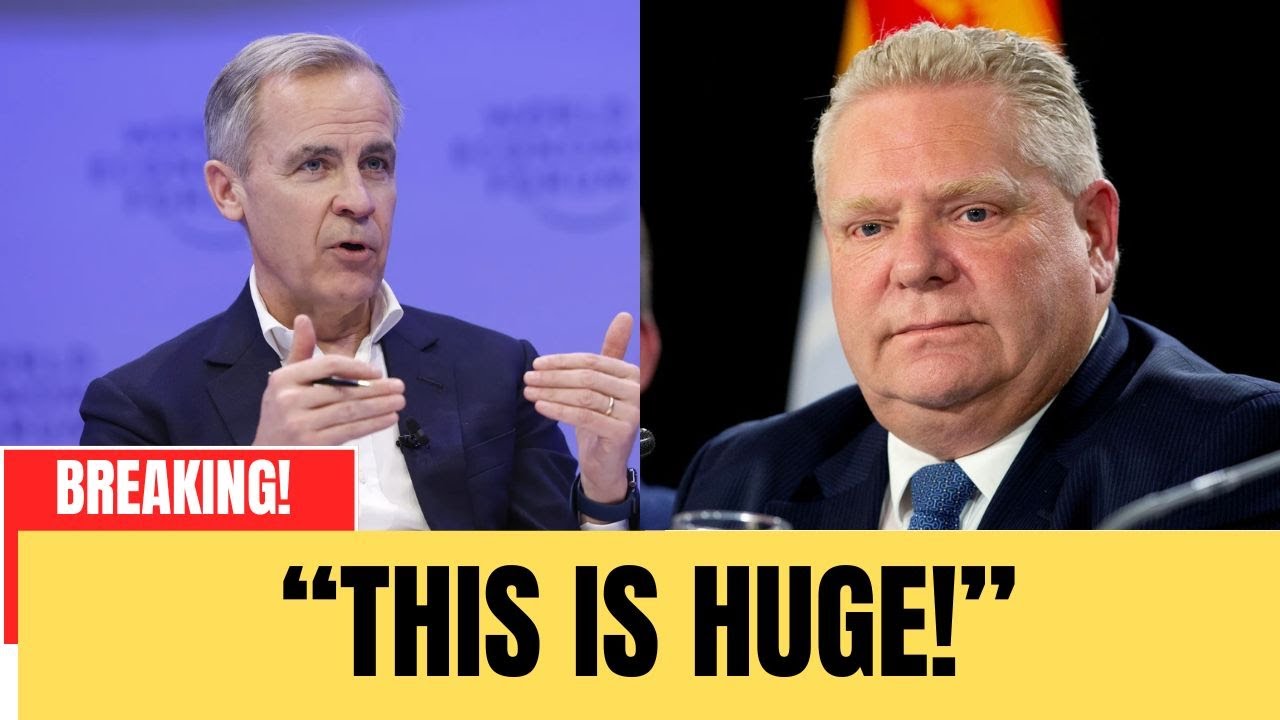
The announcement was made in New York during an international visit, framed as a breakthrough in cross-border cooperation on advanced nuclear technologies, including small modular reactors (SMRs). Ontario, home to the largest concentration of nuclear generation in the country, has a clear economic interest in such partnerships. Yet the decision to unveil the agreement abroad, without prior public coordination with the federal government, has unsettled political observers and constitutional experts alike.
At the heart of the debate lies a familiar but increasingly strained question: how far can provincial authority extend when economic initiatives intersect with foreign relations and national security considerations?
Under Canada’s constitutional framework, energy policy is largely shared between federal and provincial governments. Provinces oversee electricity generation and resource development, while Ottawa retains authority over nuclear safety, international treaties, and foreign policy. In practice, this division has long relied on coordination rather than confrontation. What makes the Ford announcement unusual is not the pursuit of U.S. collaboration, but the unilateral manner in which it was presented.

Federal officials have so far responded cautiously, avoiding direct criticism while signaling the importance of alignment on issues with international implications. Diplomatically, restraint is expected. Politically, however, the message is clear: when nuclear cooperation is announced on a foreign stage, it inevitably takes on a national dimension, regardless of provincial intent.
This sensitivity reflects the evolving role of nuclear energy in global politics. Once framed primarily as a domestic infrastructure issue, nuclear power today sits at the intersection of clean energy transitions, supply chain security, and geopolitical competition. Advanced reactor technologies are increasingly viewed as strategic assets, tied to industrial policy and international influence. As a result, decisions that appear technical can carry significant diplomatic weight.
From Ontario’s perspective, Ford’s move can be read as an effort to position the province as a leader in next-generation energy and to attract investment at a time of accelerating demand for low-carbon power. The United States, facing similar challenges, is a logical partner. Cross-border integration of energy technology has precedent, and Ontario’s nuclear expertise is widely recognized.

However, critics argue that leadership without coordination risks undermining coherence at the national level. If provinces independently announce international energy arrangements, Canada could project mixed signals to allies and investors. Over time, this fragmentation may complicate negotiations on trade, climate commitments, and security cooperation.
The issue, then, is not whether Ontario should engage with U.S. counterparts, but how such engagement is framed and governed. Political analysts note that precedent matters. If one province sets a pattern of announcing cross-border strategic initiatives abroad, others may follow. The cumulative effect could weaken Ottawa’s ability to present a unified national strategy in sectors where unity is increasingly demanded.
This episode also highlights broader pressures on Canada’s federal system. As global challenges blur traditional policy boundaries, provinces are asserting themselves more forcefully on the international stage. Trade offices, climate partnerships, and investment missions have become routine. Nuclear cooperation, however, occupies a different category—one that touches on safety regulation, long-term waste management, and international oversight regimes.
How the federal and Ontario governments resolve the political aftershocks of this announcement will be instructive. A cooperative response—clarifying roles, reinforcing consultation mechanisms, and aligning public messaging—could strengthen intergovernmental governance in strategic sectors. A prolonged dispute, by contrast, would expose vulnerabilities in Canada’s decision-making architecture at a time when clarity and consistency are increasingly valuable.
Ultimately, this moment is less about outrage than about boundaries. In a world where energy, security, and diplomacy converge, Canada must decide how those boundaries are drawn—and who gets to cross them.






