Emergency Powers Debate Raises New Questions About U.S. Election Safeguards

Washington — As the United States approaches another high-stakes election season, legal scholars and lawmakers are debating a critical question: how far presidential emergency powers can extend — and whether they could ever affect the nation’s election process.
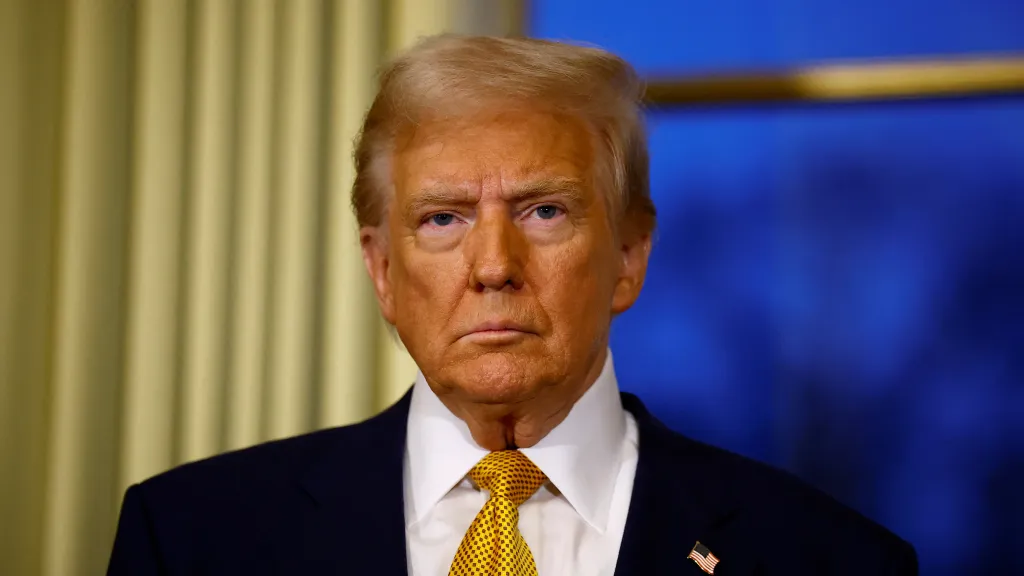
At the center of the discussion is former president Donald Trump and concerns voiced by political analysts that future administrations could test the limits of federal authority during moments of national crisis. While experts emphasize that the Constitution provides strong protections for elections, the conversation highlights broader anxieties about the resilience of democratic institutions during periods of intense political polarization.
The legal framework most often referenced in these discussions is the National Emergencies Act. The statute allows the president to declare a national emergency and activate certain powers previously approved by Congress. However, constitutional scholars note that these authorities are narrow and tied to specific statutory provisions.
“Emergency powers are not unlimited,” one legal analyst said. “They are carefully defined by Congress, and they do not give the president authority to control or alter election procedures.”
Under the U.S. Constitution, the responsibility for administering elections largely rests with individual states, while Congress sets certain nationwide rules. The executive branch plays a limited role in this process, which experts say was designed intentionally to prevent any single federal authority from controlling elections.

Historians often point to a powerful example of democratic continuity during crisis: the election held on November 8, 1864, when Abraham Lincoln sought reelection during the American Civil War. Despite the nation being divided by conflict and uncertainty, the election proceeded as scheduled, reinforcing the principle that democratic processes should continue even in difficult circumstances.
Today’s debate is shaped by a more modern concern — how misinformation, legal disputes, and emergency declarations might intersect during an election cycle.
Some political commentators have speculated about hypothetical scenarios in which a president could attempt to impose new voting restrictions or emergency measures in response to a perceived crisis. Such steps might involve temporary policy proposals affecting early voting procedures, mail-in ballots, or voter identification rules.
Legal experts say any attempt to significantly alter election operations through executive action would likely face immediate court challenges and would almost certainly be reviewed by the Supreme Court of the United States.
Still, the debate underscores how quickly political disputes could evolve into legal confrontations during an election season.
Beyond legal questions, election security officials are also focused on a growing technological challenge: the spread of misinformation and manipulated media online. Experts warn that advances in artificial intelligence have made it easier to create convincing fabricated images or videos that could mislead voters about election procedures.
For example, analysts say misleading posts could falsely suggest that federal agencies — such as U.S. Immigration and Customs Enforcement — are present near polling locations. Even if such claims are untrue, they could create confusion or discourage some voters from participating.

U.S. Senator Mark Warner has spoken publicly about the importance of preparing for these emerging risks. According to Warner, safeguarding elections now requires addressing not only cybersecurity threats but also coordinated misinformation campaigns that could spread rapidly on social media.
Intelligence officials have previously warned that foreign actors, including those linked to Russia, have attempted to amplify misleading narratives during past U.S. elections. Analysts say similar tactics could appear again in future election cycles.
Despite these concerns, many election experts stress that the decentralized structure of the American voting system remains a significant safeguard. Because elections are organized by thousands of state and local jurisdictions rather than a single federal authority, it would be extremely difficult for any one actor to gain direct control over the entire process.
Another critical layer of protection is the widespread use of paper ballots and verifiable audit systems, which help ensure that votes can be independently checked if disputes arise.
Civic organizations and voting rights groups have also stepped up efforts to educate voters about misinformation and encourage participation. Volunteers across the country are organizing community outreach programs, election monitoring initiatives, and information campaigns designed to help voters navigate the election process with confidence.
Democracy advocates argue that while institutions provide important safeguards, public engagement remains essential.
“Strong election systems depend not only on laws and technology but also on an informed public,” one organizer said. “When voters understand how the process works, it becomes much harder for misinformation or confusion to undermine participation.”
As the United States moves closer to another national election, the ongoing debate over emergency powers and election safeguards reflects a broader reality: maintaining trust in democratic systems requires constant vigilance.
For many observers, the key lesson from history — including the election held during the Civil War — is that democratic institutions are strongest when they continue to function even in times of uncertainty.






