It was not the first misleading statement ever delivered before the United States Senate, and it will not be the last. But legal analysts say what Attorney General Pam Bondi said during her appearance before the Senate Judiciary Committee this week deserves special attention—not because of its novelty, but because of its implications.
When Bondi declared, plainly and on the record, that “the two-tiered system of justice is over,” she attempted to close a debate that has been simmering for years. Instead, critics argue, her testimony may have done the opposite: it sharpened the very argument she sought to dismiss.
This article does not assert criminal guilt or confirmed misconduct. Rather, it examines why constitutional scholars say Bondi’s testimony—taken at face value—creates significant legal, political, and institutional risk for the Department of Justice and for Bondi herself.

Why This Hearing Was Different
On paper, the hearing was routine: an annual Justice Department oversight session. In reality, it unfolded against an unusually volatile backdrop.
The appearance came amid heightened scrutiny of DOJ decision-making, public accusations of politicized enforcement, and growing concern that federal power is being applied unevenly depending on political alignment. For many senators, the hearing was not about optics—it was about whether constitutional guardrails are holding.
From the opening questions, it was clear Democratic members were not there for general explanations or prepared talking points. Their focus was narrow and relentless: Has the Department of Justice crossed a constitutional line, and does unequal justice now define enforcement priorities?
The Statement That Changed the Tone
Bondi’s assertion that the two-tier system of justice is “over” was meant to project finality. Instead, legal observers say it raised an immediate credibility problem.
Why? Because Senate hearings are not evaluated by rhetoric, but by records.
If the Department of Justice is simultaneously accused—fairly or not—of selective enforcement, and the attorney general responds with an absolute denial rather than a qualified explanation, that denial becomes a benchmark. From that moment on, every documented inconsistency is measured against it.
In legal terms, absolute claims create absolute vulnerability.
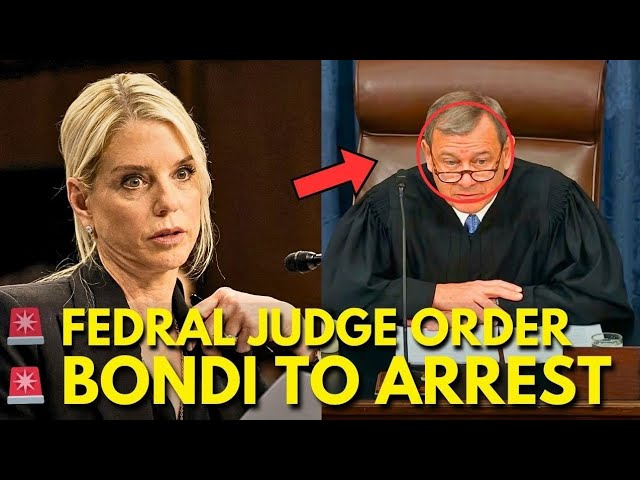
The Hypothetical Legal Risk Experts Are Watching
Several constitutional analysts point to one especially dangerous theoretical scenario discussed during the hearing: retroactive attempts to legitimize actions that were allegedly defective at the time they occurred.
To be precise, this article does not state that such actions have been adjudicated as unlawful. However, legal experts emphasize a well-established principle:
Constitutional defects cannot be cured retroactively.
If an official action requires lawful authority at the moment it is taken, no later document can rewrite that moment in time. Courts have consistently held that backdated or after-the-fact authorizations are not “clarifications”—they are misrepresentations.
This distinction matters enormously because intent, not outcome, is often the dividing line between administrative error and legal exposure.
Why Intent Changes Everything
In federal law, mistakes can be forgiven. Knowing violations cannot.
If an official becomes aware of a constitutional defect and proceeds anyway, exposure increases dramatically. If that official later attempts to reconstruct authority on paper, the issue escalates from poor judgment to potential obstruction.
That is why senators repeatedly pressed Bondi on timelines, internal warnings, and knowledge—when she knew, what she knew, and what she did after learning it.
Observers noted that as questioning narrowed, Bondi’s answers became shorter, more cautious, and more constrained—a shift familiar to anyone who has watched witnesses recognize personal legal risk.
The “Two-Tier Justice” Problem Isn’t Rhetorical
The phrase “two-tiered system of justice” resonates because it reflects a fear deeper than partisan politics: that power determines accountability.
When enforcement appears harsher for some and gentler for others, confidence in the rule of law erodes—even if no court has yet ruled misconduct occurred. That erosion accelerates when absolute denials collide with documentary records, sworn testimony, or internal dissent.
This is why critics argue Bondi’s declaration backfired. By insisting the problem no longer exists, she raised the stakes of every future disclosure.
Why Oversight Records Matter More Than Headlines
Senate hearings are not trials, but they are evidentiary factories. Sworn testimony does not expire. It can be revisited by inspectors general, prosecutors, special counsels, or courts years later.
Legal analysts stress that the real consequence of Bondi’s testimony is not immediate—it is cumulative. Each answer becomes part of a permanent record against which future evidence is measured.
That is how oversight transforms into exposure.
Political Fallout vs. Legal Fallout
Politically, officials can often survive controversy. Legally, records are unforgiving.
Once testimony suggests knowledge, timing, and action that align unfavorably, discretion narrows. Prosecutors are no longer deciding whether something “looks bad,” but whether inaction would signal tolerance of constitutional shortcuts.
That dilemma is why former DOJ officials watching the hearing described it not as explosive, but structural. Structural problems don’t fade. They demand resolution.
What Happens Next (Hypothetically)
If concerns raised during the hearing continue to gain traction, several paths remain possible:
-
Inspector General review
-
Special counsel evaluation
-
Congressional referrals
-
Judicial scrutiny in related cases
None of these require political consensus. They require records—and the record now exists.
Bondi still has options. Cooperation, clarification, or silence can shape outcomes. But the corridor is narrowing. Delay increases pressure, not relief.
The Bottom Line
Pam Bondi walked into the Senate Judiciary Committee under pressure. She walked out with something heavier: a sworn record that cannot be undone.
Whether this moment becomes a footnote or a turning point will depend on evidence that emerges later. But one reality is already clear. The claim that the two-tiered system of justice is “over” is no longer rhetorical—it is now testable.
And in American law, what can be tested can eventually be judged.






