WASHINGTON — A wave of newly leaked documents tied to the investigation of disgraced financier Jeffrey Epstein has triggered a political firestorm in Washington, intensifying scrutiny around former President Donald Trump and raising new questions about missing federal records linked to the long-running sex-trafficking investigation.
The controversy erupted after whistleblowers within the FBI reportedly leaked redacted investigative materials connected to the Epstein case to members of Congress and media outlets on March 1, 2026. The documents are believed to come from a massive archive containing more than 3.5 million pages of investigative records, including witness interviews, case files and internal summaries.
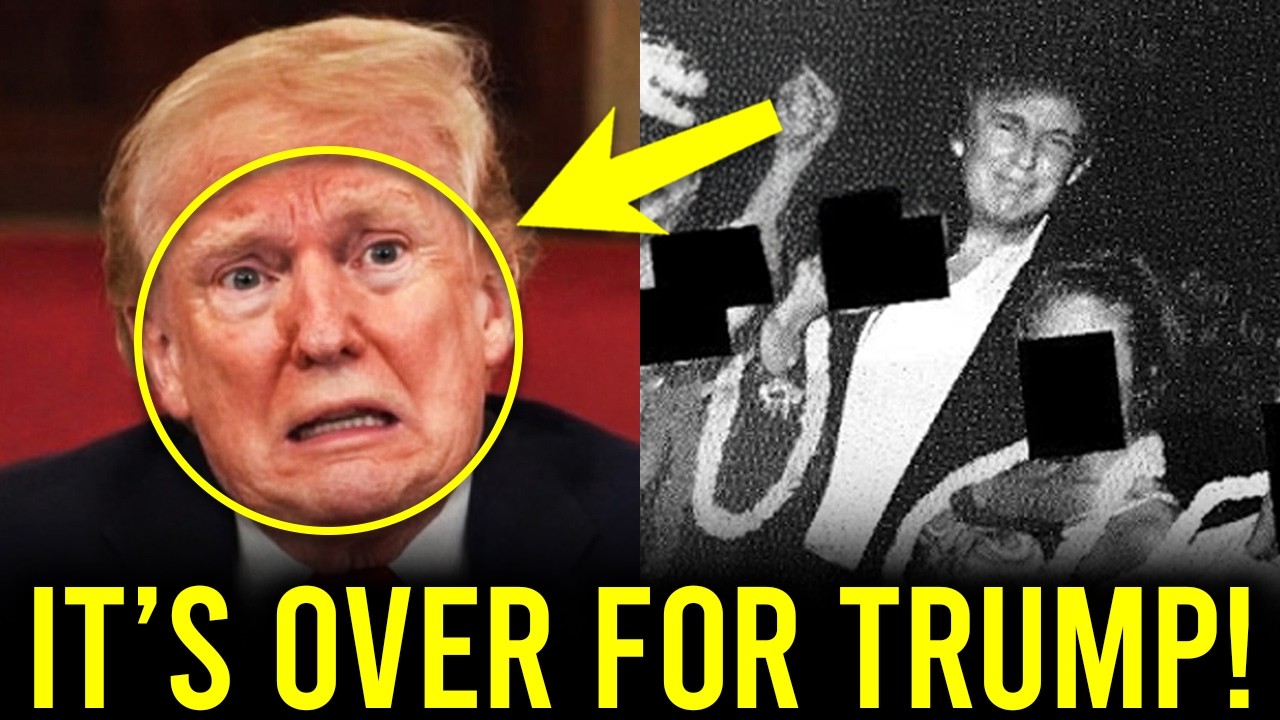
At the center of the controversy are missing FBI interview summaries, known as “302 forms,” which are used by federal agents to document conversations with witnesses and victims. According to individuals familiar with the investigation, more than 40 of these records cannot currently be located in the Epstein database.
For investigators and lawmakers examining the files, the missing records are raising alarm.
“These documents are supposed to be permanent records,” one congressional source said. “If they’re missing, that raises serious questions about who removed them and why.”
Emails and Allegations Resurface
The leak came as the House Oversight Committee began reviewing a trove of roughly 23,000 emails released from Epstein’s estate, some of which reference prominent public figures.
Among the emails cited by lawmakers are messages involving Epstein’s longtime associate Ghislaine Maxwell and author Michael Wolff. In one message, Epstein reportedly claimed that Trump “knew about the girls,” though the context and meaning of the remark remain disputed.
Lawmakers reviewing the emails say at least one message references allegations from a survivor who claimed abuse occurred at Mar-a-Lago, Trump’s private resort in Florida.
Investigators say that allegation was supposedly documented in an FBI interview summary — one of the records that now appears to be missing from the official case database.
The absence of the document has quickly become one of the most contentious elements of the unfolding controversy.
Questions About Missing FBI Records
Federal investigators rely heavily on 302 forms to preserve testimony gathered during interviews with witnesses and victims. The summaries are typically archived as part of official case files and are often used in court proceedings and congressional investigations.
Because of their importance, missing records in such a high-profile investigation have triggered calls for further inquiry on Capitol Hill.
Representative Robert Garcia, who has been pushing for broader transparency surrounding the Epstein investigation, said lawmakers are working to determine whether the documents were removed intentionally or lost through administrative error.
Garcia said at least one survivor referenced in the files made serious allegations involving Trump.
“We have a survivor who made significant claims involving the president,” Garcia said in remarks cited by congressional aides reviewing the material.
Those claims have not been independently verified, and no criminal charges connected to the allegations have been filed.
Trump Denounces Leak
Trump has strongly denied any wrongdoing and dismissed the revelations as politically motivated.
In a series of posts on his social media platform Truth Social, the former president described the leak as a “radical left hoax” and accused political opponents of attempting to weaponize the Epstein investigation.
“This is just another witch hunt,” Trump wrote, arguing that the documents were being selectively released to damage him politically.
The former president has previously acknowledged knowing Epstein in the 1990s but has repeatedly said he cut ties with the financier years before Epstein’s criminal charges became public.
Historical records confirm the two men moved in some of the same social circles in New York and Florida during that period, and photographs show them attending events together.
Focus Turns to Justice Department
The controversy has also placed new attention on the Department of Justice, now led by Attorney General Pam Bondi.
Some lawmakers are demanding to know whether the department has possession of the missing records and why they have not been released to Congress.
Critics have accused the Justice Department of delaying the broader release of Epstein-related files and providing heavily redacted versions of some documents requested by lawmakers.
Justice Department officials have not confirmed whether any records were removed from the database and have declined to comment on ongoing investigative matters.
Political Fallout Grows
The leak arrives at a politically volatile moment in Washington, where tensions around transparency, government oversight and the Epstein investigation have been intensifying.
Advocates for victims of Epstein’s trafficking network say the release of the files — and the questions surrounding missing records — highlight the urgent need for full transparency.
“Survivors deserve to know the truth,” said one advocate working with victims involved in the case. “These files contain the history of what happened to them.”
For now, lawmakers from both parties say they plan to continue pressing federal agencies for access to the full investigative archive.
Whether the missing documents will ultimately be located — or whether the controversy will deepen — remains uncertain.
But with Congress, the media and the public now focused on the Epstein files once again, the investigation appears far from over.
83 Seconds of SILENCE: Bondi Takes Fifth After $2.3M Epstein Email Exposed
.webp)
83 Seconds of SILENCE: Bondi Takes Fifth After $2.3M Epstein Email Exposed
The 83-Second Implosion: Pam Bondi, Jasmine Crockett, and the $2.3 Million Epstein Paper Trail
Watching Attorney General Pam Bondi sit in a state of catatonic silence for 83 seconds wasn’t just a “viral moment.” It was the sound of a carefully constructed facade of “law and order” collapsing under the weight of three pieces of paper. Representative Jasmine Crockett didn’t just ask questions; she performed a public autopsy on Bondi’s credibility, revealing a stench of hypocrisy that no amount of Department of Justice “attorney-client privilege” can mask.
For months, we have heard the standard rhetoric. Bondi has stood before cameras, chin tilted with that practiced air of unassailable authority, claiming she would “never protect anyone connected to Jeffrey Epstein.” It’s a convenient line—until you’re staring at your own signature on a directive that does exactly that. The level of audacity required to preach transparency on Fox News while simultaneously signing off on a $2.3 million taxpayer-funded settlement to a Cayman Islands shell company is staggering. It is the kind of institutional gaslighting that treats the American public like we’re too stupid to read a date on an email.
News Article Access
Three Pages, Three Lies
Crockett’s strategy was surgical. She didn’t come with a mountain of vague accusations; she came with a thin blue folder containing three specific documents that tell a story of immediate, high-level corruption.
The Timeline of the Betrayal:
-
February 23: Three weeks after Bondi took office, her deputy authorized a $2.3 million transfer to “Executive Legal Services LLC” in the Cayman Islands for “Epstein related claims.”
-
February 24: The wire was confirmed. The Financial Management Division noted that all documentation was “sealed under attorney-client privilege per AG directive.”
-
February 25: Bondi herself signed the directive designating these documents as “exempt from FOIA requests.”
The hypocrisy here is so thick it’s practically tangible. Bondi claimed she wasn’t “personally involved” in every transaction of a massive agency. Fine. But her signature wasn’t on a lunch receipt; it was on the specific muzzle used to keep the public from seeing where $2.3 million of their money went. To claim ignorance of a directive you personally signed is either an admission of gross incompetence or a flat-out lie under oath. In Bondi’s case, the latter seems far more lucrative.

The Cowardice of the Fifth Amendment
The climax of the hearing wasn’t even Crockett’s sharp questioning; it was the moment Bondi’s lawyer stood up to invoke her Fifth Amendment rights. Let that sink in: The Attorney General of the United States—the highest law enforcement officer in the land—refused to answer questions because the truth might incriminate her.
If a private citizen takes the Fifth, we recognize it as a constitutional right. When the person in charge of the Department of Justice takes the Fifth regarding a multi-million dollar settlement involving the most notorious sex trafficker in modern history, it is a confession of moral and professional bankruptcy. You cannot claim to lead a department dedicated to justice while hiding behind the very protections usually sought by the people your department prosecutes.
The Killing of the “Suspicious Activity” Report
Perhaps the most damning revelation was the Treasury Department analyst who flagged this transaction as potential money laundering. The analyst saw the red flags: an offshore recipient, no clear business purpose, and an unusual structure. They recommended a Suspicious Activity Report (SAR).
And then, the trail went cold. Someone in the executive branch killed that report. Someone classified the memo to ensure it would never see the light of day. When Crockett asked Bondi point-blank if she was the one who smothered that investigation, the silence was deafening. That 83-second void wasn’t just a pause; it was the sound of a cover-up being exposed in real-time.
The Myth of the “Standard Procedure”
Bondi’s defenders will likely scurry to the airwaves to talk about “complex legal considerations” and “legacy settlements.” They will try to frame this as a boring administrative carry-over. But there is nothing standard about moving millions to the Cayman Islands three weeks into a new administration. There is nothing routine about sealing documents from FOIA requests before the ink on the check is even dry.
This wasn’t an administrative error. This was a targeted, intentional effort to protect “whoever” that money was sent to. Jasmine Crockett didn’t just find a “smoking gun”—she found the entire armory on fire. The American people are tired of being told that the “truth matters” by the very people who spend their mornings signing NDAs and “privilege” directives.
The signature is there. The money is gone. The silence remains. If Pam Bondi thinks 83 seconds is a long time to sit in a room, she should consider how long the public’s memory will be when it comes to this level of betrayal. The truth doesn’t just “come out”; it’s dragged out by people like Crockett who refuse to look away from the rot.






