The Shadow in the Room: A Quiet Row of Survivors Challenges the Justice Department
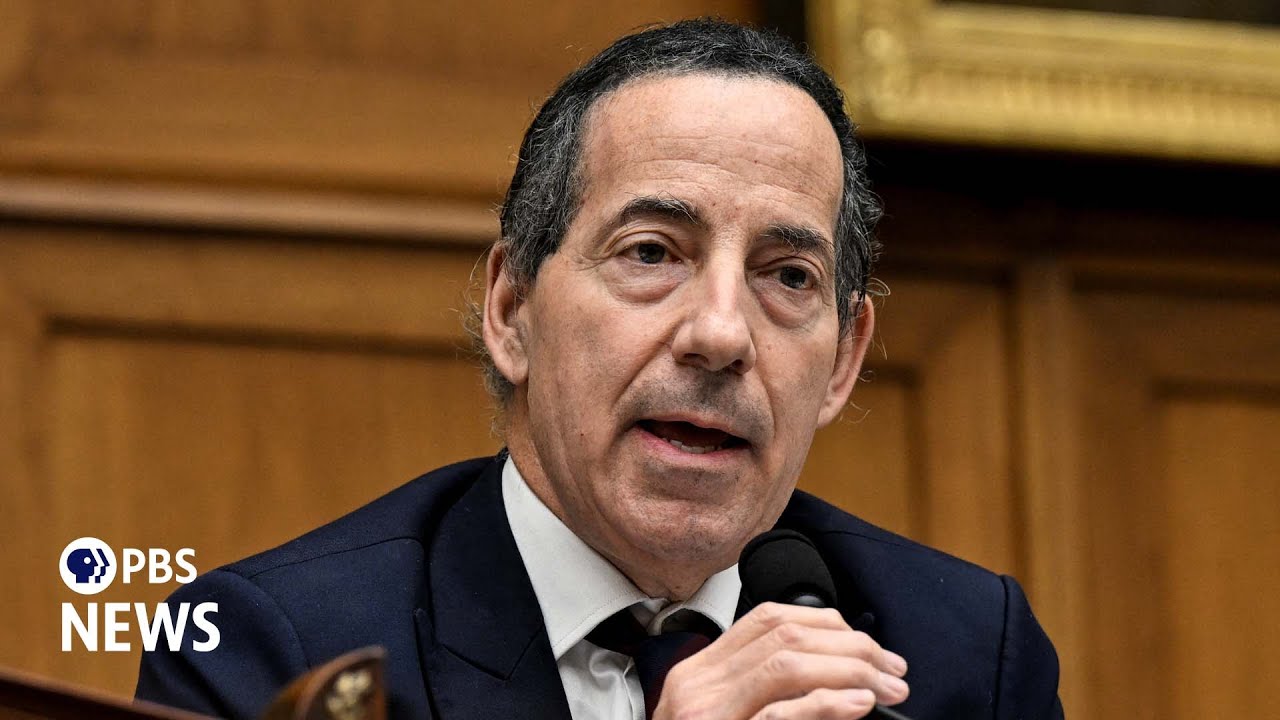
WASHINGTON — In the cavernous, wood-paneled chambers of the House Judiciary Committee, where the business of government often grinds along with the dry precision of a clock, a sudden and sharp friction can occasionally set the room ablaze. On Tuesday, that spark was provided by Representative Jamie Raskin of Maryland, who transformed a routine oversight hearing into a searing interrogation of the nation’s chief law enforcement officer, Attorney General Pam Bondi.

The confrontation was not merely about the specifics of a case or the timeline of a document release. It was a fundamental clash over the soul of the Department of Justice. For Raskin, the department has become a repository of withheld truths regarding the Jeffrey Epstein saga. For Bondi, it is an institution navigating a logistical and legal minefield where “pure transparency” must be balanced against federal protocol.
A Silent Jury in the Back Row
The hearing began with a gesture that instantly shifted the atmospheric pressure inside the chamber. Before posing a single legal question, Raskin drew the room’s attention to a group of women seated directly behind the witness table. These were not spectators; they were survivors and family members of Jeffrey Epstein’s global sex trafficking ring, including individuals representing the estate of the late Virginia Giuffre.
Raskin’s opening salvo was a direct hit on the Attorney General’s institutional performance. “Justice for the people means you’ve got to listen to the victims, like the women seated behind you today,” Raskin said, his voice carrying a practiced, rhythmic weight. He alleged that despite their presence and their years of torment, Bondi had yet to meet with many of the survivors—a claim that sparked a wave of murmurs throughout the room and left the Attorney General visibly stone-faced.
The Three-Million-Page Deficit
The interrogation then turned from the human cost to the forensic record. Under a congressional mandate, the Department of Justice was ordered to release approximately six million documents, photographs, and videos related to the Epstein investigation. To date, the department has produced only half of that total.
Bondi defended the shortfall by claiming the remaining three million pages were merely duplicative. Raskin, however, dismantled this defense with granular detail, pointing to foundational prosecution memos and victim statements that have vanished from the public record. “Even if they were duplicative, why not release them?” Raskin asked. “Transparency is not a suggestion; it is a statutory mandate.” He further alleged a “jaded cruelty” in the department’s redaction process, claiming that while the names of powerful enablers were shielded to spare them embarrassment, the names and identities of victims were shockingly left unredacted for the world to see.
The “Burn Book” and the Institutional Revolt
The hearing also highlighted a growing rift within the Department of Justice itself. Raskin moved to enter into the record letters from dozens of career prosecutors who have recently resigned in protest. He cited high-profile departures, such as Danielle Sassoon and Hagen Scotton, who reportedly refused what they described as “corrupt orders” to quash indictments as political favors.
In a particularly biting moment, Raskin referenced Bondi’s previous performance in the Senate, where she reportedly utilized a binder of personal smears against lawmakers—a document Raskin dubbed a “burn book.” He urged her to set aside the “binders of smears” and address the “vendetta factory” that he claimed the department had become. The implication was clear: the department, in Raskin’s view, has been transformed from an independent arbiter of justice into a specialized protection unit for political allies.
The Ghost of Ghislaine Maxwell
The geography of the claims discussed during the hearing centered heavily on the treatment of Ghislaine Maxwell, Epstein’s convicted associate. Raskin raised serious questions about Maxwell’s transfer from a high-security facility to a minimum-security camp in Texas, where she reportedly enjoys “five-star treatment.”
The lawmaker suggested that this favorable treatment followed a nine-hour meeting with Deputy Attorney General Todd Blanche. Raskin alleged that the move was not based on correctional policy, but on ensuring Maxwell’s silence regarding powerful figures. While these claims remain disputed by the administration, the mere existence of such allegations inside a congressional forum has reignited the public suspicion that the full picture of the Epstein network has never been revealed.
A Verdict Left to the Public
As the gavel fell, the hearing yielded no confessions and few new facts. Instead, it left behind two irreconcilable versions of the truth. To Raskin and his supporters, the Attorney General’s performance “screams cover-up.” To Bondi and her defenders, the interrogation was a “partisan theater” designed to create headlines rather than uncover justice.
The questions that echoed through the room—about missing memos, 3 million withheld pages, and the silent survivors in the back row—remain unresolved. In the vacuum of those answers, the loud, competing narratives of Washington continue to fill the space. For the survivors who sat through the five-hour session, the wait for accountability continues, as the Epstein case remains a story surrounded by mystery, speculation, and the lingering suspicion that wealth and influence can still bend the bars of justice.






