A Late-Night Pause That Said More Than Any Answer (Fiction)
It began the way so many televised conversations begin in America: warm lights, practiced smiles, a host who knows how to make controversy feel like entertainment. The band played. The audience applauded on cue. The guest walked out with the kind of composure that reads, to millions, as competence.
From her first steps onto the stage, she looked prepared—posture exact, expression calibrated, a smile that suggested ease while revealing almost nothing. She had occupied public attention for years, and she carried herself like someone who understood the modern bargain of fame: offer the public a version of yourself that feels intimate, while keeping the real boundaries intact.
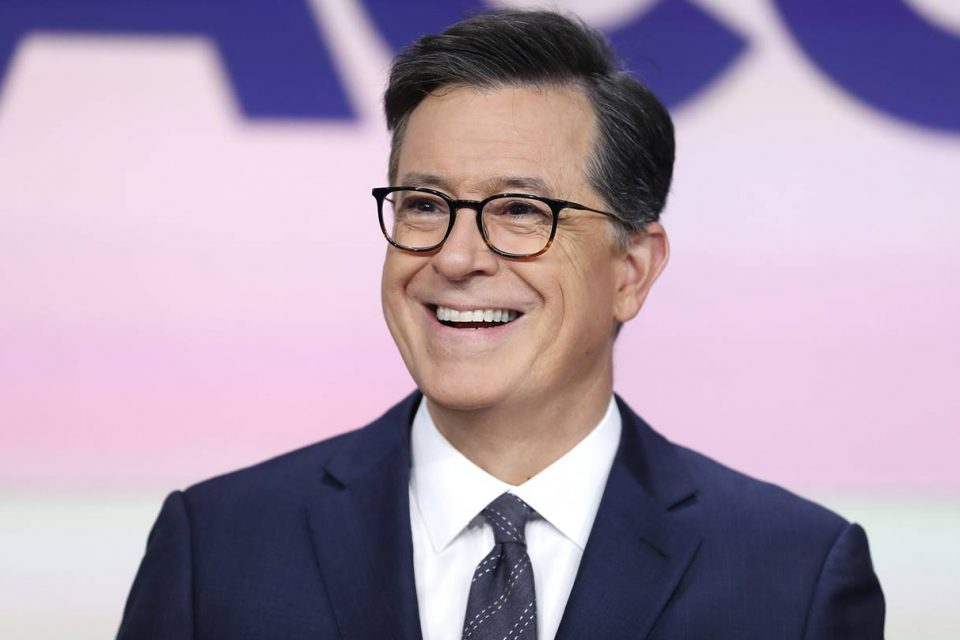
The host rose from behind his desk, greeted her with the familiar charm that has made late-night television a soft arena for hard topics. They exchanged pleasantries. A few jokes landed. The audience laughed. The opening segment moved along a safe track: business ventures, life after politics, family anecdotes, the light touch of public life presented as personal narrative.
If the conversation had remained there, the audience would have left with the expected impression—an evening of gentle banter, an image burnished rather than tested. But late-night television, at its best, is a performance of control: the guest tries to manage the story; the host tries to manage the moment. The tension lies in who succeeds.
For several minutes, the guest succeeded. Her answers were smooth and measured, shaped like statements designed to be replayed. She smiled at the right moments, laughed lightly at the right jokes, and offered just enough warmth to appear candid without opening any doors she did not intend to open.
Then the host slowed down.
It wasn’t dramatic. He did not raise his voice or announce a “serious segment.” He simply reduced the pace of the conversation and let a quiet, longer-than-normal pause settle between sentences. The audience sensed it the way people sense weather changing: not through noise, but through pressure.
“There’s something,” he said, still calm, “that people watching at home are asking.”
The question that followed was not a shout or an accusation. It was framed as a matter of public interest—how narratives change, why certain stories metastasize, why some disappear. It wasn’t about gossip. It was about consistency, and about the widening gap between what officials say and what the public believes.

The guest smiled, as if recognizing a familiar tactic. She offered humor—an attempt to dissolve tension with charm, to shrink the question into a joke and move on. It’s a strategy that works often enough on television, where the rules reward pace and punish silence.
But the host did not take the bait. He did not laugh to relieve the room. He let her joke sit in the air, unanswered.
In a studio built for sound, silence becomes a kind of verdict. The audience’s laughter thinned, then stopped. People leaned forward. The conversation, which had been gliding, began to feel like it was approaching an edge.
The guest began speaking at greater length. She used the language of modern reputation management—misinformation, speculation, bad-faith narratives, the insistence that she would not elevate “nonsense” by repeating it. On paper, it was a competent defense. On live television, it sounded like distance.
What the host was doing, very gently, was refusing to let distance do the work.
He asked about timelines rather than motives. About shifts rather than scandals. He posed questions that did not claim to know hidden truths, but that highlighted contradictions visible in plain sight: how demands for transparency can become sudden secrecy; how moral certainty can turn into procedural avoidance; how easily public outrage can be deployed against opponents and then neutralized when it nears allies.
The audience responded to the shape of the moment rather than its details. They were not watching for a single sensational reveal. They were watching for something rarer on television: an unscripted reaction.
The guest attempted a pivot, returning to safer topics. The host followed her, but only for a moment. Then he returned to the same point, as if insisting that certain questions cannot be outflanked forever.
That insistence changed the temperature in the room.

The guest’s smile began to look timed rather than natural. Her laughter, when it came, sounded thinner, like a note played too lightly to carry. The audience could feel the shift, even if they could not name it: the moment a polished performance begins to show strain.
Then she tried a different move—sharpness.
It was not an explosion, but it was a line. A pointed remark aimed at the host, designed to reassert dominance and remind the room that she was not a passive subject of his questions. In another setting, it might have played as confident. In this one, it landed as defensive.
The host did not respond in kind. He did not argue. He did not escalate. He simply looked at her for a beat longer than television usually allows.
And then he reached under his desk and brought out a folder.
It might have been nothing—notes, printed clips, research for the segment. But he handled it slowly, deliberately, with the calm precision of someone signaling that the conversation had moved from performance to record.
“The thing about public life,” he said, “is that it eventually becomes a paper trail.”
He did not claim to be exposing a secret conspiracy. He did not read names. He did not attempt to turn the segment into a prosecution. Instead, he presented what he described as context: timelines, quotations, public statements that could be compared against one another. The folder’s power was not in what it “proved,” but in what it implied: that the questions being asked were not random, and that the public’s suspicion does not arise from thin air—it grows where information is withheld.
The guest’s posture stiffened. Her expression changed, subtly but visibly, as if she had recognized that she could not charm her way through what was coming next. Her eyes flicked, once, toward the folder, then back to the host. She looked less like a spokesperson and more like a person weighing risk in real time.
The audience did not clap. They did not laugh. They watched.
A familiar late-night rule had been reversed. Usually, the host’s power comes from speed: the ability to move quickly, to turn tension into entertainment before it becomes uncomfortable. Here, the power came from refusing speed—from forcing a pause long enough for discomfort to become the point.
The guest tried to reframe again, insisting that she would not participate in “innuendo,” that the segment was veering outside the spirit of a normal interview. She said this calmly, but with an edge, as if her composure was now a shield rather than a skill.
Then she stood.
It was not theatrical. It was abrupt in the way real decisions are abrupt. She murmured something to someone off camera and stepped away from the chair, walking toward the exit without looking back.
The studio remained still. The band did not play. The audience did not know what to do with its hands. The silence was so complete that it made the movement feel louder, as if her heels were punctuating each second.
The host watched her leave. He did not chase her. He did not call her back. He waited until she disappeared behind the curtain, then turned to the camera with the composure of someone who knows that the most consequential moment of the night is not always the most dramatic.
“That’s all the time we have,” he said.
In another episode, the line would have sounded routine. Here, it sounded like a closing argument.
Because the question the audience carried out with them was not what was in the folder. It was what had happened before the folder appeared: the hesitations, the pivots, the refusal to answer plainly. The sense that the night had revealed something deeper than any single claim—something about how power behaves when asked to explain itself.
In American politics, the truth is often treated as a choice: something you can disclose or conceal depending on advantage. But moments like this expose a harsher reality. Sometimes the story isn’t what is said.
Sometimes the story is the silence.






