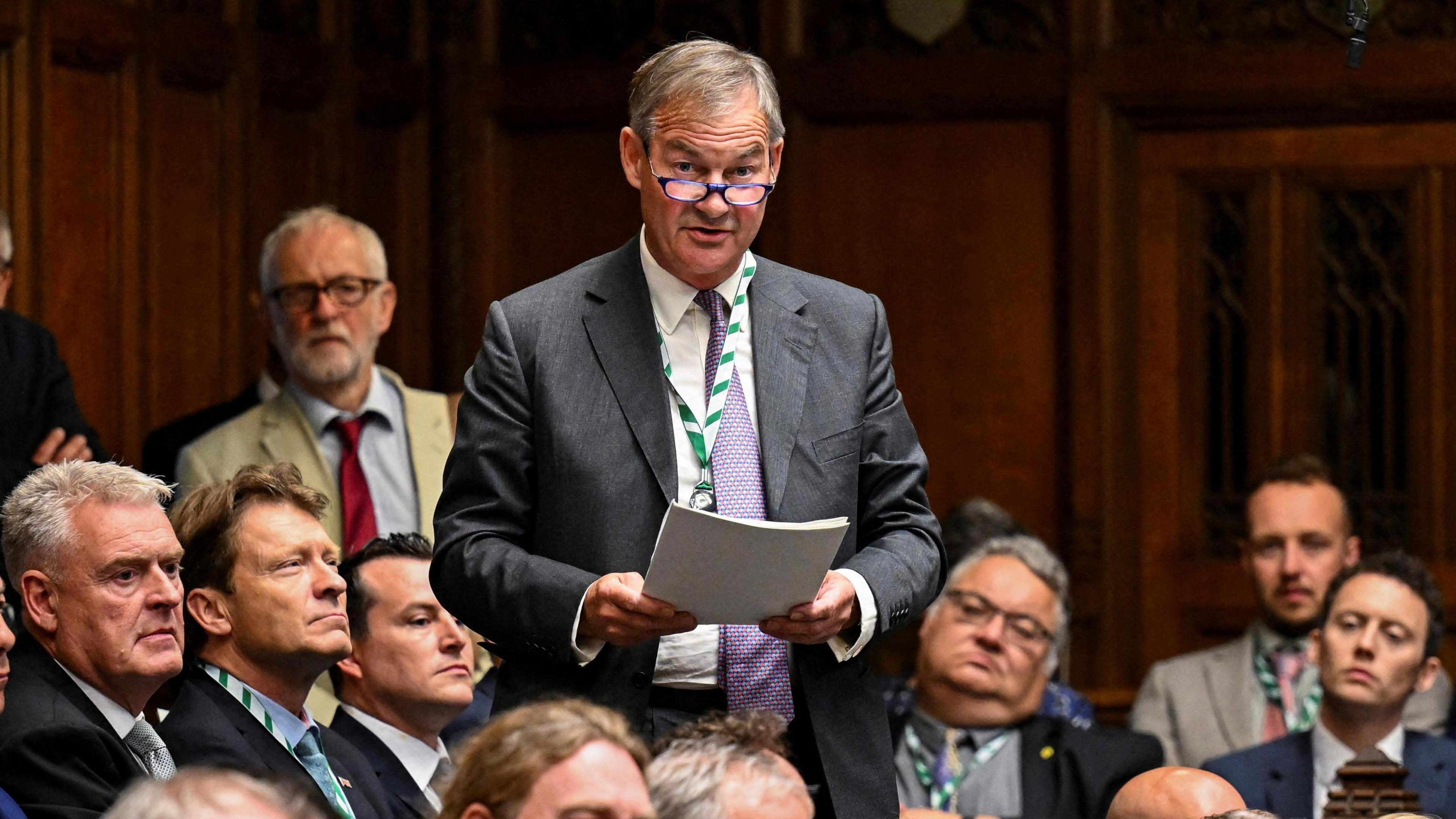
A recent parliamentary committee session has highlighted tensions over the UK government’s approach to economic regulation and growth, as Reform UK MP Rupert Lowe questioned a senior civil servant on the operational meaning of “delivering growth” under the “Regulating for Growth” initiative. The exchange, part of scrutiny into the Department for Business and Trade’s regulatory framework, underscored concerns about strategic clarity, institutional capacity, and the practical translation of high-level policy goals into regulatory practice.

The session focused on the department’s efforts to align regulators with the government’s stated priority of fostering economic expansion. Lowe began by probing the origins of the phrase “Regulating for Growth,” questioning its conceptual foundation and suggesting that deregulation, rather than additional regulation, might more logically support expansion. He expressed scepticism about whether the department fully grasped its own objectives, pointing to the name as potentially counterproductive.
Lowe then shifted to the department’s understanding of growth itself. He asked the permanent secretary to define what constitutes “delivering growth” and whether regulators had been given clear, quantifiable benchmarks — such as specific contributions to gross domestic product (GDP) — to measure success or failure. The MP noted his background in business and finance, emphasising that without precise metrics, it would be difficult for regulators to assess performance or align their actions with broader economic aims.
In response, the civil servant acknowledged the range of questions but indicated that no quantified GDP targets had been set for regulators. Instead, the department was developing regulator-specific “strategic steers” and “growth guidance” to outline expectations. The official described the role of regulators as helping their respective sectors “flourish” and achieve growth, without elaborating on precise indicators at the time of questioning. When pressed on how success would be judged absent numerical targets, the response centred on ongoing work to tailor guidance to individual regulators.
The dialogue reflected broader frustrations voiced by some parliamentarians about the government’s growth agenda. Lowe suggested that regulators, having built established structures and processes, might resist changes perceived as threatening their scope or authority. He referenced reports of reluctant engagement from regulators, framing this as evidence of potential misalignment between departmental ambitions and on-the-ground realities.
The “Regulating for Growth” framework forms part of the Labour government’s wider economic strategy following the 2024 general election. It seeks to ensure that regulatory bodies — spanning financial services, energy, planning, and other sectors — actively support business expansion rather than acting solely as barriers. Ministers have argued that smarter, more proportionate regulation can unlock investment and productivity gains without compromising standards in areas such as consumer protection or environmental safeguards.
Critics, including voices from Reform UK, contend that the approach risks adding complexity rather than removing impediments. They advocate for a clearer emphasis on reducing bureaucratic burdens, citing evidence that excessive regulation has constrained sectors such as housing development and small business formation. Reform UK has positioned itself as a proponent of deregulation, arguing that meaningful growth requires lifting obstacles to enterprise rather than issuing new guidance layers.
The exchange also touched on the department’s internal capacity. When asked whether the department possessed the necessary expertise to drive the growth agenda, the permanent secretary deferred to external business perspectives, noting that views would vary. This response drew attention to ongoing debates about civil service skills in economic policy delivery, particularly in an era when governments increasingly rely on regulatory levers to influence private sector behaviour.
Parliamentary scrutiny of such matters has intensified under the current administration. Select committees have examined how strategic objectives cascade through Whitehall departments and arm’s-length bodies. The absence of quantified targets in the hearing raised questions about accountability mechanisms: without measurable benchmarks, it becomes challenging for parliament or the public to evaluate progress toward stated goals.
Historical context is relevant. Previous governments have pursued similar initiatives, such as the “Better Regulation” agenda under earlier Conservative administrations, which aimed to reduce administrative costs while maintaining protections. Outcomes have been mixed, with some sectors reporting lighter burdens and others highlighting persistent compliance challenges. The current framework builds on those efforts but operates in a different fiscal and political environment, marked by post-pandemic recovery pressures and global supply chain shifts.
Reform UK’s participation in these debates reflects the party’s growing profile in economic policy discussions. Having secured representation in the House of Commons, the party has used committee appearances to challenge what it describes as overly cautious or bureaucratic approaches to growth. Lowe’s questioning aligns with this stance, pressing for definitional precision as a prerequisite for effective policy execution.

Business organisations have offered varied reactions. Some trade bodies welcome efforts to embed growth considerations in regulatory decision-making, viewing it as a step toward more balanced oversight. Others express concern that without clear metrics, the initiative could lead to inconsistent application or additional reporting requirements that offset intended benefits.
Economists note that defining and measuring growth remains complex. GDP remains the primary headline indicator, but supplementary measures — including productivity, investment rates, and regional disparities — provide fuller pictures. Regulators influence these variables indirectly through approvals, enforcement, and standard-setting. The challenge lies in designing guidance that encourages pro-growth behaviour without distorting market signals or creating unintended consequences.
The hearing forms part of a series examining the implementation of growth-oriented policies across government. Future sessions are expected to explore specific regulators’ responses to forthcoming strategic steers, offering further insight into how abstract objectives translate into practice. Outcomes could influence adjustments to the framework or inform broader civil service reforms aimed at enhancing delivery capacity.
As the government advances its economic programme, clarity on core concepts such as growth will remain central to credibility. The exchange between Lowe and the civil servant illustrates the scrutiny such initiatives face, particularly when definitions and metrics appear provisional. Whether subsequent guidance provides the precision sought by critics will shape perceptions of the strategy’s effectiveness.
In a political landscape where economic performance influences electoral prospects, these discussions carry weight beyond technical detail. They reflect competing visions of how the state should interact with the economy — through enabling deregulation or through guided regulatory evolution. The answers provided in committee rooms will help determine which approach prevails in practice.






