Herbert Kickl’s Rise Shakes Austria—and Sends Tremors Through the European Union
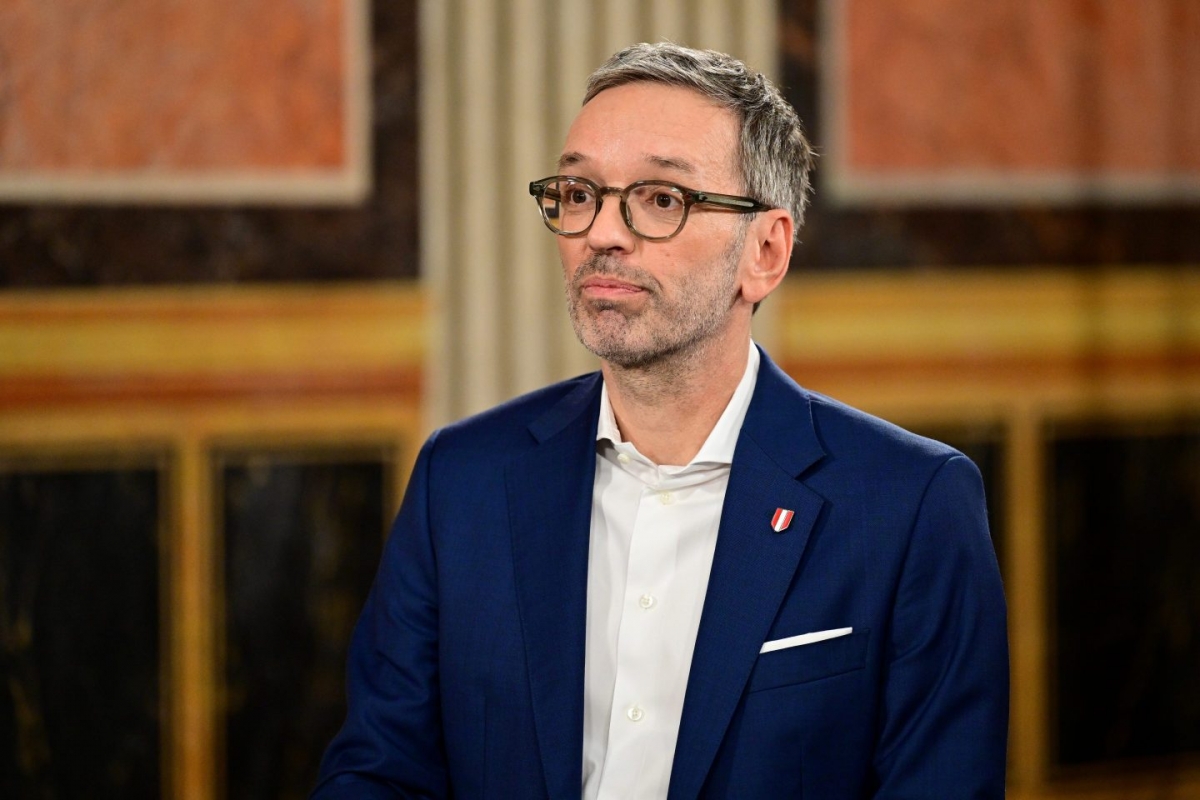
The political temperature in Austria is rising—and not quietly. What began as a contentious election outcome has evolved into a broader confrontation over democracy, sovereignty, and the future of the European Union itself. At the center of the storm is Herbert Kickl, a polarizing figure whose growing influence has unsettled political elites in Vienna and drawn wary attention from Brussels.
In recent weeks, tens of thousands of demonstrators have filled the streets of Vienna, voicing frustration not only with economic pressures but with what they perceive as a widening gap between voters and the political class. The protests, while diverse in composition, share a common thread: a sense that traditional institutions are no longer responsive to public concerns.
Kickl, leader of the Freedom Party of Austria (FPÖ), has emerged as the focal point of that discontent. Following strong electoral gains, his party positioned itself as a legitimate contender for power. Yet efforts by rival parties—including the Austrian People’s Party and the Social Democrats—to form alternative coalitions have fueled accusations that the political establishment is attempting to sideline the electorate’s choice.
Critics of these maneuvers argue that such alliances, while constitutionally permissible, risk deepening public distrust. Supporters, however, counter that coalition-building is a cornerstone of parliamentary democracy, particularly when parties seek to prevent more radical elements from gaining control. The tension between these interpretations has turned Austria into a case study in democratic legitimacy under strain.
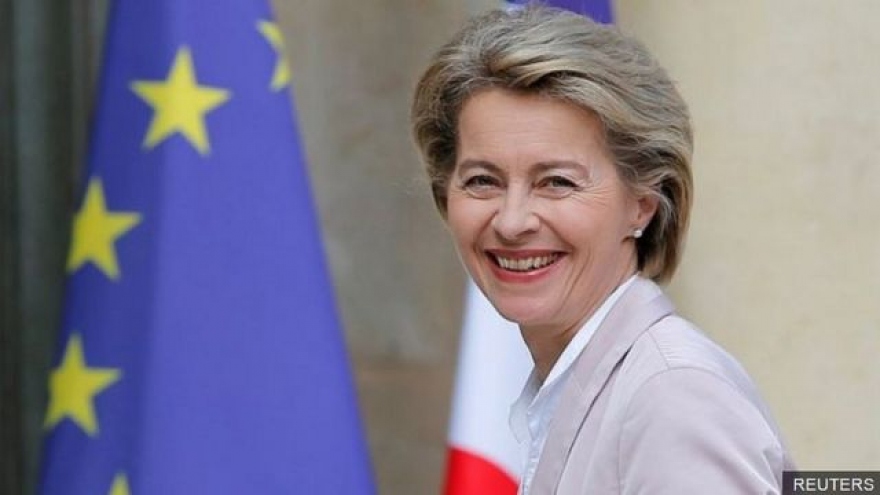
Beyond domestic politics, the implications of Kickl’s rise extend across Europe. The European Union, already navigating economic uncertainty and geopolitical challenges, now faces the possibility of increased fragmentation from within. Austria, positioned at the crossroads of Central Europe, holds strategic significance that amplifies the impact of any political shift.
Observers note that Kickl’s rhetoric—emphasizing national sovereignty, border control, and skepticism toward centralized EU authority—aligns with a broader trend seen in several member states. From Hungary to Italy, movements advocating for greater national autonomy have gained traction, challenging the long-standing model of deeper European integration.
This convergence has prompted concern among EU officials, who fear that a coordinated push by sovereignty-focused governments could weaken the bloc’s cohesion. While such an outcome remains speculative, the mere possibility has intensified debates about the balance of power between Brussels and individual member states.
Adding to the complexity is the evolving transatlantic relationship. Signals from the United States suggest a potential shift toward more bilateral engagement with European nations, rather than reliance on EU-wide frameworks. Such an approach could reshape diplomatic dynamics, offering opportunities for some countries while complicating collective decision-making.
In Austria, these global currents intersect with local realities. Economic pressures—including inflation and concerns over energy security—have heightened public sensitivity to policy decisions. For many voters, abstract debates about sovereignty translate into tangible questions about cost of living, employment, and national identity.
Kickl’s appeal lies partly in his ability to channel these concerns into a clear, if controversial, narrative. He presents himself as an advocate for ordinary citizens against what he describes as an out-of-touch elite. Whether that message translates into sustainable governance, however, remains an open question.
Opponents warn that his approach could isolate Austria within the EU and undermine cooperation on critical issues ranging from trade to security. They argue that the challenges facing Europe—climate change, migration, and geopolitical instability—require collective solutions rather than unilateral action.
Yet supporters see the moment differently. For them, the current tensions represent not a crisis, but a correction—a reassertion of democratic accountability in a system they believe has drifted too far from its roots. In this view, Austria is not destabilizing Europe, but forcing it to confront unresolved contradictions.
As negotiations over government formation continue, the stakes are becoming clearer. The outcome will shape not only Austria’s political trajectory but also broader debates about the future of the European project. Will the EU adapt to accommodate rising demands for national autonomy, or will it double down on integration?
For now, uncertainty prevails. The demonstrations in Vienna show no immediate sign of fading, and political leaders face mounting pressure to find a path forward that balances competing priorities. In the corridors of Brussels, the developments are being watched closely, with an awareness that Austria’s choices could resonate far beyond its borders.

In the end, the story unfolding in Austria is not just about one politician or one election. It is about the evolving relationship between citizens and institutions in a rapidly changing world. And as that relationship is tested, the consequences may redefine the contours of European politics for years to come.






