A tariff war meant to protect American industry is triggering an unexpected backlash.
Instead of collapsing under pressure, Canada’s steel sector is reorganizing — and the economic shockwaves are starting to hit the United States itself.
When Donald Trump announced that tariffs on imported steel would jump from 25% to 50%, the message was clear: protect American industry at all costs.
But what followed has turned into a much more complicated economic story.

Canada — historically the largest supplier of steel to the United States — refused to buckle. Instead of scrambling to regain access to the U.S. market, Ottawa began rewriting its entire industrial strategy.
And now, the consequences are rippling back across the border.
In 2025, the Trump administration doubled down on its “America First” trade doctrine, expanding tariffs not only on raw steel but also on more than 400 steel-related products including wind turbines, electric-vehicle components, and construction materials.
For Canada’s steel producers — companies such as Algoma Steel and Stelco — the move initially looked devastating. The U.S. had long been their biggest export market, and a 50% tariff instantly made Canadian steel far less competitive.
But instead of retreating, Canada pivoted.
Prime Minister Mark Carney’s government introduced a sweeping industrial strategy designed to reduce Canada’s dependence on American markets. His first federal budget included a $10-billion loan facility to stabilize manufacturers, targeted tariff relief programs for steel and aluminum companies, and a new “Buy Canadian” procurement strategy.
The message from Ottawa was blunt: Canada would no longer rely on U.S. demand to sustain its industrial base.
Steel, once primarily exported, would now be redirected into Canada’s own massive infrastructure push.
That includes building bridges, transmission lines, EV plants, naval ships, housing projects, and clean-energy infrastructure — all powered by domestically produced steel.
Instead of waiting for U.S. market access to return, Canada began constructing an internal demand engine capable of absorbing millions of tons of steel annually.
The shift is already transforming Canada’s economic playbook.

Electric arc furnace conversions, green steel investments, and long-term infrastructure contracts are reshaping the industry into what Ottawa describes as a national strategic asset tied directly to energy security and economic independence.
Meanwhile, the impact of tariffs is becoming increasingly visible inside the United States.
American automakers, construction firms, and energy companies — all heavily dependent on steel — are warning that rising input costs are rippling through the economy.
Auto manufacturers face higher production costs. Infrastructure projects are seeing bids climb. Renewable energy developers report ballooning expenses for steel-intensive projects like wind turbines and transmission towers.
Economists describe it as the classic tariff paradox.
Protecting one industry can unintentionally harm many others.
Steel producers may gain temporary protection, but downstream industries — which employ far more workers — absorb the cost increases.
North America’s manufacturing system was built on deeply integrated supply chains. Steel moved seamlessly across the Canada-U.S. border for decades, allowing both countries to manufacture efficiently and remain globally competitive.
Tariffs disrupt that delicate balance.
Now Canada appears to be adapting faster.
By redirecting investment toward domestic projects and expanding trade partnerships abroad, Ottawa is gradually reducing its dependence on the American market.

Prime Minister Carney has also emphasized diplomatic outreach to Asia, Europe, and Mexico, seeking long-term supply agreements for energy, minerals, and advanced manufacturing.
Foreign investors are taking notice.
Statistics Canada reported a 14% increase in foreign manufacturing commitments during the first nine months of 2025, particularly in energy and metals sectors affected by U.S. tariffs.
Meanwhile, American manufacturers face a different challenge: unpredictability.
Trade policies that change rapidly create uncertainty, making long-term investment planning difficult. According to industry surveys, more than 60% of midsize U.S. manufacturers delayed or canceled investment decisions due to trade instability.
The economic dynamic now unfolding across North America is revealing a deeper paradox.
Tariffs were meant to strengthen U.S. leverage.
Instead, they are encouraging allies to diversify away from American markets.
Canada’s response has been strikingly calm. Rather than escalating the trade conflict with retaliation, Ottawa has focused on internal investment and global diversification.
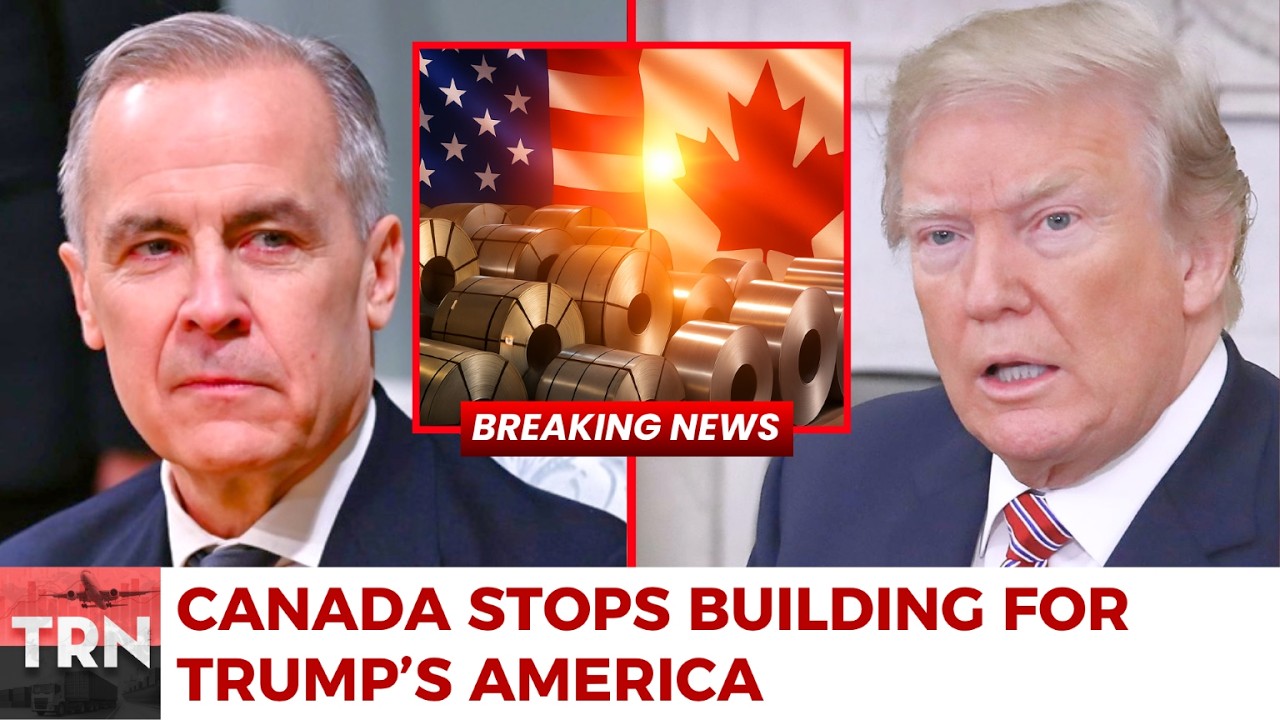
Carney’s strategy is simple but transformative: build a domestic industrial base strong enough that external pressure loses its leverage.
At the same time, Canada is strengthening partnerships with countries like Japan, South Korea, and members of the CPTPP trade bloc, expanding access to Asia-Pacific markets.
Even cooperation with Mexico is increasing ahead of the 2026 review of the United States-Mexico-Canada Agreement (USMCA).
The result is a quiet but significant shift in North America’s economic landscape.
Trump’s tariffs were designed to force trading partners to depend more heavily on the United States.
But in Canada’s case, they may be achieving the opposite.
Instead of retreating, Ottawa is restructuring its economy — transforming a trade shock into a long-term industrial pivot.
And as supply chains evolve, the biggest question may no longer be who started the steel war…
But who is actually winning it.






