A Transatlantic Rift Widens as Washington and Ottawa Clash Over Iran
The relationship between the United States and Canada—long regarded as one of the most stable alliances in modern history—appears to have entered an unusually strained phase, as a sharp disagreement over potential military action against Iran reverberates across diplomatic and defense circles.
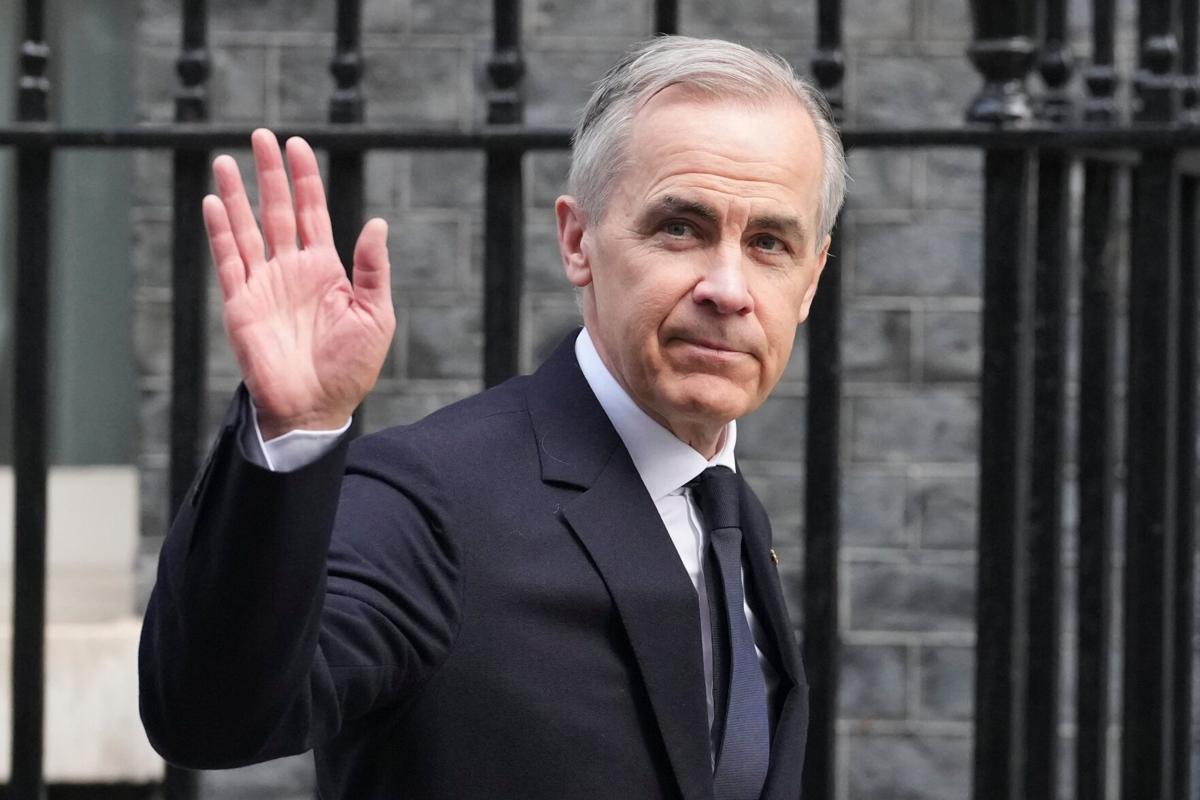
At the center of the dispute are President Donald Trump and Prime Minister Mark Carney, whose contrasting approaches to the escalating Iran crisis have exposed deeper questions about sovereignty, alliance obligations, and the future of Western cooperation.

The immediate trigger came after Washington signaled its intention to organize a coalition for possible strikes on Iranian nuclear facilities, following renewed tensions over Tehran’s nuclear activities. In a move that surprised many observers, Canada swiftly declined to participate. Speaking in Ottawa, Mr. Carney framed the decision not as a break with allies, but as a principled stance rooted in international law. Military action, he suggested, must be justified either by collective self-defense or explicit authorization from the United Nations.
The response from Washington was sharp. President Trump publicly criticized Canada’s position, portraying it as a failure of solidarity at a moment of strategic urgency. Yet behind the rhetoric, the disagreement has revealed a more complex and potentially consequential shift within the Western alliance system.
For decades, cooperation between the United States and Canada has extended far beyond symbolic partnership. The two countries are deeply integrated through joint defense arrangements such as NORAD and intelligence-sharing frameworks like the Five Eyes alliance. These structures have underpinned not only continental security but also broader Western coordination in conflicts from the Cold War to Afghanistan.
What makes the current episode notable is not merely the policy divergence, but the speed with which it has drawn reactions from other allies. Officials in several European capitals have signaled caution about military escalation, emphasizing diplomacy and legal frameworks. While no unified alternative bloc has emerged, the absence of immediate, unequivocal support for Washington’s position marks a departure from past crises, when allied backing was often more automatic.
Analysts say the episode underscores a growing tension between two competing visions of leadership. On one side is a more traditional, U.S.-led model in which Washington sets the strategic direction and allies align accordingly. On the other is an increasingly assertive approach among middle powers, including Canada, that emphasizes multilateral decision-making and legal legitimacy.
Mr. Carney’s background as a former central banker and international policymaker has shaped his response. Rather than engaging in overt confrontation, he has sought to reframe the debate in institutional terms—calling for deliberation through the United Nations and consultation among allies. This approach, some experts argue, is designed less to challenge American power directly than to constrain its unilateral use.
For the Trump administration, however, the stakes are both strategic and political. Acting without allied support would place greater operational and financial burdens on the United States, while also raising questions about the legitimacy of any military action. At the same time, stepping back could be perceived domestically as a retreat, particularly after strong public statements signaling resolve.
The implications extend beyond diplomacy. Markets have already shown signs of unease, with energy prices reacting to the possibility of conflict in the Persian Gulf. Any disruption to shipping through the Strait of Hormuz—a critical artery for global oil supply—could have immediate economic consequences worldwide.

Military planners, too, are said to be weighing the risks of acting without coalition backing. Historically, allied participation has provided not only additional capabilities but also strategic depth and political cover. Without it, even a limited operation could carry greater uncertainty.
Still, it remains unclear whether the current impasse will lead to a lasting rupture. Some officials suggest that quieter diplomatic channels may yet produce a compromise, allowing both sides to maintain their positions while avoiding escalation. Others warn that the disagreement reflects deeper structural changes that cannot easily be resolved.
What is evident is that the assumption of automatic alignment within the Western alliance can no longer be taken for granted. Canada’s decision to withhold support—regardless of its ultimate impact—has introduced a new variable into the calculus of international security.
Whether this moment proves to be a temporary divergence or the beginning of a more fragmented order will depend on what happens next: whether Washington adjusts its approach, whether allies coalesce around a common strategy, and whether the crisis with Iran itself can be contained.
For now, a partnership once defined by quiet coordination is being tested in public, with consequences that may reach far beyond North America.






