By XAMXAM
WASHINGTON — A recent YouTube video, uploaded in the style of a cinematic political thriller, claims to recount a dramatic, closed-door confrontation between President Donald J. Trump and former President Barack Obama inside a secure conference suite in the capital. The narration paints a vivid scene: Mr. Trump strides in aggressively, intent on dominating through sheer presence, sharp jabs and unrelenting volume; Mr. Obama, by contrast, remains composed, using deliberate silence and minimal gestures to unsettle his counterpart. The turning point arrives when Mr. Obama slides a plain envelope across the table, supposedly containing a photograph that implies a compromising link between the Trump family and Jeffrey Epstein’s social circle. The account builds to Mr. Trump’s supposed unraveling—escalating denials, uneven breathing, restless movements—culminating in a single, quiet question from Mr. Obama about legacy and family that leaves the room enveloped in heavy, unanswered silence.
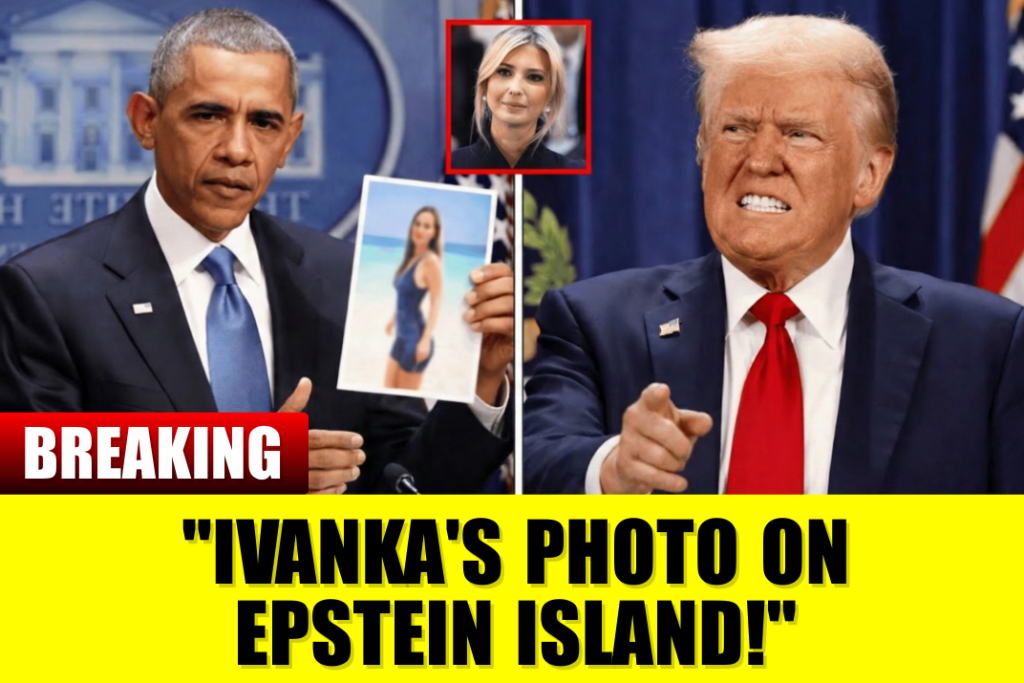
No verifiable evidence supports the existence of such an encounter. Comprehensive reviews of public records, transition logs, official calendars, White House visitor logs from relevant periods, news archives and statements from spokespeople for both men reveal no indication of a private, face-to-face meeting between Mr. Trump and Mr. Obama in recent years—let alone one involving photographic material, envelopes or discussions tied to Epstein. Mr. Obama has maintained a relatively low public profile on Mr. Trump since leaving office in 2017, confining his commentary to occasional speeches on democratic norms, institutional integrity and the importance of peaceful transitions. Mr. Trump, who routinely addresses perceived adversaries directly on Truth Social, has never alluded to a private setback or confrontation with Mr. Obama matching this description.
The video draws on real historical tensions and ongoing controversies surrounding Jeffrey Epstein but assembles them into a fictionalized narrative. Recent document releases under the Epstein Files Transparency Act—legislation Mr. Trump signed into law in late 2025—have included previously known social photographs of Mr. Trump with Epstein from the 1990s and early 2000s, taken at parties, golf outings and other events in Palm Beach and New York. Some images were briefly removed from a Justice Department website before being restored; department officials attributed the action to standard victim-privacy protocols and emphasized that no redactions were made specifically to shield Mr. Trump or any other individual. No materials from those releases—or from earlier court-mandated disclosures—depict Ivanka Trump as a teenager or Baron Trump in the contexts suggested by the video, nor do they include any “blurry beach photo” or shoreline image matching the described scene.
The two presidents’ documented interactions remain confined to the formal 2016–2017 transition period. Photographs show them seated together in the Oval Office for a cordial handover meeting, alongside joint public appearances and routine briefings. Relations deteriorated sharply afterward. Mr. Trump repeatedly accused the Obama administration of improper surveillance of his 2016 campaign—claims investigated by multiple inquiries, including the Durham special counsel probe, that found no evidence of politically motivated spying. Mr. Obama, in speeches and interviews, has critiqued Mr. Trump’s approach to governance, foreign policy and democratic institutions without engaging in personal attacks. In 2025, amid renewed public focus on Epstein files, Mr. Trump has deflected questions about his past associations by pivoting to criticisms of Mr. Obama, including unsubstantiated assertions of a “coup” linked to 2016 intelligence assessments on Russian election interference. Those claims, amplified by recent document releases from Director of National Intelligence Tulsi Gabbard, have been contested by fact-checkers and former intelligence officials as misrepresentations of routine analytic processes.
The YouTube video follows a familiar pattern in contemporary online political content: it takes verifiable elements—archival photographs, longstanding personal animosity, recent document controversies—and weaves them into invented high-stakes drama designed for maximum engagement. Similar productions have reframed real celebrity interviews, award-show remarks and old social-media exchanges into alleged live-television meltdowns or secret showdowns, often relying on anonymous “insider” sourcing, suspenseful narration, ominous background music and slow-motion reenactment effects. In this case, the envelope serves as a classic narrative device, symbolizing hidden truth, while the legacy question adds moral weight, framing the encounter as a reckoning over family, reputation and enduring power rather than mere politics.
Epstein’s documented social and professional network continues to generate speculation across ideological lines. Released files have confirmed long-known flight logs, address books and photographs but have produced few substantive new revelations beyond what was already litigated in civil suits and criminal proceedings. The video’s emphasis on silence as a strategic weapon and family legacy as a point of vulnerability lends the story a literary, almost theatrical quality, casting Mr. Obama as the embodiment of patient restraint and Mr. Trump as the archetype of blustery defensiveness. Yet in reality, power in Washington is seldom overturned by a single prop or a perfectly timed question in a closed room. Genuine reckonings—when they occur—typically leave paper trails: memos, calendars, leaked emails, congressional testimony, court filings or contemporaneous press reports. This alleged confrontation left none.
As Mr. Trump’s second term progresses—marked by ongoing debates over government transparency, institutional trust, foreign alliances and domestic policy—the video taps into deeper partisan narratives. For some viewers, it represents a satisfying fantasy of accountability long overdue; for others, it exemplifies the kind of fabricated attack that fuels distrust in media and institutions. Either way, the story exists firmly in the realm of creative speculation rather than journalism or history. No envelope crossed a conference table; no question about family legacy silenced a room. The encounter, as presented, is a product of imagination, where restraint triumphs over bluster in a script composed well after any real events could have taken place.