TRUMP FACES MOUNTING LEGAL AND FINANCIAL PRESSURE AS $450 MILLION BOND REMAINS OUT OF REACH

A High-Stakes Legal Battle Enters a Critical Phase
Former President Donald Trump is confronting one of the most consequential financial challenges of his career, as a civil fraud ruling threatens to reshape both his business empire and public narrative. The case, brought forward by New York Attorney General Letitia James, alleges that Trump systematically inflated the value of his real estate assets over many years in order to secure more favorable loan terms and insurance agreements.
After a lengthy trial, Judge Arthur Engoron ruled against Trump, imposing a penalty of approximately $354 million. With accumulating interest, that figure has now surpassed $450 million—placing immense pressure on Trump’s financial resources at a moment when liquidity and credibility are under intense scrutiny.
The Bond Requirement: A Financial Barrier
To proceed with an appeal, Trump is required to post a bond covering the full judgment amount. This bond serves as a financial guarantee that the state will receive payment if the appeal fails. However, securing such a bond has proven far more difficult than anticipated.
According to reports, roughly 30 insurance and bonding companies have declined to underwrite the required amount. Their reluctance appears to stem from concerns about the reliability and valuation of Trump’s assets—many of which were central to the original fraud allegations.
This development highlights a striking contradiction: the same asset valuations that once supported Trump’s business dealings are now being questioned by financial institutions when used as collateral.
The Risk of Immediate Enforcement
If Trump is unable to secure the bond within the court-mandated deadline, the consequences could be swift and severe. The state of New York would gain the authority to begin enforcing the judgment, which may include:
-
Freezing bank accounts
-
Placing liens on properties
-
Initiating asset seizures
Such actions could disrupt not only Trump’s business operations but also his broader financial stability. Legal experts note that enforcement mechanisms in civil fraud cases are designed to ensure compliance, particularly when large sums are involved.
A Turning Point for Trump’s Financial Narrative
For decades, Trump has cultivated an image of immense wealth and financial acumen, often emphasizing the scale and value of his real estate holdings. This case, however, places those claims under a different lens—one shaped by legal findings rather than branding.
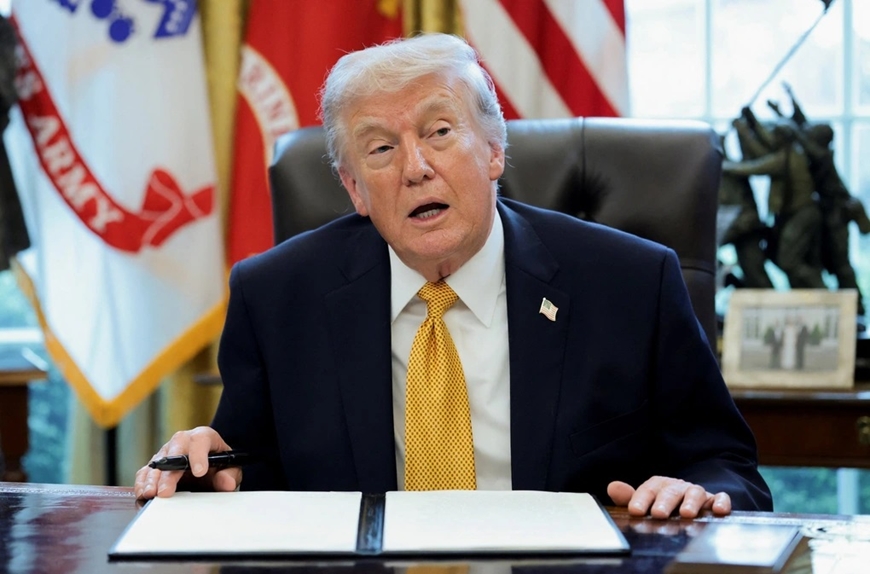
The refusal of multiple bonding companies suggests that market confidence in Trump’s asset valuations may not align with past representations. In practical terms, this disconnect is now limiting his ability to navigate the legal system effectively.
Legal Strategy and Uncertain Outcomes
Trump’s legal team continues to pursue options, including potential court intervention that could reduce the bond requirement or provide alternative arrangements. Such requests are not unprecedented, but they are granted sparingly and typically require compelling justification.
The timeline remains critical. Without relief from the courts or a last-minute financial solution, the enforcement process could begin almost immediately after the deadline passes.
Broader Implications
Beyond the immediate financial stakes, the case carries broader implications for Trump’s business legacy and public standing. It underscores the risks associated with aggressive valuation practices and raises questions about accountability in high-profile financial dealings.
Moreover, the situation illustrates how legal judgments can rapidly translate into tangible financial consequences, especially when large-scale assets and public figures are involved.
Conclusion
As the deadline approaches, Donald Trump faces a narrowing set of options. The inability to secure a $450 million bond marks a pivotal moment in an already high-profile case—one where legal rulings, financial realities, and public perception are converging.
Whether through court intervention or an unexpected financial arrangement, the outcome of this phase will likely have lasting effects—not only on Trump’s immediate circumstances but also on the broader narrative surrounding his business empire.






