“And Still I Rise”: A Speech That Shook the House Floor
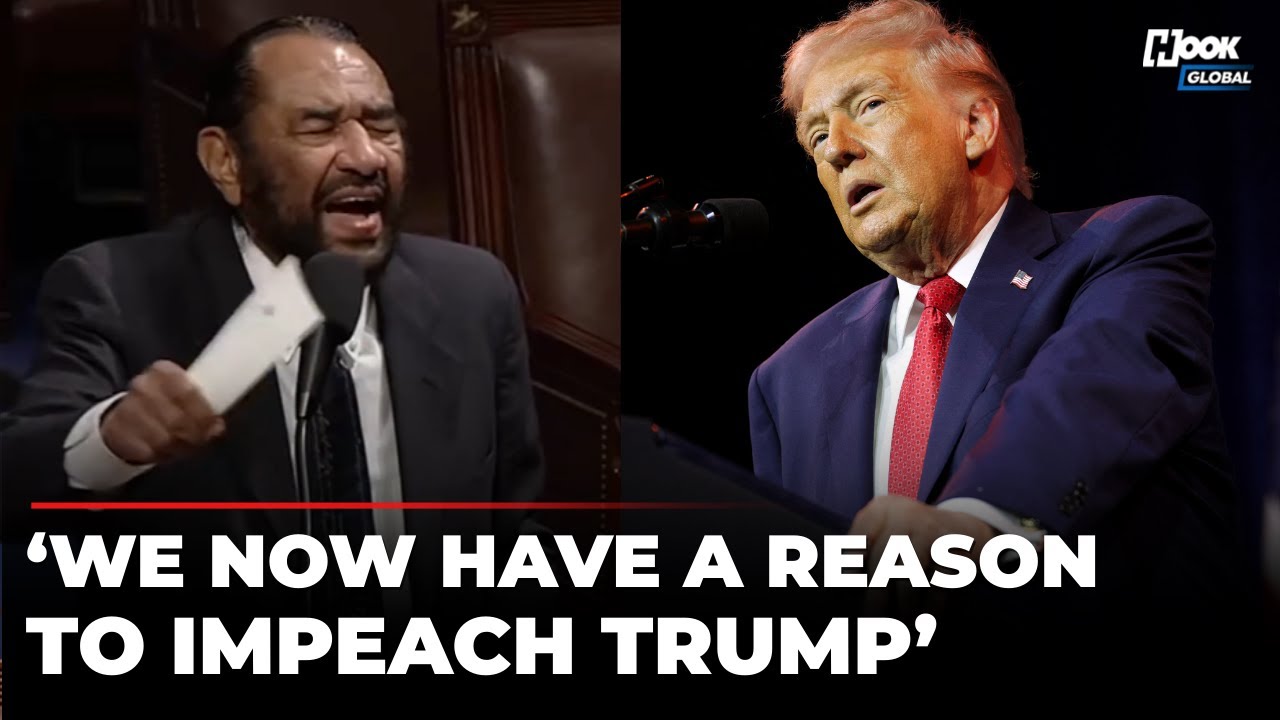
In a powerful and emotionally charged address on the House floor, Congressman Al Green delivered a stark warning to the nation: “I fear for the lives of the American people.” Speaking directly to the Speaker and the American public, Green accused President Donald Trump of abusing executive power, undermining the Constitution, and normalizing state violence—both at home and abroad.
The speech culminated in a dramatic declaration: Al Green announced his intent to introduce articles of impeachment against the President of the United States for what he described as an unconstitutional act of war against Venezuela and a broader pattern of lawlessness.
The Case of Renee Good and Fear at Home
Central to Green’s remarks was the killing of Renee Good, a mother of three who was fatally shot during an encounter with federal agents. Green condemned efforts by administration officials to label her a “terrorist” despite video evidence showing her seated in her vehicle as masked officers aggressively approached her.
“If they can convince this country that Miss Renee Good was a terrorist,” Green warned, “then none of us are safe.”
He described the incident as emblematic of a dangerous precedent: federal agents using lethal force without accountability, followed by immediate political justification rather than transparent investigation.
Green sharply criticized the administration’s decision to exclude local law enforcement from the investigation, calling it a deliberate attempt to prevent the case from reaching trial.
“If you truly believe in liberty and justice for all,” he said, “you would want transparency. You would want the local constabulary involved.”
Executive Power Without Limits?
Green then connected domestic concerns to foreign policy, citing President Trump’s own words when asked about limits on his international power:
“My own morality, my own mind is the only thing that can stop me.”
Green called the statement alarming and unconstitutional.
“What about Congress? What about the Constitution?” he asked. “The power to declare war does not belong to the president alone.”
Venezuela and an Unconstitutional Act of War
The congressman accused the president of engaging in hostilities against Venezuela without congressional authorization, directly violating Article I, Section 8 of the U.S. Constitution, which grants Congress the sole power to declare war.
He referenced Senate Joint Resolution 90, which asserts that Congress has not authorized military action against Venezuela and demands the removal of U.S. forces from hostilities.
According to Green, the president acted unilaterally, consulting oil companies instead of Congress.
“Has Congress been replaced by oil companies?” he asked.
“Noble Ends Do Not Justify Unconstitutional Means”
A central theme of Green’s speech was his rejection of the idea that perceived “noble ends” can justify unconstitutional actions.
He warned that accepting such logic would render the Constitution meaningless.
“If we allow unconstitutional means to be justified by noble ends,” Green said, “then at some point, the Constitution ceases to exist in practice.”
The Threat of Presidential Immunity and Pardons
Green also expressed concern that even if federal agents were convicted for misconduct, the president would pardon them—just as Trump pardoned individuals involved in the January 6 attack on the U.S. Capitol.
This, Green argued, creates a system where executive allies act with impunity.
A Direct Announcement: Articles of Impeachment
Near the conclusion of his speech, Green made his most consequential declaration:
“I will bring articles of impeachment against the president of the United States of America.”
He stated the grounds clearly:
-
Waging war without congressional authorization
-
Substituting personal morality for constitutional law
-
Undermining congressional authority
-
Normalizing executive lawlessness
“This is not about politics,” Green said. “It is about whether we will still have a Constitution.”
Standing Alone, If Necessary
Green acknowledged that impeachment may not succeed immediately and may not be bipartisan. But he argued that moral clarity matters more than political convenience.
“On some issues,” he said, “it is better to stand alone than not stand at all.”
He emphasized that impeachment votes are votes of conscience, not party loyalty.
Why This Speech Matters
Al Green’s address was not merely procedural. It was a constitutional alarm.
At its core, the speech raised fundamental questions:
-
Who checks presidential power?
-
Does Congress still matter?
-
Are constitutional limits optional or binding?
Green’s answer was unequivocal.
“The Constitution still rules,” he said. “And if it is to mean anything, we must act when it is violated.”
Conclusion: A Constitutional Line in the Sand
Whether or not impeachment ultimately succeeds, Green’s speech marks a defining moment in the ongoing debate over executive authority in America.
By tying together domestic policing, foreign military action, and constitutional law, he framed a broader warning: unchecked power endangers democracy itself.
As Green concluded:
“I promise you, I will not be deterred. I take this stand for the Constitution, for the republic, and for the people.”






