President Donald Trump referenced the 1941 Pearl Harbor attack during a bilateral meeting with Japan’s prime minister at the White House, prompting visible discomfort and drawing attention to the handling of historical sensitivities in high-level diplomacy. The comment occurred in the context of a discussion on advance notification to allies regarding U.S. military operations against Iran, highlighting ongoing challenges in coordinating with partners across the Indo-Pacific.

The meeting, held amid efforts to strengthen U.S.-Japan alignment on regional and global security matters, included exchanges on economic consequences of Middle East developments and expectations for allied contributions. A Japanese reporter asked why the United States had not informed key Asian and European allies, including Japan, prior to initiating action in Iran. Trump explained the decision as intended to preserve operational surprise, then added that Japan, of all nations, should understand the value of such an approach, asking rhetorically why Japan had not informed the United States before Pearl Harbor.
The prime minister maintained composure throughout the exchange, though the room’s atmosphere shifted noticeably. Japanese officials have historically emphasized careful diplomacy and avoidance of references that could reopen wounds from World War II, particularly in settings involving U.S. leaders. The remark appeared intended as a pointed illustration of military strategy rather than a deliberate provocation, yet it landed awkwardly given the historical weight of the event for both nations.
Broader discussion touched on alliance responsibilities. Trump emphasized existing U.S. commitments, including the stationing of approximately 45,000 American troops in Japan and significant defense expenditures, while expressing expectations that Japan would increase support in response to regional threats. He noted Japan’s heavy reliance on oil transit through strategic waterways, suggesting this as a practical incentive for greater involvement. The president described the relationship as reciprocal, with the United States providing security guarantees in exchange for allied cooperation.
The prime minister addressed the global security environment directly, describing it as severely deteriorated and warning of substantial economic repercussions from ongoing Middle East instability. She highlighted risks to the world economy, including supply chain disruptions and energy price volatility, and reiterated Japan’s preference for diplomatic pathways to resolution. The comments reflected Tokyo’s longstanding position favoring multilateral approaches and de-escalation in conflict zones.
Another segment of the meeting saw Trump shift focus to domestic economic policy, launching an extended critique of Federal Reserve Chair Jerome Powell. He described Powell as stubborn and incompetent, accusing him of exhibiting “Trump derangement syndrome” and refusing to lower interest rates despite what Trump viewed as favorable conditions. The president complained about ongoing construction at the Federal Reserve complex, claiming it was excessively costly and mismanaged. This tangent occurred in the presence of the foreign leader, diverting attention from the bilateral agenda and adding to the session’s unconventional tone.
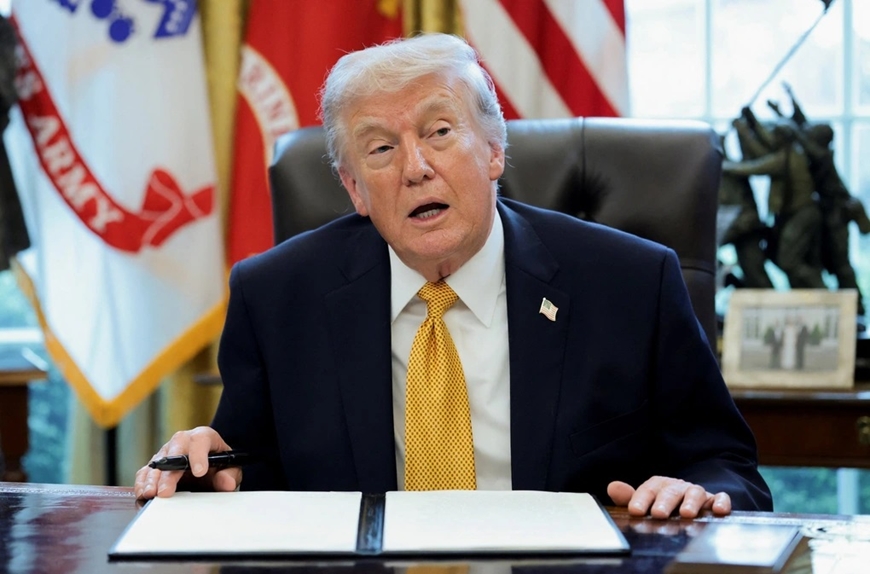
Later, when a Japanese reporter attempted to ask about future expectations for Japanese support, Trump paused the proceedings to comment on the reporter’s appearance, turning to the prime minister and asking whether the individual was “one of your people” and if he was a “good” or “bad” reporter. After a brief pause, Trump permitted the question to proceed. The exchange drew immediate attention for its informal and potentially stereotyping nature, though the reporter continued without visible disruption.
The president responded to the substantive question by reiterating expectations for Japan to contribute more actively, citing the existing security framework and mutual interests in stable energy flows. He downplayed immediate needs for additional assistance while affirming that allied participation remained appropriate given shared stakes.
Trump also addressed economic impacts from the Iran operations, acknowledging that he had anticipated more severe disruptions to oil prices and the broader economy. He described pre-conflict conditions as favorable, with low gasoline prices and strong economic performance, and noted that while some upward pressure on energy costs occurred, the outcome had proven less damaging than feared. He framed the action as necessary to address long-term threats and expressed confidence in eventual stabilization, suggesting the prime minister shared the view that the Iranian situation required resolution.
The bilateral engagement included customary elements of U.S.-Japan summits, such as discussions on trade balances, defense cooperation, and responses to regional challenges in the Indo-Pacific. Both leaders affirmed the strength of the alliance, which remains a cornerstone of security architecture in Asia. Japan has consistently supported U.S. efforts to maintain freedom of navigation and deter aggression, while advocating for restraint to avoid broader escalation.
Observers noted the meeting’s unusual dynamics, with extended presidential monologues on domestic issues and historical analogies dominating portions of the public session. Such moments can complicate messaging on alliance solidarity, particularly when partners prioritize predictability and mutual consultation.
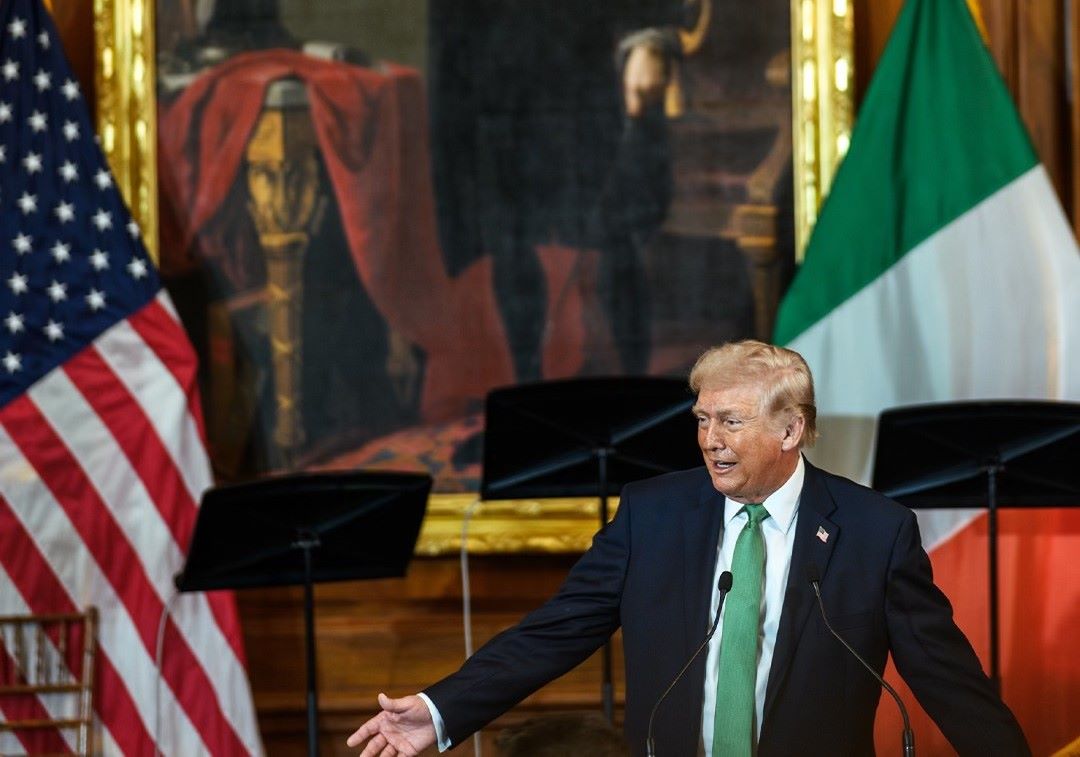
The Pearl Harbor reference joins a pattern of occasional historical allusions by Trump in diplomatic settings, often intended to underscore strategic points but carrying risks of misinterpretation. For Japan, maintaining forward-looking relations with the United States remains a priority, even as domestic audiences expect sensitivity to historical memory.
Economic discussions reflected shared concerns over global stability. With Japan heavily dependent on imported energy, fluctuations tied to Middle East developments directly affect consumer prices and industrial competitiveness. The prime minister’s emphasis on severe security and economic conditions aligned with assessments from other Asian capitals wary of prolonged conflict.
As U.S. operations in Iran continue, alliance management will likely require careful calibration to sustain partner confidence. The White House has stressed that actions aim to degrade specific threats rather than pursue regime change, though outcomes remain fluid. For Japan and other allies, the focus rests on protecting economic interests and regional stability amid uncertainty.
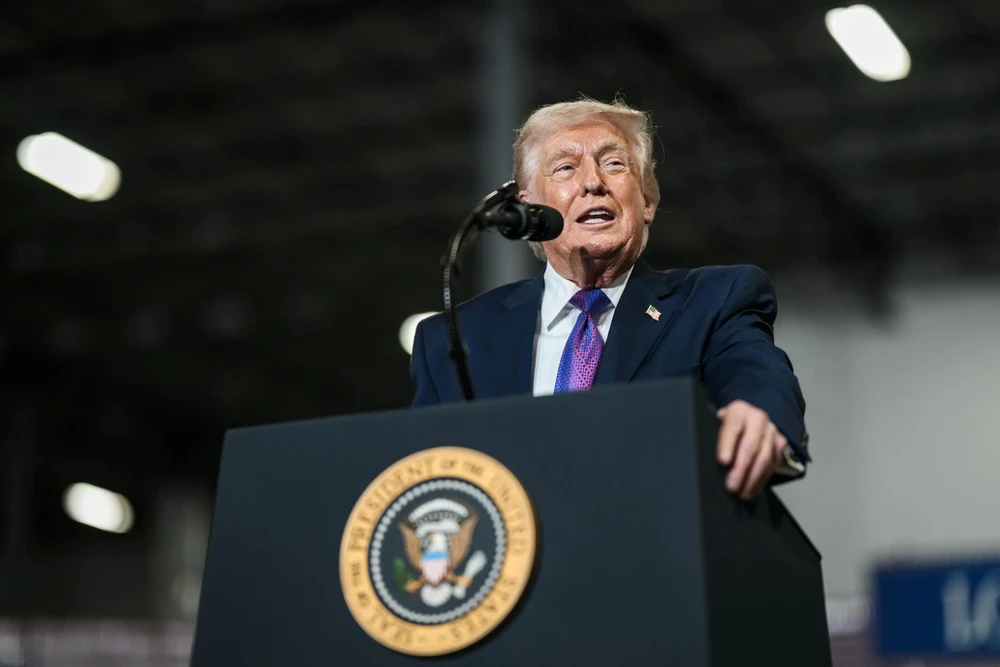
The meeting underscored the complexities of conducting diplomacy in a period of active military engagement and domestic political pressures. While the alliance endures, public exchanges like this one highlight the need for precision in language and framing to preserve mutual understanding across cultural and historical contexts.






