Europe on Edge: Germany–Italy Rift Exposes Deep Fault Lines in EU Power Structure

A sudden escalation between Germany and Italy has sent shockwaves through financial markets and political institutions, raising urgent questions about the stability of the European Union. What began as a dispute over fiscal policy has rapidly evolved into a broader أزمة—one that threatens to redefine the balance of power within Europe.
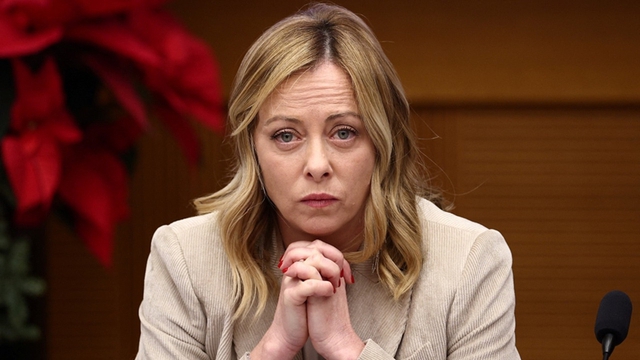
At the center of the unfolding confrontation is Italian Prime Minister Giorgia Meloni, who has taken an unusually confrontational stance against what Rome perceives as overreach from Berlin. According to officials familiar with internal discussions, Italy has rejected proposals that would expand centralized fiscal oversight across the eurozone—measures it views as disproportionately targeting its economy.
German policymakers, led by figures aligned with Friedrich Merz, have long advocated for stricter fiscal discipline within the eurozone. Their argument is rooted in sustainability: countries with high debt levels must adhere to tighter controls to ensure long-term economic stability. Yet critics in southern Europe see a different motive—one that risks consolidating economic influence in the hands of Europe’s largest economy.
The dispute has drawn in European Commission, headed by Ursula von der Leyen, whose role as mediator is now under intense scrutiny. Tasked with maintaining unity among member states, the Commission faces a delicate balancing act as tensions between two of the bloc’s founding economies escalate.
Financial markets have responded swiftly. The spread between Italian and German government bonds has widened, signaling investor concern about rising risk within the eurozone. Currency traders, meanwhile, have begun hedging against volatility in the euro, reflecting uncertainty about how the الأزمة will unfold.
At the heart of the disagreement lies a proposed framework for deeper fiscal integration. Supporters argue it would strengthen the eurozone by enforcing discipline and preventing future debt crises. Opponents, particularly in Rome, contend that such mechanisms could erode national sovereignty by placing domestic economic decisions under external control.
Italy’s resistance is not occurring in isolation. Other southern European nations, including Spain and Greece, have expressed concerns about policies that might replicate the austerity measures imposed during past financial crises. These memories remain politically potent, shaping current debates about the limits of European integration.
Meanwhile, Emmanuel Macron has adopted a cautious approach, emphasizing dialogue while avoiding explicit alignment with either side. France’s position reflects both its role as a key EU power broker and its own sensitivity to questions of fiscal sovereignty.
Energy and trade considerations further complicate the الأزمة. Italy plays a strategic role in Mediterranean energy routes, while Germany’s industrial sector depends heavily on stable supply chains. Any disruption to cooperation between the two could have cascading effects across the continent’s الاقتصاد.
For Giorgia Meloni, the confrontation represents both a political risk and an opportunity. By challenging Berlin’s influence, she has positioned herself as a defender of national sovereignty—a message that resonates with voters wary of centralized control from Brussels. Yet the stakes are high: prolonged conflict could strain Italy’s finances and test market confidence.
For Ursula von der Leyen, the الأزمة is equally defining. Her ability to broker compromise may determine not only the outcome of this dispute but also the credibility of EU institutions at a moment of growing internal division.

As negotiations continue behind closed doors, one reality is becoming increasingly clear: the European Union is entering a period of profound uncertainty. Whether this confrontation leads to deeper integration or further fragmentation will depend on decisions made in the coming days—decisions that could shape Europe’s economic and political trajectory for years to come.






