He Border in the Bank Account: A Symmetrical Financial Freeze Strains the Limits of Canadian Diplomacy
The escalation of the bilateral confrontation between Ottawa and Washington has long been measured in the abstract language of trade percentages, procurement contracts, and grid infrastructure. But this morning, the conflict moved from the high halls of policy directly into the living rooms of three million Americans who call Canada home. Following a targeted U.S. Treasury directive that restricted financial access for 240,000 Canadians living in the United States, Prime Minister Mark Carney responded with a symmetrical—if numerically larger—account freeze. By dawn, American citizens from British Columbia to Newfoundland found themselves facing a bureaucratic wall, unable to fill prescriptions, pay rent, or access shared family savings. It was a move calibrated with the cold precision of a central banker: a response intended to match not the headcount, but the strategic weight of the American action. Yet, as the first reports of blocked debit cards at pharmacy counters began to circulate, the Canadian government found itself facing a rare internal reckoning. For the first time since the confrontation began, the unity of the Canadian consensus showed signs of fraying, replaced by a poignant question about the human cost of geopolitical symmetry.
The logic behind the freeze was rooted in the principle of proportionality that has defined Mr. Carney’s premiership. When the Trump administration cited “national security” to restrict Canadian access to U.S. retirement vehicles and investment products, the Liberal cabinet concluded that a silent acceptance would be a surrender of sovereignty. The resulting Canadian directive was designed to land with the same “human register” as the American provocation. Under the emergency financial powers framework, major institutions like RBC and TD were ordered to flag and suspend accounts tied to U.S. citizenship. To the technocrats in Ottawa, this was a necessary mirror; to the affected individuals, it was a sudden, inexplicable betrayal. A software engineer in Vancouver or a retired teacher in Nova Scotia—people who have built lives, paid taxes, and raised Canadian children—suddenly found their private lives weaponized in a trade war they did not start. The precision of the calculation met the messiness of human reality, and the impact was immediate and devastating in its ordinariness.
The political reaction in the House of Commons reflected a nation deeply conflicted by its own resolve. Conservative leader Pierre Poilievre, who has largely supported the government’s firm stance against U.S. tariffs, drew a sharp line at the targeting of individuals. Calling the measure “wrong” in an unequivocal address, Mr. Poilievre argued that Canada must not punish neighbors and family members for the sins of their government. This sentiment was echoed by the NDP, who characterized the move as a departure from core Canadian values. Even within the Liberal caucus, members representing ridings with high expat populations reported receiving calls not of political protest, but of genuine grief. These were constituents who viewed themselves as part of the Canadian fabric, now told by the state that they were merely instruments of leverage. The silence that fell over the chamber during these debates signaled a shift in the national mood: the “sentimental technocrat” had finally found the limit of what the Canadian public was willing to endure in the name of strategic consistency.
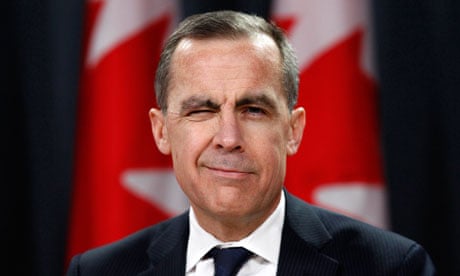
In a rare moment of public recalibration, Mr. Carney acknowledged the human toll of the directive during a difficult press conference, subsequently announcing a “humanitarian exemption framework.” This modification allows Americans with deep Canadian ties—such as marriage to a citizen or a decade of residency—to seek expedited account restoration. This pivot revealed a different side of the Prime Minister’s leadership: a willingness to admit that a blunt policy instrument had caught people it should not have. While the modification did not fully satisfy the opposition’s calls for a total suspension, it served as a vital safety valve for a country examining itself in the mirror. The American State Department’s protest against “collective punishment” was met with a chorus of observers pointing out the irony of their own initial directive against Canadians. Ultimately, the frozen bank accounts have forced a genuine tension between Canada’s sovereign strategy and its commitment to human dignity. It is a tension that defines the country’s current struggle: the effort to fight a high-stakes battle of wills while remaining the kind of nation that stops to listen when a nurse cannot fill a prescription.






