TRUMP BLINDSIDED: Canada QUIETLY REROUTES $780 BILLION Trade Flow — U.S. Ports & Railways LOCKED OUT Overnight! 🇨🇦
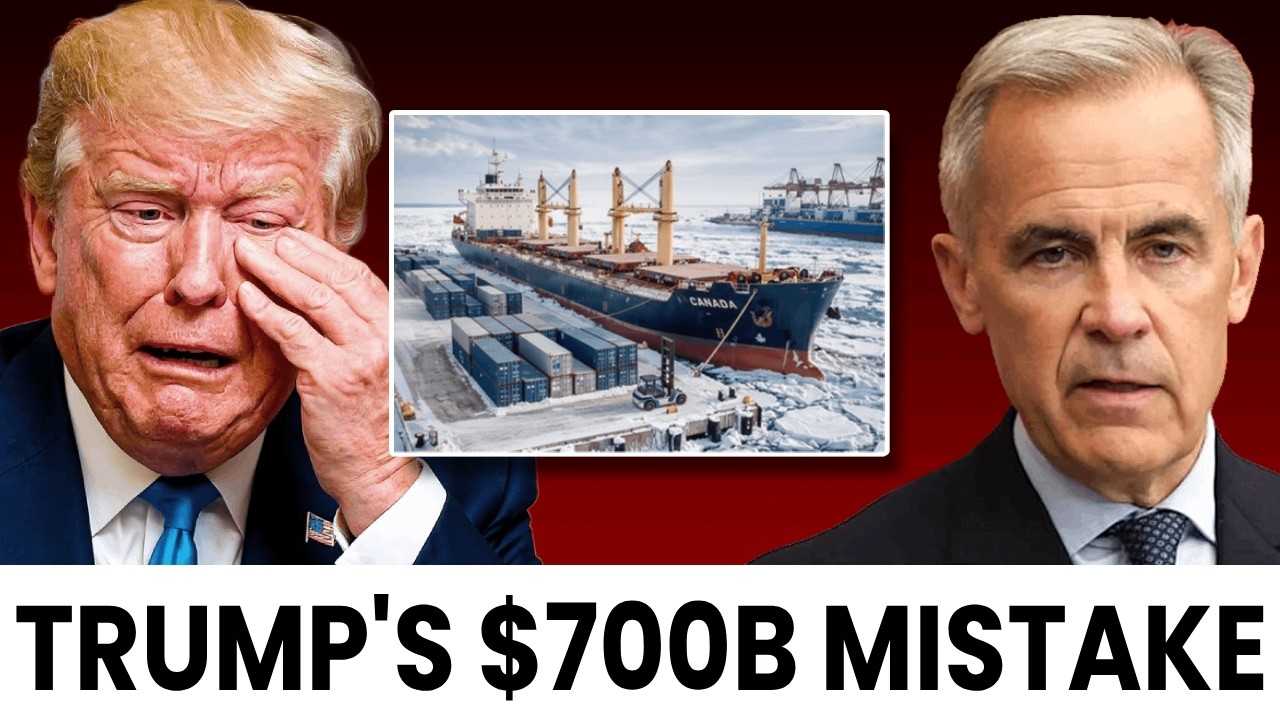
A Tariff Threat That Backfired Spectacularly
In the high-stakes arena of North American trade, where economic muscle and political bravado often collide, President Donald J. Trump’s latest salvo against Canadian fertilizer imports has ignited an unintended geopolitical earthquake. What began as a routine threat to impose severe tariffs on Canadian potash — a critical input for American agriculture — has instead accelerated Canada’s long-dormant plan to reroute vast swaths of its export economy through its own Arctic gateway. The result: an estimated $780 billion in projected trade flows over the coming decade now bypassing U.S. infrastructure entirely, leaving American ports, railways, and logistics networks suddenly — and perhaps permanently — sidelined.
The pivot centers on the Port of Churchill in northern Manitoba, a deep-water Arctic facility long dismissed as a relic of the 1930s. Once sold off for a symbolic $1 in the late 1990s and left to deteriorate after flooding damaged its rail link in 2017, Churchill has been reborn as the linchpin of Canada’s strategic diversification. Prime Minister Mark Carney, in close collaboration with Manitoba Premier Wab Kinew, has championed the “Port of Churchill Plus” initiative, channeling hundreds of millions in federal and provincial investments to modernize rail lines, expand storage, upgrade loading systems, and extend the ice-free shipping season with icebreaker support. What was once an afterthought has become a symbol of Canadian sovereignty and economic resilience.
The Fragile Backbone of American Farming
American farmers, particularly in the Midwest, rely heavily on Canadian potash. More than 95 percent of U.S. potash needs are met through imports, with roughly 90 percent originating from Saskatchewan’s vast reserves — Canada controls about 41 percent of global exports, generating billions annually. Trump’s off-the-cuff warning of “very severe” tariffs, delivered amid announcements of billions in aid for domestic producers, aimed to pressure Ottawa into concessions and bolster U.S. self-reliance. Yet the rhetoric clashed with reality: domestic production cannot scale quickly enough to replace Canadian supplies without devastating crop yields.

The threat landed amid broader tensions. Canada had already faced punishing duties from China on canola and pork, squeezing its agricultural sector from multiple fronts. Rather than escalate with counter-tariffs or public confrontations, Ottawa pursued a quieter, more enduring response: infrastructure independence. Partnerships like the one between Genesis Fertilizers and the Arctic Gateway Group — which operates Churchill — signal the shift. Plans to import phosphate through Churchill, process fertilizer in Saskatchewan, and export it northward eliminate exposure to U.S. tariffs and fees. Scaling to 1 million tons annually removes hundreds of thousands of tons from American routes each year.
From Familiar Paths to Northern Independence
For generations, Canadian grain (27.7 million tons of wheat exported yearly, worth over $11.5 billion) and potash traveled south by rail into the U.S., through Gulf Coast ports, and across the Atlantic — generating revenue for American carriers at every step. The inefficiency was tolerated for convenience. Trump’s threats shattered that complacency. In March 2025, Carney posed a pointed question to Saskatchewan farmers: Why route through American infrastructure when a shorter, Canadian-controlled Arctic path exists?
The answer has unfolded rapidly. Churchill shortens shipping to Europe by thousands of kilometers and roughly six days compared to southern routes, offering lower costs, faster delivery, and immunity from U.S. political volatility. European and Asian buyers, wary of tariff risks, have shown keen interest. Conservative projections suggest 15–20 percent of grain volumes could shift north, with potash exports alone — $5.5 billion yearly — potentially redirecting half their value over a decade. Factoring in growth, critical minerals, processed fertilizer, and emerging energy shipments, the total rerouted trade nears $700–800 billion.
A Permanent Realignment in North American Power
This is no fleeting retaliation. Infrastructure breeds habits; new contracts and supply chains create permanence. Once rerouted, trade flows rarely reverse without massive disruption. For Washington, the loss extends beyond dollars: diminished leverage over a key ally, evaporated revenue streams supporting jobs, and a stark precedent that dependency is optional. Canada’s move underscores a broader lesson — pressure tactics meant to extract concessions can instead hasten independence.

As Trump’s administration grapples with the fallout, the quiet revival of Churchill stands as a masterclass in strategic patience. What started as a tariff threat to assert dominance has instead redrawn the map of continental trade, handing Canada greater control over its destiny and leaving the United States to confront the high cost of miscalculation. The Arctic gateway is open — and the old routes may never regain their centrality.






