
WASHINGTON — For three decades, the economic lifeblood of North America has flowed through an invisible but ironclad circulatory system. It is a $1.6 trillion engine of integration where Canadian energy powers American factories, Mexican assembly lines build the cars in Ohio showrooms, and fresh produce moves north across the Rio Grande with the rhythmic certainty of the seasons.
But this week, that sense of permanence was replaced by a profound, systemic tremor. What began as a series of early-morning social media posts from Mar-a-Lago has escalated into what trade historians are calling the most significant crisis in the history of North American commerce.
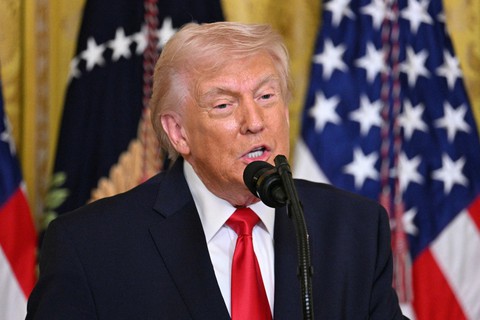
By issuing a 48-hour ultimatum to Canada and Mexico—demanding the immediate dismantling of Canadian dairy protections, a 90 percent U.S.-sourced mandate for automobiles, and drastic wage hikes in Mexican factories—Donald J. Trump has not merely reopened a negotiation. He has signaled a desire for the demolition of the existing order.
However, it is the response from Ottawa and Mexico City that has truly upended the geopolitical script.

The ‘United Front’ Doctrine
In the past, Washington’s neighborhood disputes followed a predictable pattern: the U.S. would apply pressure, its partners would negotiate separately in quiet rooms, and a compromise would be reached that favored the larger economy.
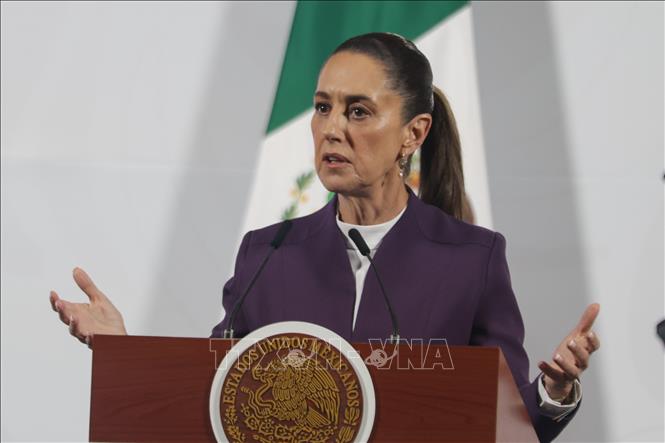
That playbook was discarded on Tuesday. In a move that blindsided the White House, Canadian Prime Minister Mark Carney and Mexican President Claudia Sheinbaum coordinated their defiance. Within hours of each other, both leaders held separate but mirrored press conferences, rejecting the U.S. demands in their entirety.
“The USMCA was designed as a partnership, not a protection system for one nation alone,” Mr. Carney told a room of stone-faced provincial leaders in Ottawa. His tone was not one of panic, but of clinical preparation.
The coordination suggests that America’s two largest trading partners have reached a shared conclusion: the risk of submitting to unilateral demands is now higher than the risk of a sustained trade war.
The Mathematics of Disruption
The financial markets, usually sensitive to political theater, reacted with a cold, mathematical clarity. While the Mexican peso stabilized and the Canadian dollar actually strengthened, it was the American manufacturing sector that bore the brunt of the uncertainty. The Dow Jones Industrial Average dropped hundreds of points as investors began to calculate the “tariff multiplier.”
In the automotive sector, the integration is so deep that it borders on the cellular. A single car engine might cross international borders eight times during the production process. Under the proposed 25 percent tariff, those costs would not just add up; they would compound, potentially pricing North American vehicles out of the global market.
“You cannot unscramble this egg in 48 hours,” said one senior logistics executive at a Detroit-based automaker. “We aren’t just talking about moving a factory. We are talking about re-engineering the entire industrial logic of the continent.”
The Energy Leverage
Perhaps the most overlooked element of this confrontation is the “energy card.” Canada remains the largest foreign supplier of crude oil to the United States, delivering millions of barrels daily through a vast network of pipelines. When Canadian officials hinted that energy exports could be included in potential retaliatory measures, energy futures jumped across multiple exchanges.
For a White House that has tethered its political fortunes to lower gas prices, a disruption in Canadian crude or Mexican petroleum products represents a self-inflicted wound. The economic pressure is no longer one-directional; it is a circular firing squad.
A New Continental Geometry
Behind the scenes, the landscape is shifting in ways that may outlast the current administration. Diplomatic sources in both Ottawa and Mexico City suggest that both nations have accelerated high-level discussions with European and Asian trade blocs.
If Canada and Mexico successfully diversify their economic alliances, the United States faces the prospect of losing its status as the undisputed gravitational center of the North American economy. For the first time, the “middle powers” of the continent are signaling that they are prepared to defend their interests, even if it means confronting their largest customer.
The Carney Factor
The presence of Mark Carney—a former Governor of both the Bank of Canada and the Bank of England—at the helm in Ottawa adds a layer of sophisticated grit to the standoff. Mr. Carney, a veteran of the 2008 financial crisis and the Brexit fallout, is a leader who speaks the language of the markets as fluently as the language of diplomacy.
His strategy appears to be one of “calculated resilience”: presenting Canada as the defender of stable, predictable trade rules in contrast to Washington’s volatility. By aligning with Ms. Sheinbaum, he has transformed a bilateral bullying session into a multilateral stalemate.
As the 48-hour clock winds down, the question for North America is no longer whether the trade rules will change, but whether the continent itself will remain an integrated economic block. For 30 years, the system functioned because everyone agreed to play by the rules. This week, the rules were set on fire, and the smoke is visible from every boardroom on the continent.






