Canada’s Potato Pivot Signals a Subtle Shift in North American Trade
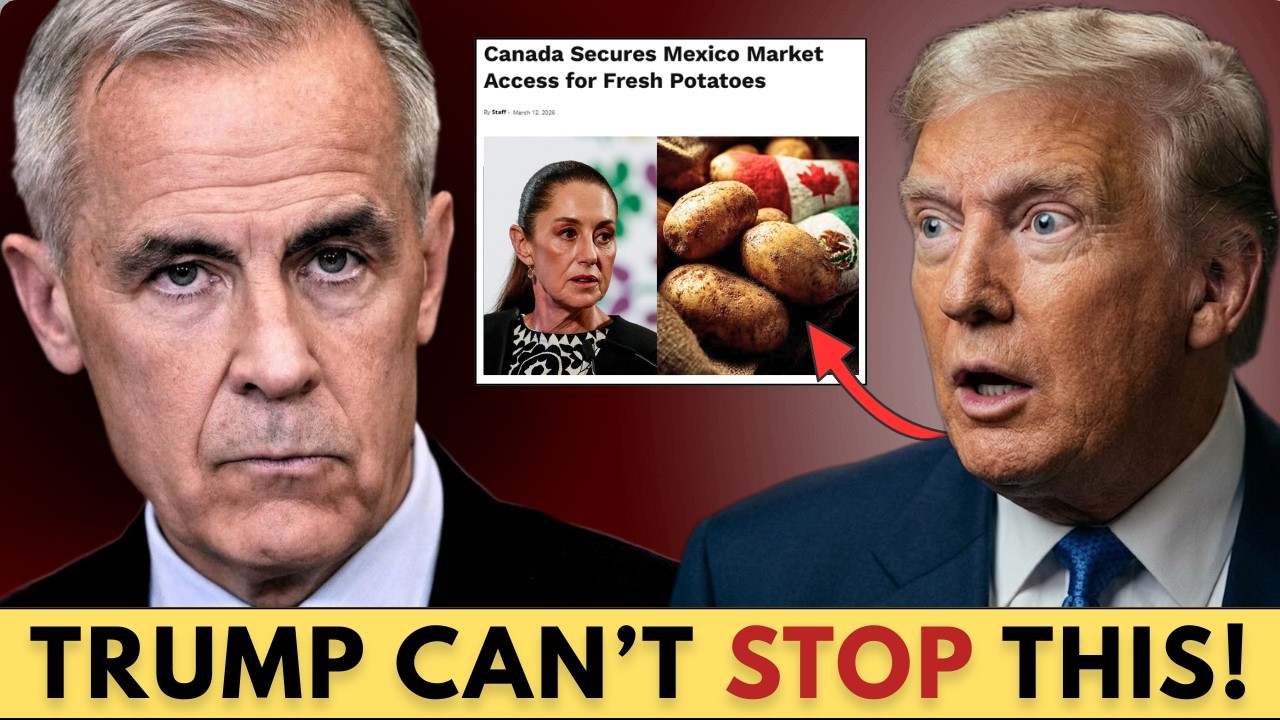
In the quiet farmlands of Prince Edward Island and across the agricultural expanses of Alberta, a seemingly routine trade development is unfolding with implications that stretch far beyond the fields. Canadian farmers may soon begin shipping potatoes to Mexico under a newly reached agreement facilitated by the Canadian Food Inspection Agency. At first glance, the move appears technical, even mundane. But beneath its surface lies a deeper story—one that reflects a changing economic mindset and a recalibration of long-standing trade relationships.
For decades, Canada’s economic partnership with the United States has been among the most stable in the world. Billions of dollars in goods have crossed the border each year, supported by integrated supply chains and geographic proximity. In agriculture, the United States has been a cornerstone market for Canadian producers. Farmers, particularly those in Prince Edward Island, built their livelihoods on reliable access to American consumers.
Yet that sense of certainty has gradually eroded. Trade disputes over softwood lumber, dairy quotas, and metals have introduced friction into what was once considered an almost frictionless relationship. These tensions were amplified during the presidency of Donald Trump, whose “America First” economic approach signaled a shift in how the United States engaged with even its closest allies. Tariffs were imposed with little warning, and negotiations took on a sharper, more transactional tone.
For Canadian exporters, the message was clear: dependence on a single market carried growing risks.
It is within this context that the potato agreement with Mexico takes on broader meaning. Mexico, with a population exceeding 120 million, represents a significant and largely untapped market for Canadian agricultural products. While the country has a strong domestic farming sector, it does not produce russet potatoes at the scale or consistency required by its food processing industries. This gap creates an opportunity that Canadian producers are now moving to fill.
The agreement itself, supported by regulatory cooperation, enables Canadian potatoes to enter the Mexican market for both consumption and processing. But more importantly, it reflects a deliberate strategy of diversification. Rather than relying predominantly on the United States, Canadian farmers are seeking to distribute their exports across multiple destinations, reducing vulnerability to political or economic disruptions in any single country.
This shift aligns with broader trends in global trade. Nations are increasingly prioritizing resilience over efficiency, seeking to build networks that can withstand sudden policy changes or geopolitical tensions. In North America, this evolution is taking place within the framework of the United States-Mexico-Canada Agreement, which governs trade across the continent. While the agreement maintains a structure for cooperation, its renegotiation underscored a crucial reality: trade rules are not fixed. They are subject to political priorities and can change with shifting leadership.

For farmers on the ground, these abstract dynamics translate into practical decisions. Where once the question was how much could be sold to the United States, it is now how many markets can be accessed simultaneously. Diversification is no longer a growth strategy; it is a safeguard.
The potato, in this case, becomes more than an agricultural product. It serves as a symbol of adaptation in an uncertain economic landscape. By expanding into Mexico, Canadian producers are not abandoning their American partners. Rather, they are acknowledging a new reality—one in which stability cannot be taken for granted and flexibility becomes essential.
This transformation is not marked by dramatic announcements or sweeping policy declarations. Instead, it is unfolding quietly, through regulatory agreements, shipping routes, and incremental changes in trade patterns. Yet its significance should not be underestimated. The decisions made today by farmers and exporters may shape the contours of North American trade for years to come.
In the end, the story of Canadian potatoes heading south is less about agriculture than about strategy. It illustrates how nations respond to uncertainty—not by retreating, but by expanding their options. In a world where economic relationships are continually being tested and redefined, even the most ordinary commodities can reveal extraordinary shifts.
And so, as the first shipments prepare to leave Canadian soil for Mexican markets, they carry with them more than just produce. They carry a message: that resilience in the modern economy depends not on a single partnership, but on the ability to navigate many.