A Quiet Realignment in the Skies: How Britain, Canada and Sweden Are Rethinking Air Power
For nearly a century, the architecture of Western air power has rested on a single, unspoken assumption: that the United States would remain its gravitational center. From the mass production feats of World War II to the technological dominance of the Cold War and beyond, American aerospace has shaped not only the tools of defense, but also the rules governing their use. Today, however, a subtle yet consequential shift is underway—one that may redefine how allied nations build, share and control military capability.
At the heart of this shift is a growing alignment between the United Kingdom, Canada and Sweden. It is not a formal alliance in the traditional sense, nor a sudden rupture with existing partnerships. Rather, it is an incremental convergence of industrial strategy, technological ambition and political calculation. Together, these three countries are assembling what could become a parallel framework for air power—one less dependent on American systems and constraints.

The origins of American dominance are well documented. During World War II, the United States produced aircraft at a scale unmatched by any other nation, cementing its role as the arsenal of democracy. That industrial advantage carried forward into the postwar era, when defense spending and technological innovation reinforced its leadership. Over time, American aircraft became the default choice for many allies, particularly within NATO, where interoperability often translated into standardization around U.S. platforms.
Yet that model has revealed its limitations. Modern systems such as the F-35, while technologically advanced, come with high costs and tightly controlled software and upgrade pathways. Participating countries often find themselves reliant on American approval for modifications, exports or even operational adjustments. What was once seen as a guarantee of quality and integration has, in some cases, become a constraint on autonomy.

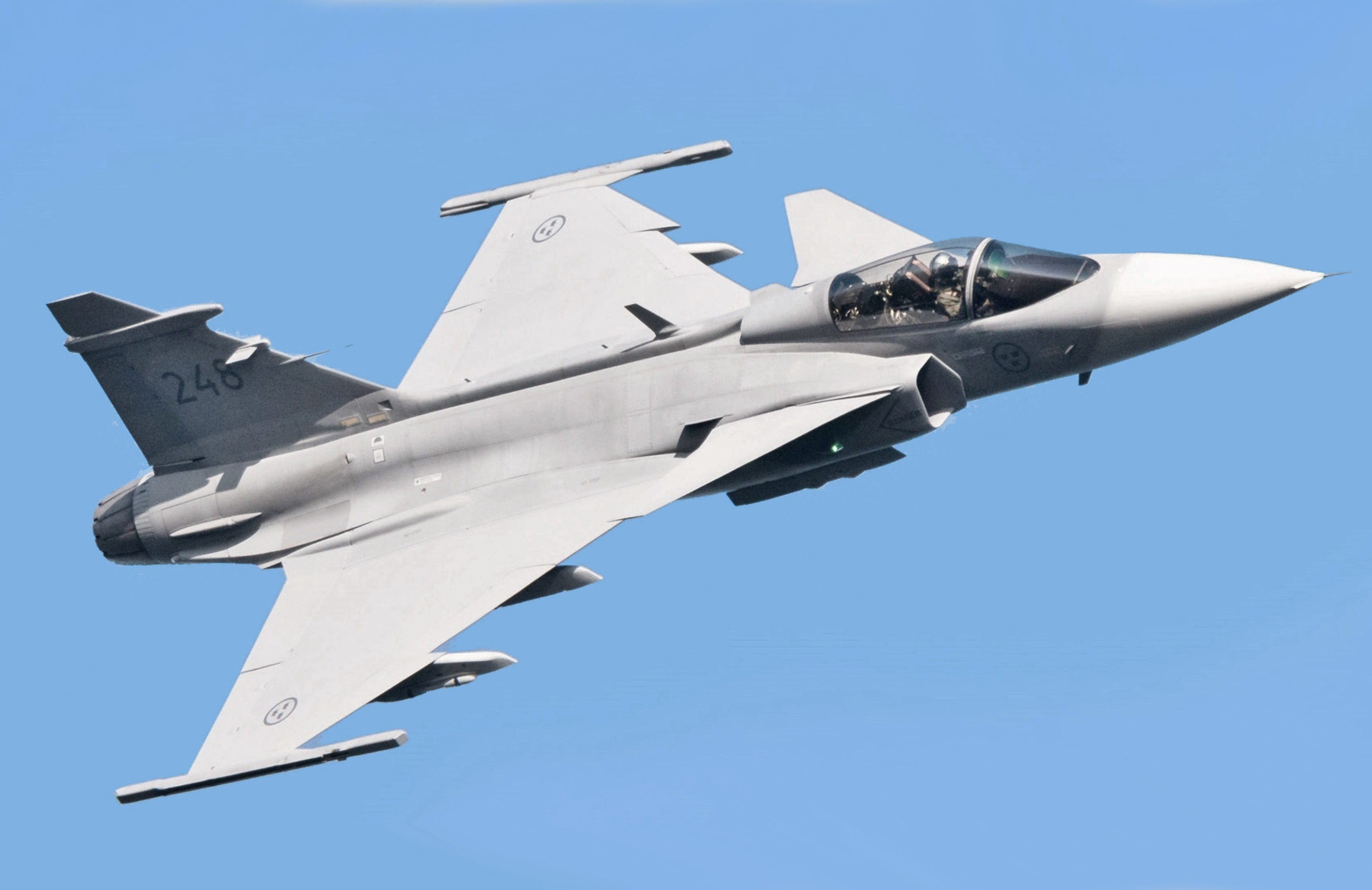
It is within this context that the British-Canadian-Swedish alignment gains significance. Each partner brings distinct capabilities. Britain contributes advanced propulsion expertise, anchored by companies like Rolls-Royce, which remains a global leader in engine design. Sweden offers flexible, cost-efficient platforms through Saab, including fighter aircraft built around open architecture systems that allow for rapid adaptation. Canada, for its part, provides strength in manufacturing, simulation and integration, with firms such as Bombardier and CAE playing central roles.
What distinguishes this emerging framework is not merely the sum of its parts, but its philosophy. Unlike traditional procurement models, which often deliver finished products with limited transparency, this approach emphasizes technology transfer and shared development. Engineers and technicians across all three countries gain access to design knowledge and production processes, enabling them to modify and evolve systems independently.
Control—particularly over critical components such as engines—has become a central concern. Reliance on American-made propulsion systems can introduce regulatory barriers, affecting how and where aircraft are deployed or sold. By developing alternatives within their own ecosystem, these nations aim to remove such constraints, asserting a greater degree of sovereignty over their defense capabilities.
The implications extend beyond hardware. Training, long a quiet pillar of military readiness, is also being reimagined. Advanced simulation technologies now allow pilots to train domestically at levels of fidelity once possible only through access to U.S.-based infrastructure. This reduces bottlenecks, accelerates force generation and insulates national defense planning from external disruptions.
Economics, too, play a decisive role. Domestic production transforms defense spending into an engine of growth, supporting high-skilled jobs and sustaining innovation. In Canada, the prospect of thousands of new positions tied to aerospace development underscores the stakes. For Britain and Sweden, continued investment ensures that their industries remain competitive in an increasingly contested global market.
None of this suggests an imminent collapse of American influence. The United States retains unparalleled resources, experience and reach. But the emergence of credible alternatives signals a more pluralistic future—one in which allies seek not to replace American leadership, but to balance it with greater independence.
Other nations are watching closely. Countries facing budget constraints, strategic uncertainty or political sensitivities may find this model appealing. A diversified approach to procurement—combining high-end systems with more adaptable, cost-effective options—offers flexibility in an era defined by rapid technological change and shifting alliances.
In the end, the significance of this quiet realignment lies not in confrontation, but in choice. By building the capacity to design, produce and operate advanced systems on their own terms, the United Kingdom, Canada and Sweden are expanding the range of possibilities available to themselves and others.
The skies, long dominated by a single center of gravity, may soon become a more distributed domain—shaped not by one power alone, but by a network of capable and increasingly confident partners.