ORLANDO, Fla. — For decades, the arrival of “Snowbirds”—the millions of Canadians who flee the northern winter for the sun-drenched golf courses of Florida and Arizona—was as predictable as the tides. But this March, as the palm trees sway in the Gulf breeze, the silence at the check-in counters is becoming an expensive diagnostic tool for the American economy.
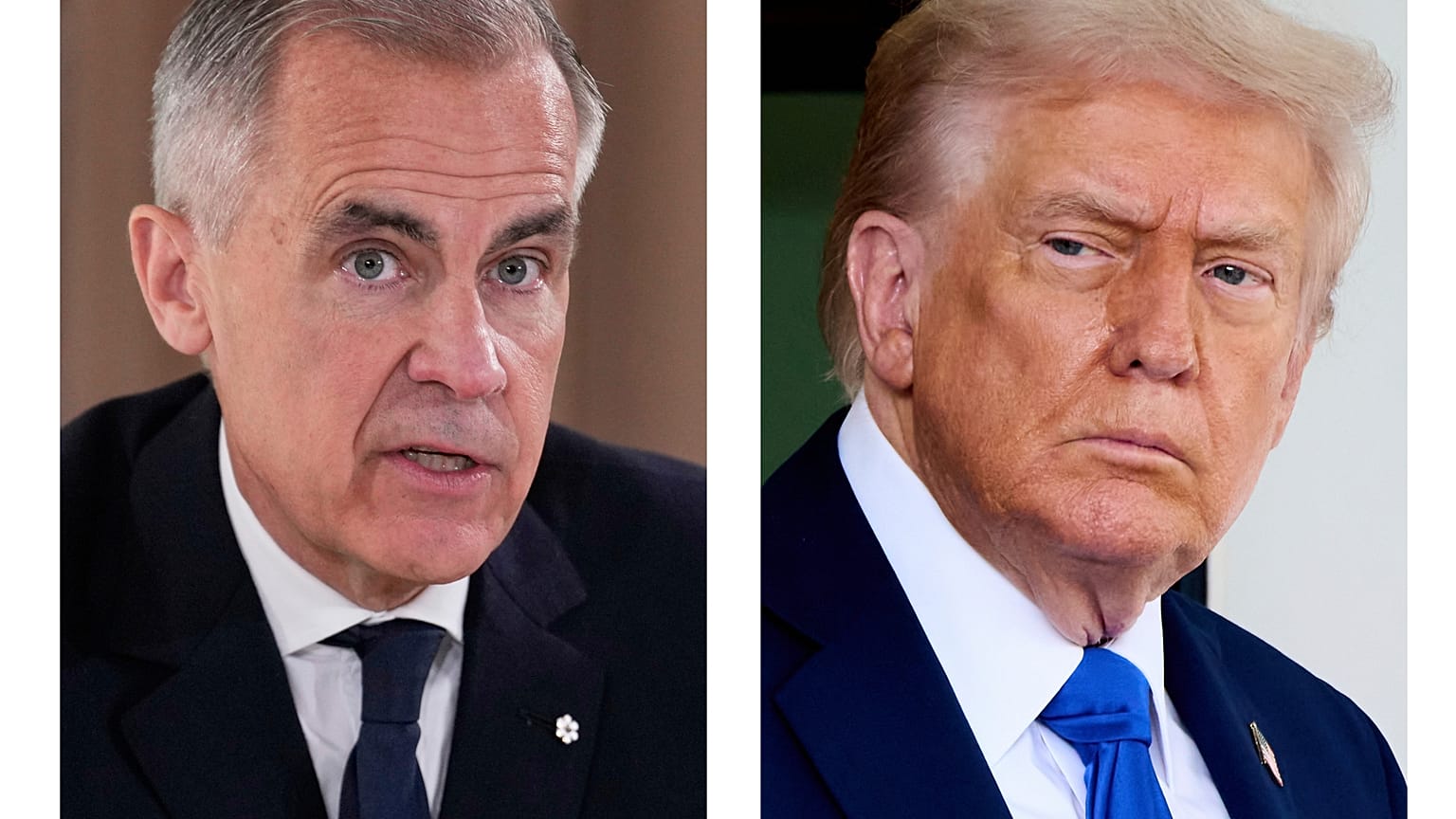
The cause is not a sudden shift in climate, but a profound shift in sentiment. Following a series of diplomatic broadsides in which President Donald J. Trump characterized Canadians as “mean and nasty” in response to their boycotts of U.S. goods and travel, the “Trump Slump” has hardened into a structural reality.
According to a comprehensive data analysis by Forbes and the U.S. Travel Association, the American economy has bled roughly $4.5 billion in lost Canadian tourism and trade over the last twelve months. It is an economic catastrophe unfolding in slow motion—one driven not by government decree, but by the quiet, collective choices of millions of individuals.
The Power of the “Quiet No”
The exodus began as a visceral reaction to the President’s February 2025 executive orders on tariffs and his rhetorical flirtation with annexing Canada as a “51st state.” But what economists initially dismissed as a temporary “protest dip” has proved to be something far more durable.
“We aren’t seeing a boycott anymore,” said Julianne Webb, a senior analyst at a Toronto-based consumer research firm. “We are seeing a behavioral pivot. Canadians haven’t just stopped going to Florida; they’ve started going to Portugal, Mexico, and their own backyard. Once a consumer builds a new habit, the old one is incredibly hard to buy back.”
The numbers are unambiguous. Statistics Canada reports that vehicle crossings into the U.S. have fallen for ten consecutive months, down 30 percent year-over-year. Air travel has plummeted by 24 percent. For an industry that relies on Canadians for 28 percent of its international arrivals, the impact is existential.
The Carney Perspective: Data as Destiny
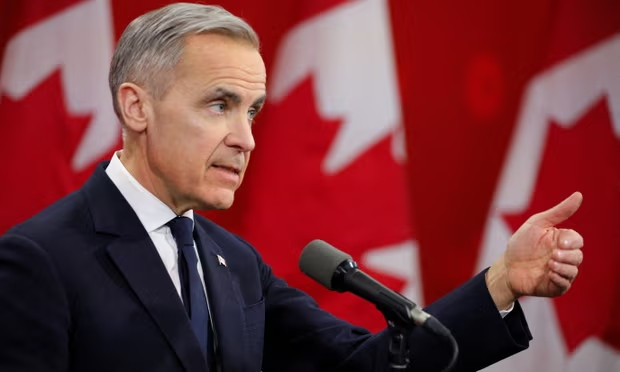
In Ottawa, Prime Minister Mark Carney has observed this shift with the clinical detachment of a former central banker. While he has publicly advocated for “Team Canada” unity, his real influence lies in his interpretation of the data.
To Mr. Carney, the $4.5 billion deficit is not a political weapon to be wielded in a speech, but a market signal. He has characterized the shift as a “long-term behavioral change,” noting that when millions of citizens independently decide to redirect their capital, they create a force that no government can easily reverse. By encouraging “market diversification” through new trade ties with Europe and Asia, Mr. Carney is effectively institutionalizing the individual choices of his citizens.
The message from Ottawa is subtle but clear: If Washington views the relationship as “mean and nasty,” Canadians will simply take their business elsewhere.
The Border State Bleed
While the rhetoric remains heated in Washington, the pain is being felt most acutely in the border states that once viewed Canadian visitors as a birthright. In Upstate New York, over 80 percent of businesses in the North Country report a decline in Canadian customers, with many forced to reduce staffing by a third.
In Florida, the “Snowbird” absence is being felt in the luxury real estate and hospitality sectors. “You can’t replace three million high-spending visitors overnight,” said a regional tourism director in Orlando. “They weren’t just tourists; they were part of the local economy. Now, they’re just… gone.”

Conclusion: The New Economic Landscape
The “Mean and Nasty” era of North American relations has proven that words have a specific, measurable price. As the U.S. travel trade deficit approaches $70 billion, the myth of American economic invulnerability is being tested by its closest neighbor.
The $4.5 billion loss represents more than just canceled hotel rooms and unbought bourbon; it represents a fraying of the social and economic fabric that has held the continent together since 1945. As Mark Carney completes his pivot toward global markets and Canadians continue to “Buy Canadian,” the silent exodus shows no signs of reversing.
Washington may still be waiting for a formal capitulation, but the market has already moved on. In the new North America, the most powerful vote isn’t cast in a ballot box—it’s cast at the checkout counter. And for the first time in a century, the North is voting “no.”






