Senior figures within the European Union have initiated informal discussions about the possibility of substantially closer cooperation with Canada across economic, regulatory, and strategic domains, according to diplomatic sources in Brussels, Ottawa, and several EU capitals. While the exchanges remain at a preliminary and non-committal stage, the very fact that such conversations are taking place has generated considerable interest among policymakers, analysts, and market participants concerned with the future configuration of transatlantic relations.
The current framework governing Canada-EU relations is anchored in the Comprehensive Economic and Trade Agreement (CETA), which entered provisional application in 2017 and has since eliminated tariffs on the vast majority of goods traded between the two sides while opening significant opportunities in services, investment, and public procurement. CETA is widely regarded as one of the most ambitious trade deals the EU has concluded with a non-European partner, yet both sides have repeatedly expressed interest in deepening the relationship beyond its existing scope. Recent joint statements issued after ministerial meetings have highlighted shared priorities in areas such as digital standards, sustainable finance, critical raw materials, and research collaboration.
The latest round of exploratory talks appears to focus on several specific dimensions. On the economic front, officials have discussed possibilities for greater alignment in regulatory approaches to emerging technologies, including artificial intelligence, quantum computing, and biotechnology, where compatible standards could facilitate smoother market access and joint innovation. Energy security has also featured prominently, with attention to Canada’s role as a reliable supplier of hydrocarbons and critical minerals essential to the EU’s green-transition objectives. Supply-chain resilience—particularly in semiconductors, batteries, and rare-earth elements—has emerged as another key area, given Europe’s ongoing efforts to reduce strategic dependencies following recent global disruptions.
Strategic and security cooperation forms a parallel track in the discussions. Canada and the EU already collaborate closely within NATO and through bilateral defense dialogues, but some European capitals have expressed interest in more structured mechanisms for information sharing, joint exercises, and coordinated responses to hybrid threats and maritime security challenges in the Indo-Pacific and Arctic regions. While full EU membership for Canada remains legally and politically implausible under current treaty provisions—which envisage accession primarily for European states—the concept of an “enhanced strategic partnership” or a bespoke association agreement has been raised as a plausible long-term objective.
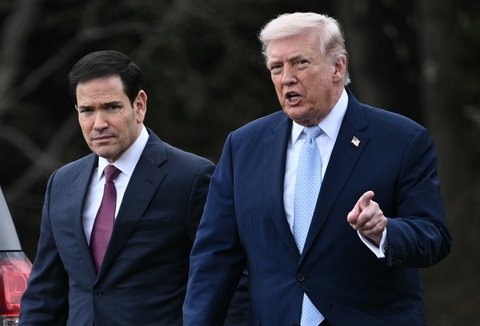
The timing of these conversations coincides with a period of notable uncertainty in transatlantic economic relations. Recent U.S. tariff measures targeting Canadian exports in steel, aluminum, and other sectors, coupled with broader questions about the durability of certain North American trade commitments, have prompted Ottawa to accelerate diversification efforts. Canadian policymakers have long pursued a multi-vector trade strategy, seeking to reduce reliance on any single market while preserving the foundational importance of the United States as the country’s largest trading partner. Strengthening ties with Europe fits squarely within that approach, offering both economic hedging and political signaling.
In Brussels, the outreach to Canada reflects a wider EU effort to cultivate deeper relationships with like-minded democracies outside the immediate neighborhood. Strategy documents published in recent years have emphasized the need to build resilient networks of partners that share regulatory philosophies, democratic values, and commitment to rules-based trade. Canada’s advanced economy, resource endowment, and track record of multilateral engagement make it a natural candidate for such outreach. Several northern and western European member states—traditionally strong proponents of open trade and transatlantic solidarity—have been particularly active in advancing the dialogue.
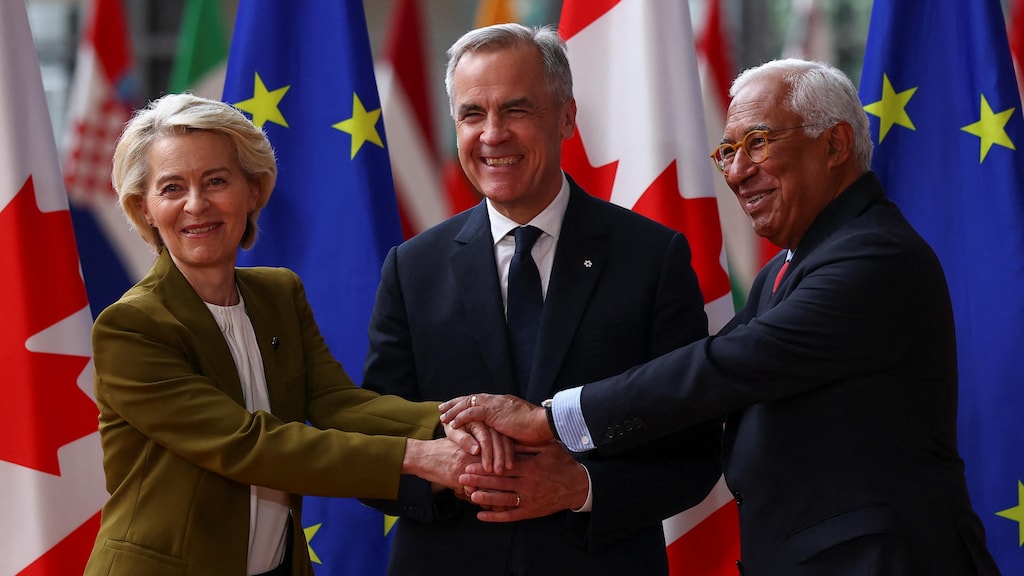
Canadian officials have welcomed the exploratory contacts while stressing continuity in existing priorities. The government has described the United States as an “irreplaceable” partner in economic, security, and geographic terms, pointing to the integrated nature of North American supply chains and the shared continental defense architecture through NORAD. At the same time, Ottawa has consistently framed deeper EU engagement as complementary rather than competitive, arguing that diversified relationships enhance overall resilience without undermining core alliances.
Market observers have noted that even preliminary discussions can influence investor sentiment and corporate planning. Sectors with significant transatlantic exposure—automotive, aerospace, energy, and technology—remain particularly sensitive to signals about future trade-policy direction. Equity markets in Toronto and major European centers registered modest movements following initial media reports of the talks, though analysts cautioned that concrete outcomes remain distant and any material impact would depend on negotiated results rather than exploratory dialogue.
Political reactions have varied. In Canada, business organizations representing export-oriented industries have expressed cautious support for deepening EU links, while underscoring the need to preserve smooth access to the U.S. market. Opposition voices have questioned whether the government is adequately prioritizing domestic economic challenges amid external diversification efforts. In Europe, supporters of closer ties highlight strategic and economic benefits, while skeptics point to the significant legal, institutional, and logistical hurdles involved in any arrangement that extends single-market disciplines across the Atlantic.
The discussions also occur against the backdrop of broader global trends toward friend-shoring and supply-chain regionalization. As geopolitical competition intensifies and economic coercion becomes a more visible tool of statecraft, many governments are seeking to cultivate redundant and ideologically aligned partnerships. For Canada, the EU represents a large, affluent market with shared regulatory traditions; for Europe, Canada offers resource security and a stable North American anchor outside immediate U.S. policy fluctuations.
No formal negotiating mandate has been granted by the European Council, and Canadian authorities have not indicated any intention to seek a new overarching agreement in the near term. Instead, the current exchanges are expected to inform future ministerial-level meetings and technical working groups. Progress, if any, would likely manifest first in sectoral initiatives—such as joint critical-minerals strategies or regulatory alignment roadmaps—rather than a sweeping institutional redesign.
The episode underscores the adaptability of transatlantic relations in an era of strategic uncertainty. While NATO defense ties and North American economic integration remain foundational, secondary partnerships are increasingly viewed as essential buffers against volatility. Whether the Canada-EU dialogue evolves into concrete outcomes or remains a useful signaling exercise will depend on the convergence of political will, economic incentives, and external pressures in the months ahead.

For now, the conversations serve as a reminder that even the most entrenched alliances are subject to recalibration when global conditions shift. The underlying message from both sides appears to be one of prudent diversification: strengthening existing relationships while cultivating additional ones capable of delivering security and prosperity in a more unpredictable international environment.






