Recurrent assertions that “London is over” and that Sharia law has effectively supplanted British legal authority in parts of the capital have gained renewed traction on social media and certain online forums. The narrative, which portrays sections of the city as governed by informal Islamic legal codes rather than UK statute, draws on a mix of anecdotal reports, isolated incidents and broader unease about demographic change and community self-regulation.
The discussion is not new. Similar claims have circulated periodically since at least the mid-2000s, often tied to the existence of Sharia councils — voluntary bodies that provide religious arbitration services for consenting parties, primarily in matters of marriage, divorce and inheritance within Muslim communities. These councils operate under the Arbitration Act 1996, which permits religious or cultural mediation provided outcomes do not contravene English law and participation remains voluntary. Successive governments have maintained that the councils have no jurisdiction over criminal matters or civil disputes that engage statutory protections, and that any ruling inconsistent with UK law is unenforceable.
Official data and statements from police and local authorities consistently contradict the notion of widespread Sharia governance. The Metropolitan Police Service has repeatedly affirmed that all criminal conduct in London falls exclusively under English law and that no parallel legal system exists or is tolerated. Community-safety partnerships in boroughs with large Muslim populations report that the overwhelming majority of reported offences are handled through standard criminal-justice processes. Home Office assessments of integration trends note that while some communities maintain strong religious norms in private and family life, there is no evidence of territorial zones where British law is systematically displaced.
Nevertheless, specific incidents continue to fuel the narrative. Reports of informal patrols by groups of young men in certain east London neighbourhoods, occasional instances of religiously motivated intimidation, and high-profile cases involving honour-based abuse or forced marriage have been cited as evidence of parallel norms gaining ground. Critics argue that under-reporting of such incidents, combined with cautious policing approaches intended to preserve community trust, creates a perception of impunity in some areas. Supporters of stricter integration policies point to these examples to question whether current community-cohesion strategies adequately uphold universal legal standards.
Demographic shifts provide part of the context. The 2021 census recorded that Muslims make up approximately 15 percent of London’s population, with higher concentrations in boroughs such as Tower Hamlets, Newham and Redbridge. In some wards, the proportion exceeds 40 percent. Rapid population change has coincided with visible expressions of religious identity — including increased mosque attendance, halal businesses and modest dress — which some residents interpret as cultural assertion while others view it as normal pluralism in a global city.
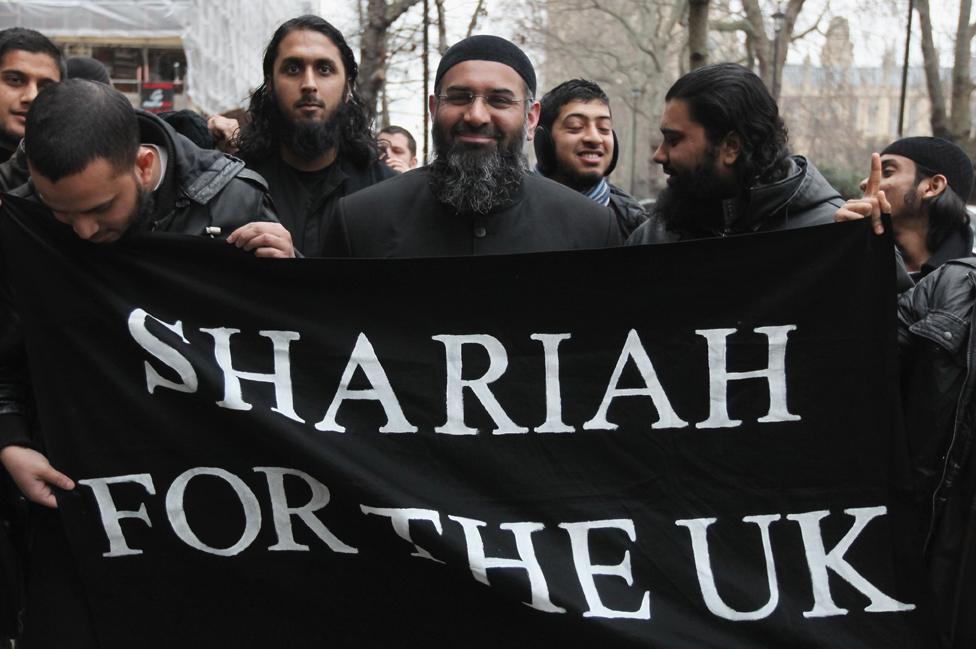
Political responses have varied. Conservative and Reform UK figures have frequently invoked the Sharia-law narrative to argue for tighter immigration controls, stronger enforcement of secular law and greater scrutiny of faith-based institutions. Labour ministers, including Prime Minister Keir Starmer, have rejected the characterisation as inflammatory and misleading, emphasising that the rule of law applies uniformly across the United Kingdom. Home Secretary Yvette Cooper has reiterated commitments to tackling all forms of abuse, including those linked to cultural or religious practices, while stressing that integration policies must balance respect for diversity with firm adherence to British legal norms.
Academic and civil-society analysis generally cautions against over-stating the phenomenon. Studies by think-tanks and university research centres have found that Sharia councils handle a limited volume of cases — mostly uncontested divorces — and that participants often use them alongside civil proceedings to secure religious recognition of marital status. Instances of coercion or non-compliance with UK law are investigated when reported, though advocacy groups argue that fear of community ostracism deters some victims from coming forward.
Public-order concerns have also featured in the debate. Police data show that hate crime and communal tensions remain a persistent challenge in diverse areas, with incidents rising during periods of international conflict involving Muslim-majority countries. Prevent, the government’s counter-radicalisation programme, continues to monitor activity that may promote extremist interpretations of religious law, though the programme itself has faced criticism for stigmatising entire communities.
The “London is over” framing, popularised in certain online spaces, tends to amplify isolated events into a generalised picture of legal collapse. Viral videos purporting to show “Sharia patrols” or public floggings have frequently been debunked as either staged, mis-contextualised or originating outside the United Kingdom. Fact-checking organisations have documented dozens of cases where footage from other countries or unrelated incidents has been repurposed to support the narrative.
At the same time, genuine policy challenges persist. Successive governments have grappled with balancing freedom of religion — protected under Article 9 of the European Convention on Human Rights — against the need to ensure that no individual is denied statutory protections through coercion or informal pressure. Proposals to regulate or ban Sharia councils have been debated in Parliament but consistently rejected on grounds that prohibition would drive the practice underground without addressing underlying issues of consent and equality.
The current resurgence of the topic coincides with broader European conversations about multiculturalism, integration benchmarks and the limits of religious accommodation in secular states. In France, Belgium and the Netherlands, similar debates have led to stricter regulation of religious arbitration and public expression of faith. In the United Kingdom, successive administrations have preferred a light-touch approach, relying on existing legal safeguards while encouraging community-led efforts to uphold gender equality and individual rights.
For Londoners living in the boroughs most frequently cited in these discussions, daily experience varies widely. Many residents of diverse neighbourhoods report amicable coexistence, with faith communities contributing positively to local life through charity, education and civic engagement. Others describe unease over perceived cultural separatism or reluctance among some groups to engage with mainstream institutions. These divergent lived realities help explain why the same set of facts can produce sharply contrasting interpretations.
As the conversation continues online and in political circles, attention is likely to remain on whether the government can demonstrate that existing legal and policing frameworks are sufficient to maintain uniform application of the law. Any future policy adjustment would need to navigate the tension between protecting vulnerable individuals and preserving the principle of religious freedom that has long been a cornerstone of British society.
The debate over Sharia law in London is therefore less about the literal existence of a parallel legal system — which no credible evidence supports — and more about perceptions of cultural change, institutional trust and the state’s capacity to enforce shared norms in an increasingly plural society. How policymakers respond to those perceptions in the months and years ahead will influence not only community relations in the capital but also wider public confidence in the fairness and universality of British law.






