OTTAWA — For decades, the North American auto industry functioned as a singular, integrated organism—a closed ecosystem where strategic mandates issued from Detroit were executed across seamless cross-border supply chains. But this week, a tectonic fracture appeared. BYD, the Chinese electric vehicle titan and Tesla’s most formidable global challenger, officially confirmed it is exploring the establishment of a manufacturing footprint in Canada.
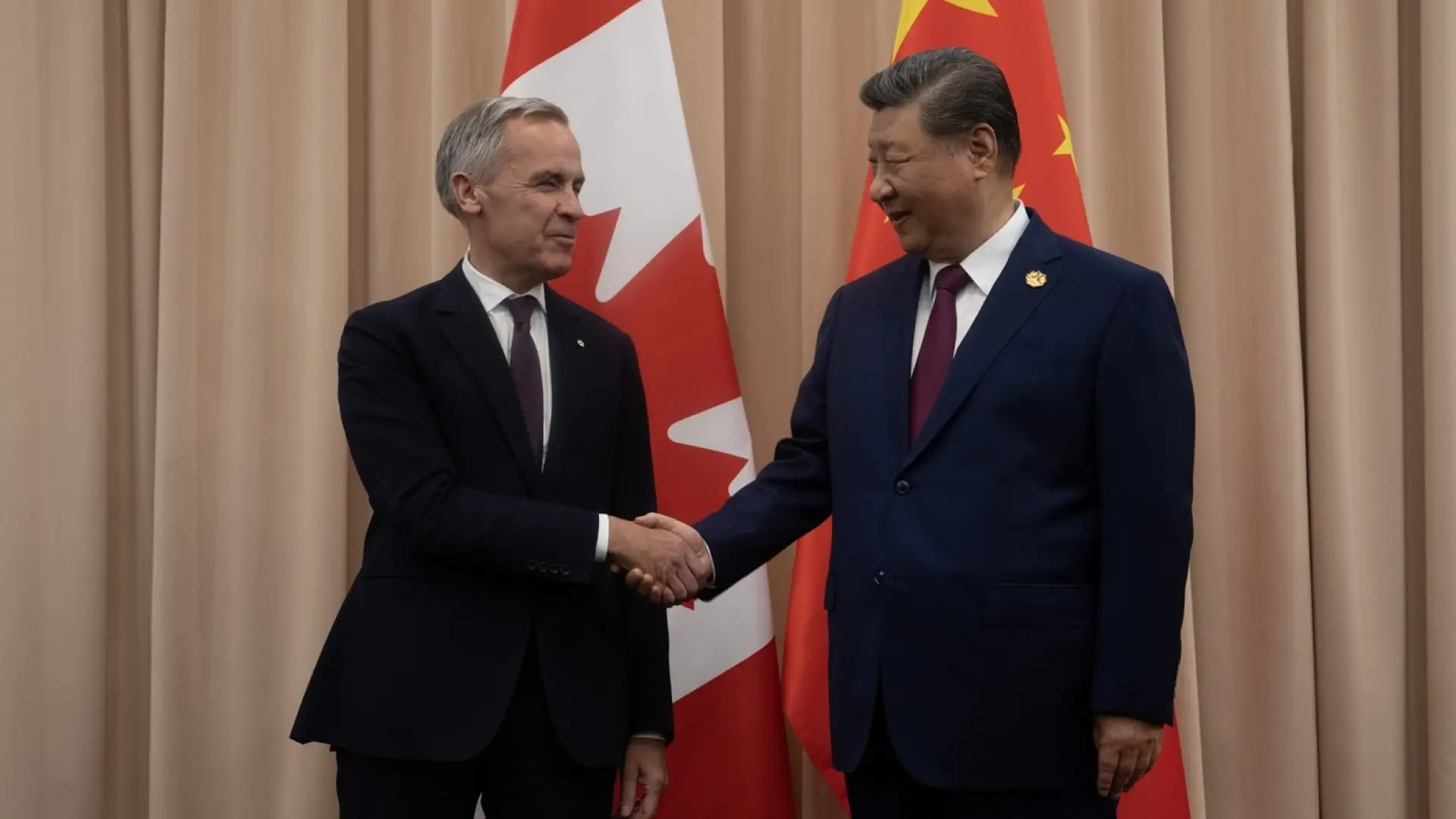
The announcement is more than a mere industrial investment story; it is a profound geopolitical signal. It suggests that while Washington erects towering tariff walls and protectionist barriers under President Donald J. Trump, Ottawa—under the stewardship of Prime Minister Mark Carney—is quietly constructing a sophisticated alternative harbor for global capital.
The Carney Re-Positioning
BYD’s pivot toward Canada is no diplomatic accident. It is the fruit of a calculated economic recalibration. Since taking office, Mr. Carney—bringing the disciplined perspective of a global central banker—has executed a rigorous diversification strategy designed to dilute Canada’s historical over-dependence on its southern neighbor.
Rather than engaging in rhetorical bluster or direct confrontation, Mr. Carney has opted to market Canada as an “Oasis of Stability” within a North American market currently defined by policy volatility. By affirming Canada’s commitment to a clean-energy future and transparent regulatory standards, he has created a gravitational pull for corporations seeking long-term clarity.
“Investment does not arrive by chance; it is calculated based on credibility,” noted one Toronto-based economic analyst. “Canada is proving that it is no longer just a cog in a regional framework, but an attractive, standalone destination.”
The “Localization” Litmus Test
However, the BYD prospect has been met with a measure of healthy skepticism. Industry experts, including the Automotive Parts Manufacturers’ Association (APMA), have been quick to cite the “Brazilian Model.” In emerging markets, BYD has often utilized “Complete Knockdown” (CKD) kits—shipping every component from China and performing only the final, low-skill assembly locally.
Should this pattern repeat, the dividends for the Canadian economy would be negligible: fewer high-tech jobs and zero integration for domestic suppliers. This is where Mr. Carney’s resolve will be tested. Canada does not enter these negotiations empty-handed. With vast reserves of critical minerals essential for battery production and a highly skilled workforce, Ottawa possesses the leverage to demand a more substantive partnership.
The mandate from the Carney government is clear: There will be no compromise for a hollow assembly model. Canada seeks deep integration—an industrial ecosystem where components are engineered, sourced, and manufactured on Canadian soil.

When Washington Hesitates, Ottawa Acts
BYD’s overture comes at a moment of visible hesitation among Western automakers. Policy uncertainty regarding EV subsidies and environmental mandates in the United States has created a market vacuum. While American giants pause to recalibrate their electric ambitions, Asian competitors see a strategic gateway.
Establishing a plant in Canada allows BYD not only to serve a domestic market hungry for affordability—a key driver for green transition—but also to position itself against USMCA standards. If the 75 percent regional value content threshold is met, these “Made in Canada” vehicles could theoretically circulate freely across North America—a strategic “backdoor” that Washington will undoubtedly view with apprehension.
Conclusion: A New Order Emerges
BYD’s selection of Canada as a potential hub is a testament to the shifting axis of economic power. It reaffirms that stability and long-term vision can, at times, outweigh sheer market size.
Under Mark Carney, Canada is transitioning from a “resource supplier” to an “innovation and manufacturing hub.” His strategy is not merely about landing a single factory; it is about creating a psychological momentum. When a player as dominant as BYD moves, the world watches. This may well be the dawn of a new industrial era—one where Canada no longer stands in anyone’s shadow, but confidently defines its own future.






