The Blink: How Mark Carney Outmaneuvered the Trump Trade Doctrine
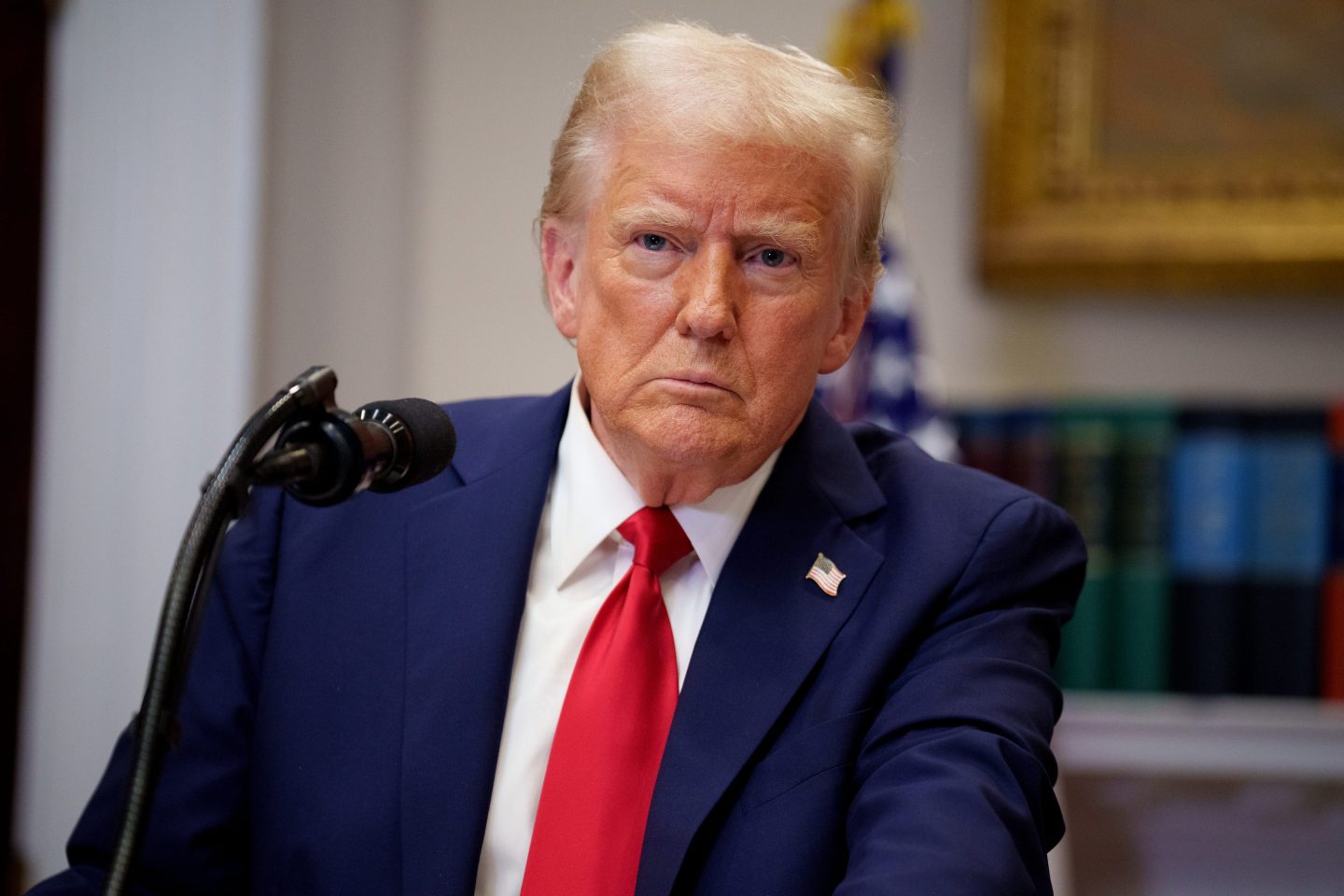
WASHINGTON — For years, the political identity of Donald J. Trump has been anchored in a singular, unwavering posture: the refusal to back down. It is a brand built on the assumption that in any high-stakes negotiation, the United States holds all the leverage, and the other side will eventually crumble under enough pressure. But this week, in a quiet but unmistakable shift captured on camera for the world to see, that image of absolute dominance finally cracked. The United States blinked.
The man who forced the pause was not a firebrand or a populist, but Mark Carney, the Canadian Prime Minister whose calm, almost clinical persistence has redefined the power dynamics of North America. While the Trump administration spent months applying maximum pressure through tariffs and aggressive rhetoric, Carney did something Washington didn’t expect: he waited. He didn’t panic, he didn’t rush to the table, and he didn’t offer the quick concessions that the White House had banked on. Instead, he allowed the passage of time to turn American strategy against itself.

The Miscalculation of Interdependence
The Trump administration’s strategy was rooted in a traditional economic assumption: Canada needs the U.S. more than the U.S. needs Canada. By imposing tariffs, Washington expected a swift capitulation as the smaller Canadian economy absorbed the shock. However, this theory failed to account for the profound, granular level of interdependence between the two nations. As Carney slowed the timeline, the “shock” didn’t just stay in Canada; it traveled back across the border, surfacing in American factories, job numbers, and the bottom lines of companies in decisive swing states.
The pressure, intended for Ottawa, began to ferment inside the United States. Components for American manufacturers became more expensive, production lines faced delays, and uncertainty—the most toxic element for any economy—began to freeze investment. Business leaders who were supposed to be the beneficiaries of this “America First” strategy were suddenly the ones picking up the phone to call governors and senators, delivering a blunt message: “This is costing us money, and it needs to stop.”
Time as a Strategic Weapon
Mark Carney’s greatest tactical success was his mastery of the clock. In trade wars, pressure only works if the target believes they are running out of time. By projecting total stability and refusing to mirror the frantic rhythm of Washington’s threats, Carney signaled that Canada was prepared to endure indefinitely. This consistency neutralized the “shock and awe” of the tariff strategy, shifting the leverage from the one applying the pressure to the one capable of absorbing it.
As the weeks dragged on, the internal political cost for the White House began to outweigh the external benefits of the trade war. The narrative of “strength” started to look like “risk.” Inside the administration, the once-unified front began to show microscopic fractures. Leaks suggested that advisers were increasingly divided, with some warning of the long-term electoral consequences in manufacturing hubs if the stalemate continued. While Washington showed these subtle signs of internal strain, Ottawa remained a monolith of silence and resolve.
The Terms of Engagement
The turning point came when the White House moved from dictating terms to reacting to them. The “blink” was not a single dramatic announcement but a series of hesitations—statements that shifted from “absolute” to “evaluating options.” Recognizing this opening, Carney didn’t rush in with a compromise; he stayed patient, allowing the internal American pressure to reach a fever pitch. When formal dialogue finally resumed, Canada was no longer the petitioner. It was the architect of the framework.
Carney’s conditions for resolution were as firm as his posture had been throughout the conflict. He demanded not a “phased-out” reduction of tariffs, but their immediate and total removal. He insisted on the elimination of the legal mechanisms used to justify the trade war, ensuring the threat could not be easily resurrected. Most significantly, he sought an acknowledgment that Canada’s resistance was a justified response to American aggression—a bitter pill for an administration that loathes admitting fault.
A New Baseline for Global Trade
What we are witnessing is a fundamental redefinition of how middle powers can interact with a dominant United States. The lesson being broadcast to every capital in the world is that economic leverage has its limits in an interconnected global economy. If a country possesses the institutional stability and strategic patience to outlast the initial blast of a trade war, the resulting internal pressure on the U.S. can force a reversal of course.
This shift has profound implications for the upcoming CUSMA (USMCA) reviews and the future of North American relations. By holding the line, Canada has established a new baseline: pressure alone is no longer enough to force a concession. As Mark Carney dictating the terms from Ottawa, the world is learning that in the modern era, the most powerful player isn’t always the one who speaks the loudest or hits the hardest—it’s the one who can stand still the longest.
The Long-Term Fallout
For the Trump administration, the fallout of this “blink” is more than just economic; it is a challenge to the very core of their “Art of the Deal” philosophy. Once the world sees that the “maximum pressure” model can be neutralized by a patient opponent, the effectiveness of that model is permanently diminished. The United States now finds itself in a complicated position where it must navigate a relationship with a neighbor that has proven it can not only resist American will but can also effectively reshape the outcome of a conflict.
As the markets begin to stabilize and the immediate threat of a full-scale trade war recedes, the geopolitical map of North America looks fundamentally different than it did just weeks ago. The balance of power has tilted, and the precedent set by this conflict will likely govern trade disputes for a generation. The story is no longer about how the U.S. will change Canada, but about how Canada has changed the way the U.S. must deal with the world.






