By LEO M. TRUJILLO
LOS ANGELES — The modern late-night monologue has often served as a secondary battlefield for American politics, but this week, the long-standing friction between Donald J. Trump and Jimmy Kimmel shifted from a standard exchange of barbs into a broader meditation on the nature of public discourse. After days of being labeled “low I.Q.” and “untalented” by the former president, Mr. Kimmel used his platform not to escalate the shouting match, but to conduct a quiet, televised autopsy of the insult itself.
The conflict began on the campaign trail and social media, where Mr. Trump repeatedly targeted the ABC host with a familiar lexicon of disparagement. “Jimmy Kimmel is not a talented person,” Mr. Trump told supporters, citing “bad ratings” and questioning the comedian’s intelligence. The strategy followed a well-worn path: when faced with criticism, the former president often shifts the focus from the argument to the individual, deploying labels like “weak,” “fake,” or “incompetent” until they begin to stick through sheer repetition.
When Mr. Kimmel took the stage following the 48-hour barrage, the studio audience—and a significant digital viewership—seemed primed for a high-decibel retaliation. Instead, the host opted for a tactical stillness. Sitting before the camera, he acknowledged that the former president had spent a significant portion of his week evaluating his cognitive abilities. With a dry irony that immediately shifted the room’s temperature, Mr. Kimmel remarked that it was unusual to receive such a public “diagnosis” without the benefit of a single follow-up question.
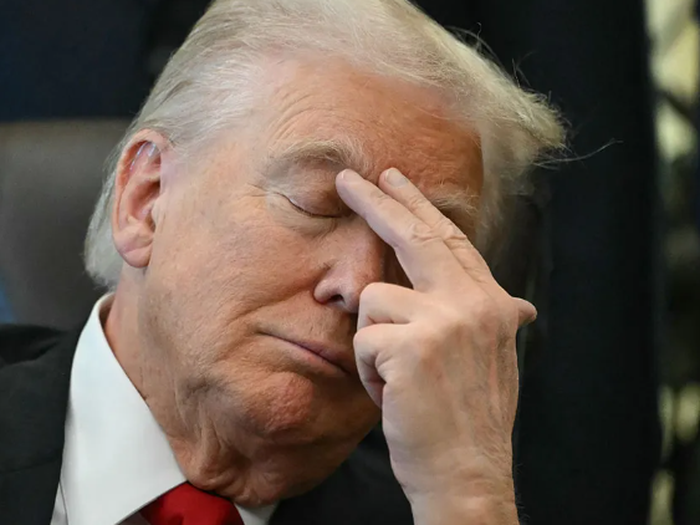
The pivot was more than a comedic timing choice; it was an attempt to dismantle the “low I.Q.” reflex that has become a staple of modern political language. Mr. Kimmel argued that engaging in a direct debate over his own intelligence would be a distraction from the larger pattern. He suggested that the insult is frequently used as a rhetorical shield whenever a critique becomes uncomfortable, serving as a deflection rather than an explanation.
In a moment that changed the mood inside the theater, Mr. Kimmel moved away from the joke and toward the record. “Let’s not trade insults,” he told the audience. “Let’s look at the tape”. What followed was a montage of Mr. Trump’s own recent public appearances—speeches marked by long pauses, drifted sentences, and mixed-up names. By refusing to narrate over the clips, Mr. Kimmel allowed the audience to sit in the silence of the footage, effectively turning the “intelligence” argument back toward the accuser.
This strategy highlights a growing divide in how media figures handle political attacks. While many in the industry choose to “fight louder,” Mr. Kimmel’s monologue suggested that the strongest response may be to slow the conversation down. He raised a broader question for the electorate: If intelligence is truly a metric for leadership, should it be recognized through self-praise and insults, or through the ability to navigate difficult questions with composure?.
The response to the segment has been sharply divided along partisan lines. Supporters of the former president viewed Mr. Kimmel’s “look at the tape” segment as a selective edit designed to embarrass a political rival, while critics of the administration praised it as a rare moment of televised accountability. However, the viral nature of the clips by the following morning suggested that the “calmer response” had achieved a reach that a standard “roast” might not have.
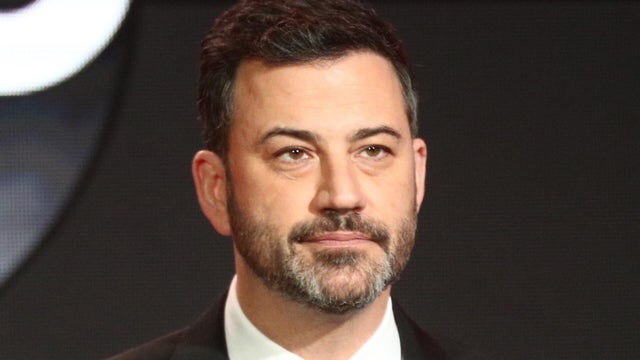
Beneath the humor lies a serious concern regarding the degradation of public debate. Mr. Kimmel’s closing observation—that public life leaves a trail of decisions and reactions—served as a reminder that the record eventually speaks louder than the label. For a brief moment on live television, the host argued that showing the record is often more revealing than any sharp comeback or louder insult could ever be.
The exchange also touched upon the long-shrouded history of Mr. Trump’s own academic records. Mr. Kimmel referenced the 2011 efforts by the former president’s team to ensure his high school and college transcripts remained buried, contrasting this secrecy with Mr. Trump’s frequent demands for transparency from his political opponents. This juxtaposition served to frame the “low I.Q.” attacks as part of a larger, carefully constructed public image that relies on the absence of contrary data.
As the late-night landscape continues to evolve into a primary source of political commentary, the Kimmel-Trump exchange offers a case study in the power of the “un-insult.” By refusing to play the same game, Mr. Kimmel forced the audience to decide what the record truly means. In an era where public debate often turns into a race to the bottom, the decision to slow down and examine the facts remains an increasingly rare, and perhaps necessary, disruption.






