CONGRESS ERUPTS AS TRUMP DIGS IN: A CONSTITUTIONAL STANDOFF THAT COULD DEFINE AN ERA
WASHINGTON — A volatile standoff is unfolding in the nation’s capital, one that is rapidly reshaping the political landscape and testing the outer limits of presidential power. Former President TRUMP has flatly refused to step down amid a swelling wave of outrage on Capitol Hill, where more than 120 members of Congress are now publicly demanding his immediate resignation. There is no binding vote forcing him out — not yet — but the confrontation has ignited one of the most intense constitutional showdowns since Watergate.
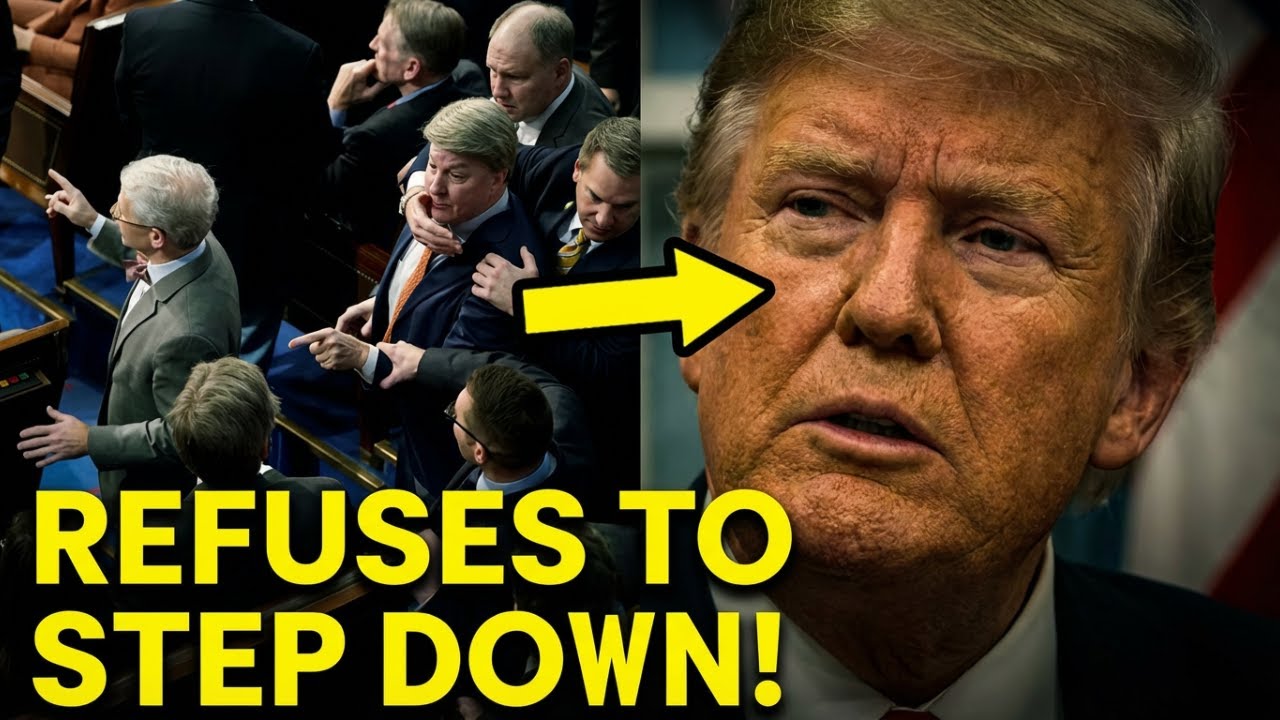
At the center of the storm is a convergence of events that lawmakers describe as unprecedented in scope and severity. Multiple impeachment resolutions have been formally filed in the House, citing abuse of power, obstruction of justice, corruption, and even “tyranny.” These are not rhetorical accusations floated on cable news; they are official congressional documents, logged on Congress.gov, laying out specific charges and legal arguments. While Republican leadership has moved swiftly to block the measures, tabling them before they can advance, the groundwork has been unmistakably laid.
What has pushed the conflict into overdrive, Democrats say, is Venezuela. In a surprise operation, TRUMP authorized military strikes and the capture of Nicolás Maduro without prior congressional approval. The Constitution grants Congress the power to declare war, a line lawmakers argue was brazenly crossed. Representative Dan Goldman called the action a direct violation of Article I, while legal analysts warned it could constitute an impeachable offense. Even Democrats who had long argued impeachment was politically impractical began to change their tone, saying the Venezuela operation shattered any remaining restraint.

Adding fuel to the fire was the fallout from Minneapolis, where a federal ICE agent shot Renee Nicole Good, a 37-year-old U.S. citizen. The incident sparked protests, school closures, and the mobilization of the National Guard. Lawmakers quickly connected the dots, arguing that the administration’s aggressive enforcement posture — combined with unilateral military action abroad — revealed a pattern of lawless governance. To them, Venezuela demonstrated contempt for constitutional limits overseas, while Minneapolis exposed the human consequences at home.
Together, these events have driven an extraordinary escalation. Beyond resignation demands and impeachment filings, some lawmakers have begun openly discussing the 25th Amendment, which allows a president to be declared unfit by the vice president and a majority of the cabinet. While few believe such a move is politically realistic given the loyalty of TRUMP’s inner circle, the mere fact that sitting members of Congress are invoking it publicly underscores the depth of the crisis.
For now, Republicans retain control of the House, giving TRUMP a formidable shield. They have blocked impeachment resolutions, dismissed resignation demands, and framed the uproar as partisan theatrics. Yet even allies privately acknowledge the pressure is real — and growing. TRUMP himself has reportedly warned fellow Republicans that losing the House in 2026 would almost certainly trigger impeachment proceedings. “If they flip it, I’ll get impeached,” he has told confidants, according to lawmakers familiar with the conversations.

That warning reveals the strategic logic behind his defiance. Resigning would validate every accusation. Apologizing would signal weakness. His only viable path, politically, is to hold the line and rely on partisan control of Congress. It is a strategy that has served him before, but one that hinges entirely on electoral outcomes rather than legal exoneration.
Democrats, meanwhile, are exploring every lever available. With government funding set to expire on January 30, some have threatened to tie ICE funding to broader budget negotiations, using the looming shutdown as leverage for accountability. Resignation demands, impeachment templates, 25th Amendment rhetoric, and fiscal brinkmanship are now all part of the same pressure campaign.
Historically, the parallels are impossible to ignore. More than 120 lawmakers calling for a president’s resignation marks the largest such demand since Richard Nixon — who ultimately stepped down under far less open defiance. TRUMP, by contrast, shows no sign of retreat. His refusal is total, his posture unyielding.
The result is a constitutional battle with no immediate resolution. There is no vote today that can force TRUMP from office. But the record is being written in real time: documented demands, formal charges, and a growing consensus among opponents that waiting until the next election cycle is unacceptable. Whether accountability comes through elections, impeachment, or history’s judgment remains uncertain — but the confrontation itself is already reshaping how this presidency will be remembered, and the internet is exploding as the nation watches every move unfold in real time.