Outrage and Protests After ICE Agent Kills Minneapolis Woman, Deepening National Debate Over Federal Enforcement.
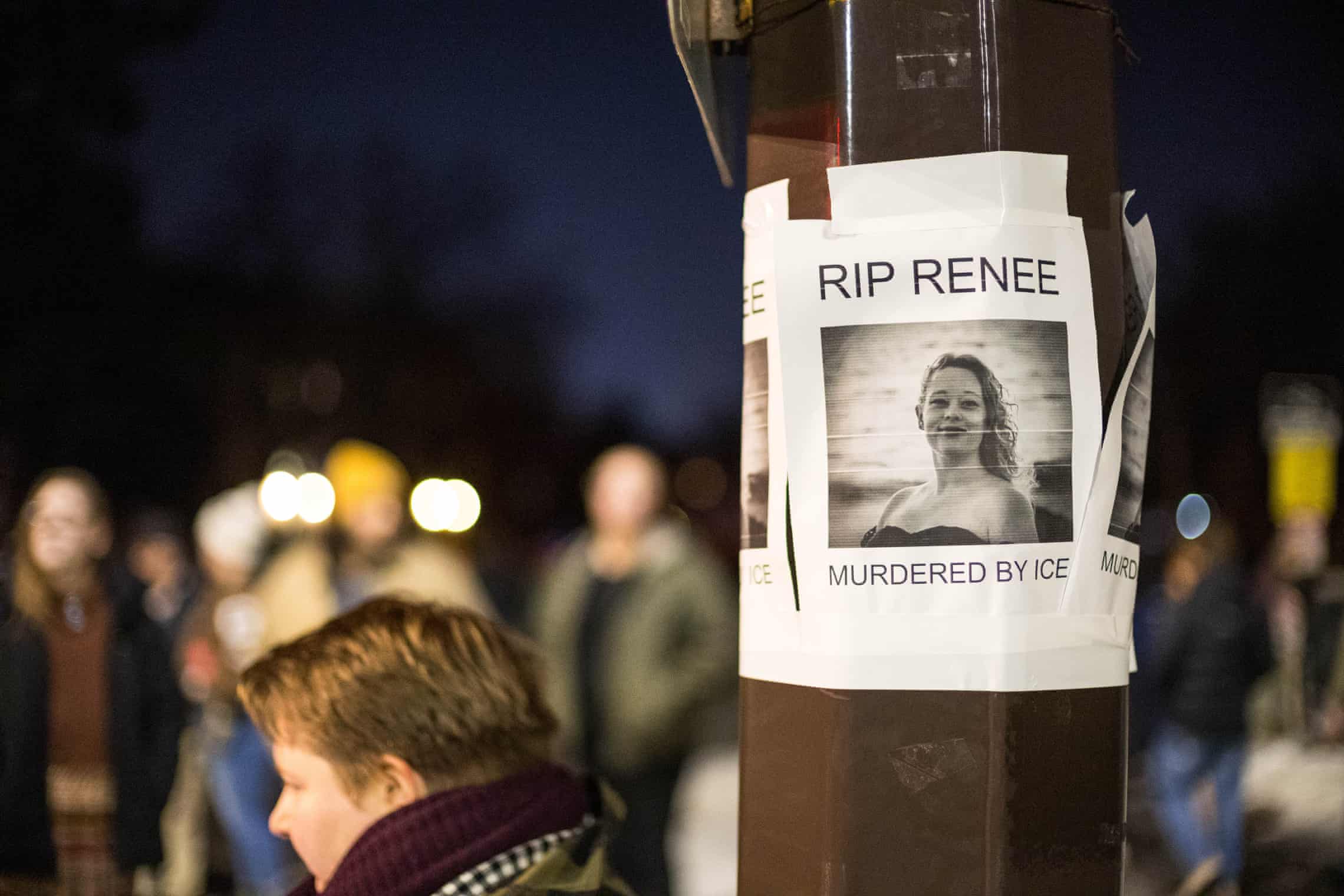
MINNEAPOLIS — A quiet residential street in south Minneapolis has become the latest flashpoint in the nation’s heated confrontation over immigration enforcement and the limits of federal power.
On the morning of January 7, 37‑year‑old Renee Nicole Good, a poet, mother of three and beloved community member, was fatally shot by a U.S. Immigration and Customs Enforcement (ICE) agent during a federal operation in the city. The killing — captured on multiple videos and rapidly shared online — has sparked days of protests, sharp political denunciations from local and national figures, and deep disagreements between federal and state authorities over transparency and accountability. (CBS News)
What Happened That Morning
According to official statements and newly released footage, federal officers were conducting what the Department of Homeland Security (DHS) described as an immigration enforcement operation in Minneapolis when they encountered Good in her SUV. DHS and White House officials initially portrayed the encounter as defensive: asserting that Good “weaponized” her vehicle and attempted to run over agents, forcing an officer to fire in “self‑defense.” (CBS News)
But multiple videos circulating on social media and obtained by major news outlets show a different picture: Good and her wife are seen speaking calmly to agents just moments before the fatal shots were fired as she attempted to drive away. One new cellphone video — apparently recorded on the shooting ICE officer’s own device — shows Good smiling or speaking just seconds before the agent opened fire. (NBC Chicago)
Local authorities and some eyewitnesses have cast doubt on the federal portrayal. Minneapolis Mayor Jacob Frey called the administration’s narrative “bulls**t” and disputed claims that Good posed a threat, noting that in the video the vehicle never strikes any officer and that the agent who fired the shots appears uninjured. (New York Post)
Who Was Renee Nicole Good
Friends, family and community leaders described Good as a compassionate, creative person with deep ties to her family and neighborhood. Originally from Colorado and recently relocated from Kansas City, Missouri, she was a devoted mother, an accomplished poet who had won a university prize and a volunteer in youth mission work. Her mother, Donna Ganger, said her daughter was “probably terrified” in the moments before she was shot, emphasizing that Good was not violent and posed no clear danger to federal agents. (People.com)
A GoFundMe campaign launched to support her family quickly raised more than $1.5 million, far exceeding its original goal and reflecting national sympathy and outrage. (The Guardian)
The Officer and Federal Narrative
Although ICE and DHS have not officially named the agent who shot Good, reporting by major outlets has identified him through court records as Jonathan E. Ross, a 43‑year‑old veteran of federal law enforcement with nearly two decades of service that includes time in the U.S. Border Patrol and the military. Ross was previously injured in a separate incident during an immigration arrest attempt last year, a detail cited by DHS in its defense of his actions in Minneapolis. (Star Tribune)
Federal officials have staunchly defended their personnel and their version of events. DHS Secretary Kristi Noem and Vice President [name] described the shooting as a justified use of force and dismissed criticisms as politically motivated, even labeling Good’s attempt to leave the scene as “domestic terrorism.” The administration has framed the broader enforcement operation as lawful and necessary. (CBS News)
Protests and Public Outcry
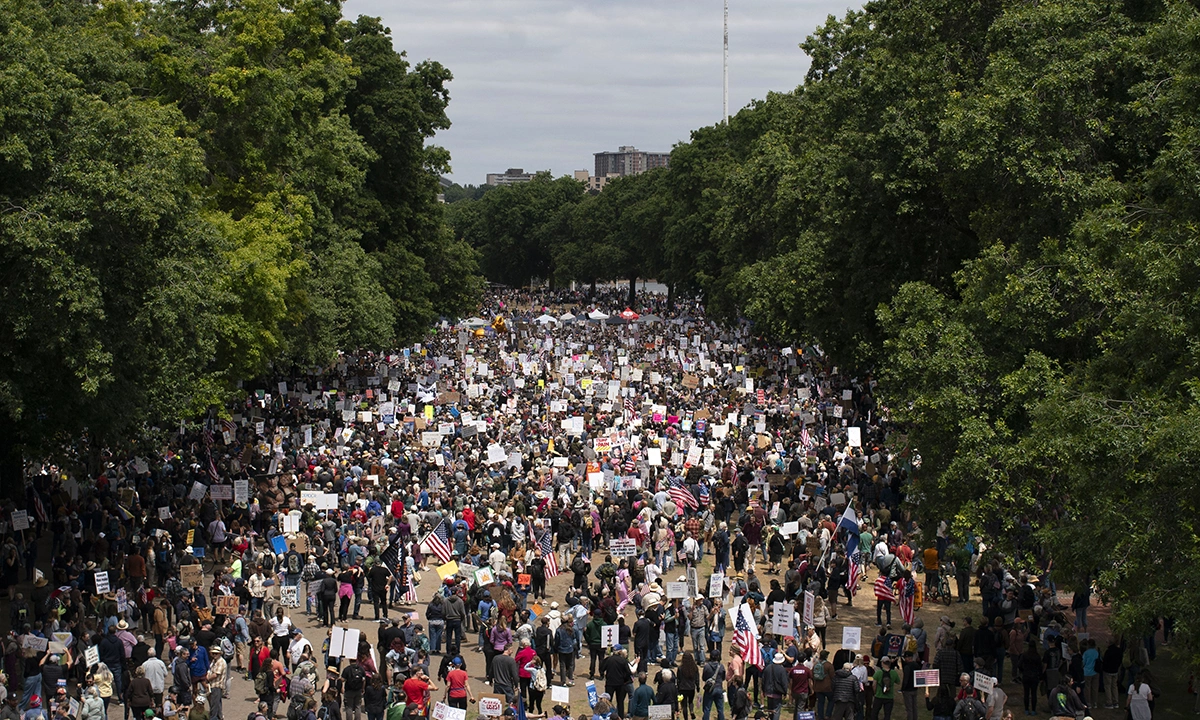
In the days since Good’s death, tens of thousands of protesters have taken to the streets in Minneapolis and cities across the United States, including Portland, New York, and others, chanting “ICE out now” and expressing broader grievances about federal enforcement tactics. Reuters reported that crowds were large and sustained, with protests organized in hundreds of locations under the banner “ICE Out For Good.” (Reuters)
In Minneapolis, protests have been largely peaceful but occasionally tense, with some demonstrators clashing with police, throwing snow and ice at officers, and at times being arrested as authorities declared unlawful assemblies. (FOX 9 Minneapolis-St. Paul)
Videos shared widely online show community members confronting federal agents, blowing whistles and attempting to offer comfort to families affected by the federal presence. In some clips, residents accuse agents of acting without warrants and urge individuals not to sign documents provided by ICE. These scenes have become emblematic of the broader resistance to what many see as overreach. (These community‑captured videos — while widely reposted on social platforms — should be interpreted cautiously, as independent verification may vary.)
Tensions Between Federal and Local Officials
The shooting has strained relations between Minneapolis officials and federal authorities. Minnesota Governor Tim Walz has publicly rejected the federal narrative and called for local investigation and accountability, while Minneapolis Public Schools canceled classes amid safety concerns tied to protests and reports of federal behavior near schools. (CBS News)
Complicating the official response, the FBI assumed exclusive responsibility for investigating the shooting, effectively sidelining the Minnesota Bureau of Criminal Apprehension (BCA), which initially had been involved. Local prosecutors and law enforcement leaders expressed alarm at this decision, worrying that it could undermine transparency and public trust. The Hennepin County Attorney’s Office subsequently asked the public to submit any videos or evidence they might have, underscoring concerns that state authorities could be cut off from critical investigative material. (wplg)
Political and National Repercussions
National politicians have weighed in sharply. Democratic lawmakers condemned the killing as an abuse of federal power and demanded independent reviews. Some Republicans defended the shooting and the broader operation, emphasizing law enforcement authority and the dangers faced by agents. U.S. Attorney General Pam Bondi warned that assaults on federal agents during protests could lead to arrests, illustrating the balancing act between protecting free speech and enforcing federal law. (Fox News)
The incident comes amid a larger immigration enforcement surge under the current administration, one that has seen thousands of arrests and deployments far from U.S. borders. Critics argue that these tactics fuel fear and erode civil liberties, while supporters frame them as essential to national security and rule of law.
A Community in Mourning
For those who knew Good, the protests and political debates are only a backdrop to personal grief. Vigils and memorials have sprung up in Minneapolis, with neighbors remembering her warmth, creativity and devotion to her children. Flowers and handwritten notes cover a makeshift shrine near the site where she died, echoing similar scenes from past moments of national grief.
Her death less than a mile from the site where George Floyd was killed — a fact frequently noted by community leaders and activists — has only deepened the symbolic weight of the tragedy and fueled calls for change. (The Guardian)
Looking Ahead
As the nation continues to grapple with questions over immigration policy, federal authority, and police accountability, the shooting of Renee Nicole Good represents more than an isolated incident. It has sparked a broader struggle over how communities are policed, who gets protected under the law, and how power is exercised in American streets.
Whether the protests lead to lasting policy changes or legislative reforms remains uncertain. But for Minneapolis families and activists across the country, the demand for accountability — and for answers — is far from over.






