Supreme Court Curbs Nationwide Injunctions, Redrawing the Balance of Federal Judicial Power
WASHINGTON — In a 6–3 emergency decision issued late Monday night, the Supreme Court sharply limited the power of federal judges to issue nationwide injunctions, a procedural tool that for more than two decades has allowed single courts to block state and federal laws across the entire country.
The ruling, delivered without oral argument, marks one of the most consequential shifts in federal judicial practice in a generation. By declaring that lower courts generally lack authority to freeze laws beyond the specific parties before them, the Court has upended a legal strategy relied upon by administrations, advocacy groups, and state governments across the political spectrum.
The immediate effects are already rippling through Washington and state capitals. The longer-term implications could reshape how constitutional rights are enforced, how elections are administered, and how federal power operates in practice.
Ending a Modern Judicial Practice
Nationwide injunctions — orders that prohibit enforcement of a law against anyone, anywhere — are not explicitly authorized by statute. They emerged gradually in the late 20th century and became commonplace in the past decade, particularly during periods of sharp partisan conflict between Congress, the presidency, and the courts.
In its decision, the Supreme Court concluded that such injunctions exceed the constitutional limits of judicial authority.
“Federal courts exist to resolve cases and controversies between specific parties,” the majority wrote, emphasizing that remedies must be tailored to the plaintiffs who bring suit. Relief extending beyond those parties, the Court said, transforms judges into de facto policymakers.
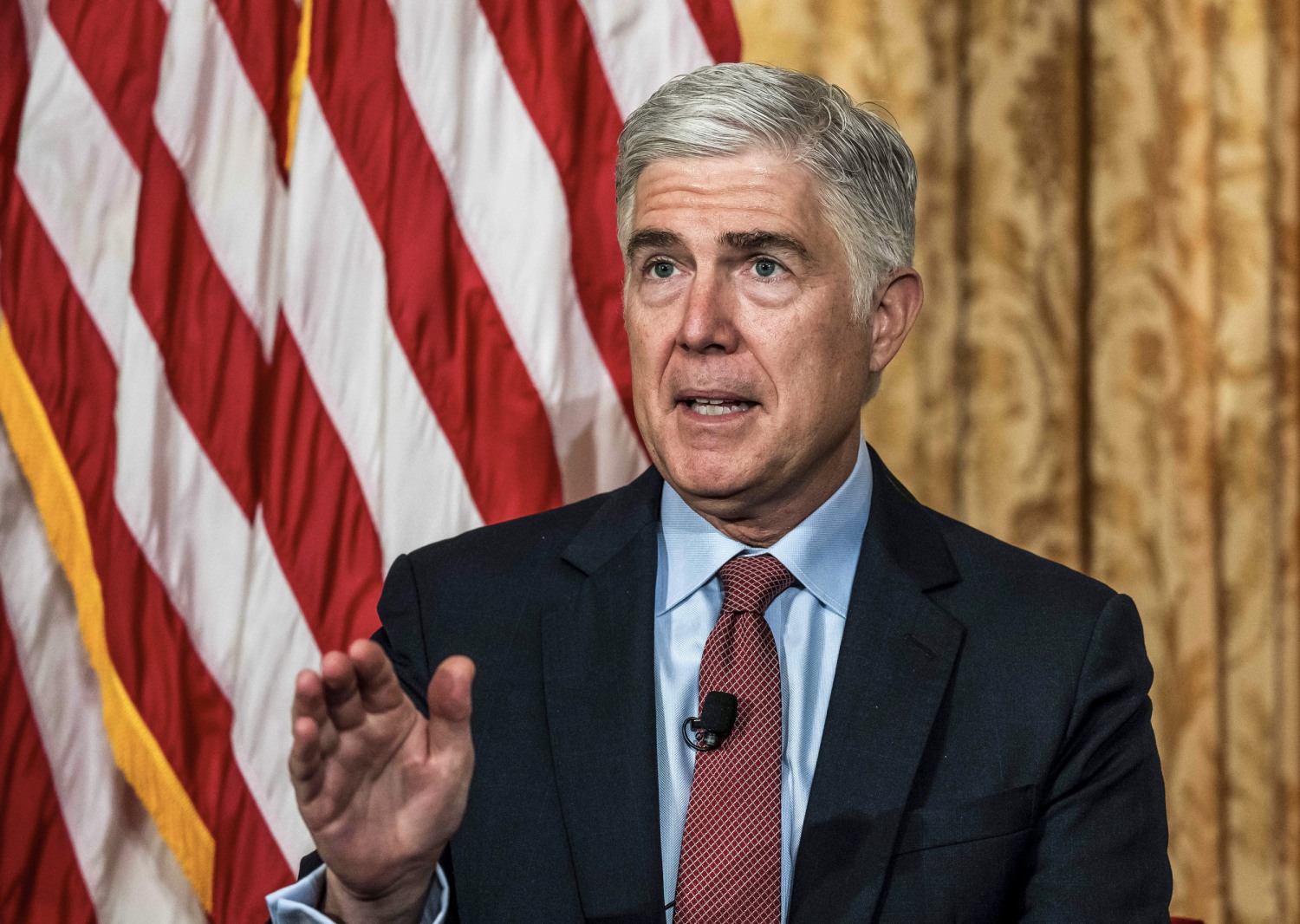
Justice Neil Gorsuch, joined by several members of the majority, grounded the ruling in historical practice. In a concurring opinion, he cited records from the late 18th and early 19th centuries showing that early federal courts routinely rejected requests for broad relief, even when plaintiffs argued that efficiency demanded it.
Justice Clarence Thomas went further, arguing that nationwide injunctions are fundamentally incompatible with Article III of the Constitution, which confines courts to resolving concrete disputes rather than issuing abstract commands governing millions of people not before the court.
The dissenting justices warned that the decision risks fragmenting constitutional protections and undermining the courts’ ability to stop unlawful government action swiftly. They pointed to civil rights-era cases in which broad injunctions were essential to dismantling systemic discrimination.
The majority was unpersuaded, signaling that even well-intentioned outcomes cannot justify remedies the Constitution does not authorize.
Immediate Legal Shockwaves
Within hours of the ruling, attorneys general in multiple states filed emergency motions seeking to narrow or dissolve injunctions that had blocked enforcement of laws on immigration, elections, firearms, environmental regulation, and health care.
At the Justice Department, senior litigators convened early-morning strategy sessions to assess how the decision affects more than 20 active cases. Federal agencies are now preparing for the possibility that regulations previously frozen nationwide could suddenly take effect in some states but not others.
Republican governors have moved quickly to announce plans to enforce laws long stalled by court orders. Democratic attorneys general, meanwhile, are scrambling to determine how to shield residents from policies they believe violate federal law but are no longer blocked beyond narrow jurisdictions.
The speed of the reaction underscores how deeply embedded nationwide injunctions had become in modern governance.
A New Litigation Landscape
For decades, advocacy groups on both the left and the right relied on a tactic known as forum shopping: filing lawsuits in districts where judges were perceived as ideologically sympathetic, in hopes of securing nationwide relief.
That strategy is now effectively defunct.
Under the new framework, plaintiffs seeking broad impact must file parallel lawsuits across multiple jurisdictions, dramatically increasing costs and complexity. Legal experts say a case that once required a single filing may now demand a dozen or more, each subject to different circuit precedents and appeal timelines.
Major law firms have already warned clients that constitutional and regulatory litigation could become far more expensive — and far less predictable.
The change may also advantage governments with greater resources, while disadvantaging individual plaintiffs and nonprofit organizations that lack the capacity to litigate nationwide on a piecemeal basis.
Policy on Uneven Ground
The ruling’s real-world consequences may be most pronounced in areas where uniformity has long been assumed.
In immigration enforcement, for example, federal authorities currently operate under multiple injunctions limiting deportation procedures, detention standards, and asylum processing. If those orders are narrowed, enforcement could resume fully in states outside the plaintiffs’ jurisdictions.
Gun regulation presents a similar dilemma. Several firearm restrictions are currently frozen by nationwide injunctions. If those orders are limited to named plaintiffs, the same law could be enforceable against most residents of a state while remaining blocked for a small group.
Health care policy is another pressure point. Ongoing litigation over abortion medication, gender-affirming care, insurance mandates, and religious exemptions could result in stark geographic disparities in access and enforcement.
Environmental regulation, workplace standards, banking oversight, and technology governance all face comparable uncertainty, as federal rules may apply unevenly depending on where courts have intervened.
An Election-Year Complication
Perhaps nowhere is the risk of fragmentation greater than in election law.
At present, several nationwide injunctions govern voter identification requirements, mail-in ballot procedures, early voting rules, and voter roll maintenance. Under the Court’s ruling, those injunctions may only protect voters in specific counties or districts.
Election administrators warn that such patchwork enforcement could create chaos, particularly in the months leading up to a national election, when clarity and consistency are essential for training poll workers and preparing ballots.
Both parties have relied heavily on nationwide injunctions in election disputes over the past decade. With that tool curtailed, litigation is likely to intensify — and outcomes may vary sharply not just from state to state, but within states themselves.
Civil Rights Concerns
Civil rights advocates have reacted with alarm, arguing that the decision could make it far harder to stop discriminatory laws before they cause widespread harm.
Historically, broad injunctions played a central role in enforcing desegregation, disability access, and voting rights, allowing courts to address systemic violations without forcing victims to relitigate the same issues repeatedly.
The majority opinion acknowledged none of these practical concerns directly, focusing instead on constitutional structure. Whether Congress will step in to authorize broader remedies through legislation remains an open question — and a politically fraught one.
A Court Asserting Control
Beyond injunctions, the ruling reflects a broader pattern: a Supreme Court increasingly willing to use emergency orders to direct the behavior of lower courts.
By acting through its emergency docket, the Court signaled that compliance is expected immediately. Lower courts are now tasked with applying a sweeping principle without detailed guidance, increasing the likelihood of confusion and further appeals.
Supporters see the decision as a necessary correction to judicial overreach. Critics view it as the Court consolidating power at the expense of legal stability.
Either way, the message is unmistakable: the rules governing federal litigation have changed.
And as lower courts, governments, businesses, and citizens adjust, the country is about to learn what a Constitution enforced in fragments truly looks like.






