Canada Breaks With Washington as Trump’s Greenland Push Tests NATO’s Core
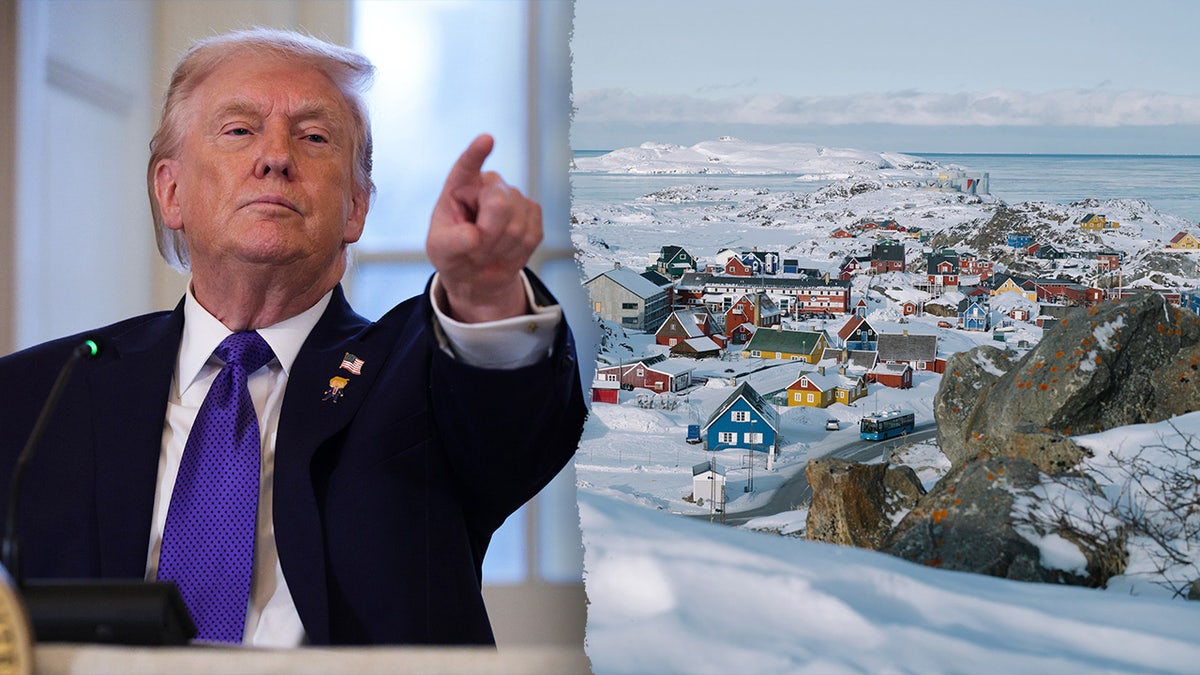
WASHINGTON — When President Donald Trump once again raised the possibility that the United States could acquire Greenland — even suggesting that military force could not be ruled out — the reaction from Denmark was swift and severe. The response from Canada, however, marked something new.
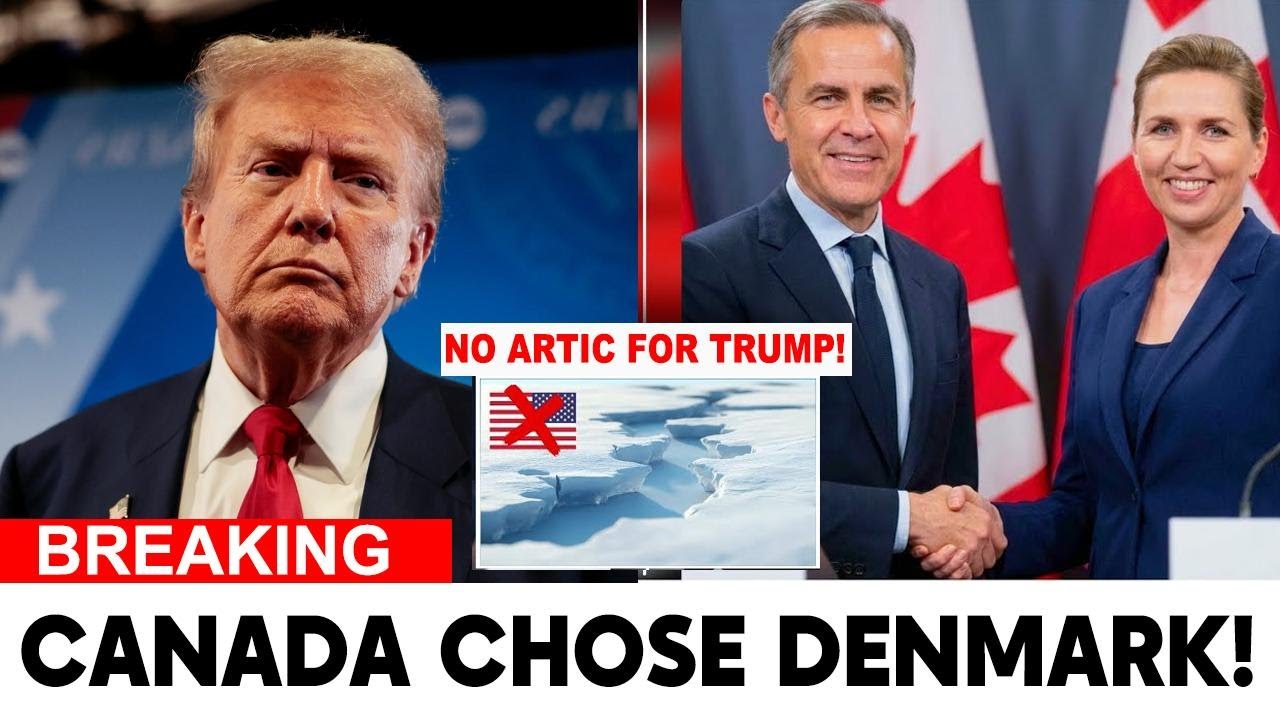
Standing beside Denmark’s prime minister in Paris earlier this month, Canada’s prime minister, Mark Carney, delivered a message that cut directly against decades of diplomatic habit. Greenland’s future, he said, belongs to Greenland and Denmark alone — not to threats, not to coercion, and not to any country that believes borders can be redrawn through pressure.
It was not merely rhetoric. Within hours, Canada announced it would open a permanent consulate in Nuuk, Greenland’s capital, a move designed to reinforce Danish sovereignty and support Greenlandic self-determination. For NATO allies accustomed to Washington setting the strategic tone in the Arctic, the moment felt like a rupture.
For years, Arctic security followed a predictable pattern. The United States led. Canada and Denmark aligned closely. Russia played the role of the shared adversary, while Greenland remained a strategically vital but politically quiet territory under Danish control. That equilibrium depended on one assumption: that allies would not threaten one another’s sovereignty.
That assumption no longer holds.
A Claim That Shook the Alliance
President Trump’s renewed interest in Greenland builds on an idea he floated during his first term, when he publicly suggested purchasing the island. At the time, the proposal was widely dismissed as symbolic and was quickly rejected by Copenhagen. The episode faded, treated as an odd footnote rather than a strategic doctrine.
In Trump’s second term, the language has sharpened. Administration officials have spoken openly about annexation, framed as a matter of national security. On social media and in cable news appearances, allies of the president have argued that Greenland’s strategic position and mineral wealth make American control inevitable.
The White House has cited growing Russian and Chinese activity in the Arctic, access to rare earth minerals, and the need to protect NATO’s northern flank. But the suggestion that force might be an option crossed a line for many allies.
Denmark’s prime minister, Mette Frederiksen, warned publicly that an American takeover of Greenland would effectively spell the end of NATO as it currently exists. Her statement echoed across European capitals, where officials privately questioned whether alliance guarantees could be trusted if sovereignty itself became negotiable.
Why Greenland Matters
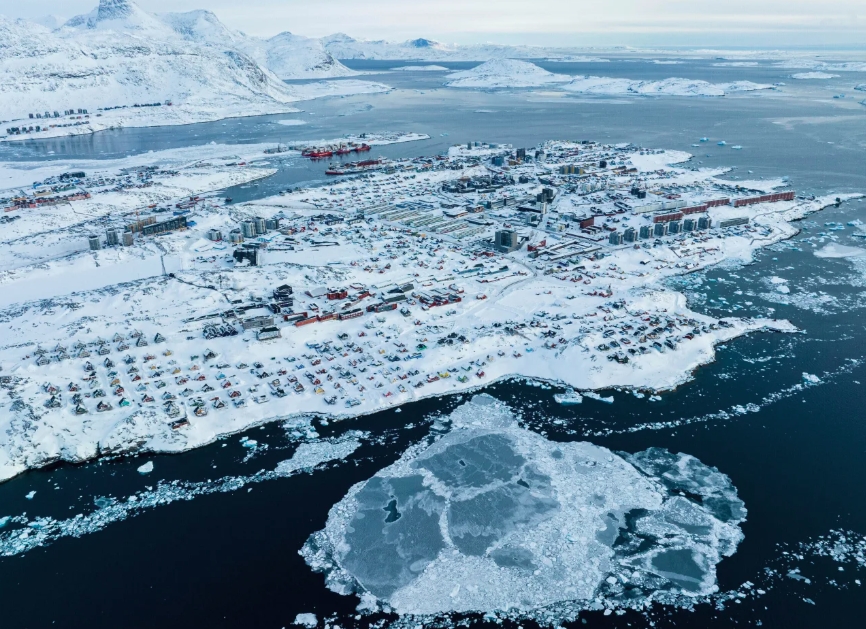
Greenland is enormous — 2.16 million square kilometers, roughly 80 percent of it covered in ice — and sparsely populated, with about 56,000 residents, most of them Inuit. It has been part of the Kingdom of Denmark for centuries, while steadily gaining autonomy over domestic affairs.
Its strategic importance, however, far outweighs its population.
The island sits between North America and Europe, overlooking Arctic shipping routes that are becoming increasingly viable as ice retreats. The United States operates Pituffik Space Base (formerly Thule Air Base), a critical node in North American missile defense and early-warning radar systems.
Greenland is also rich in rare earth minerals essential for batteries, advanced electronics, renewable energy technologies, and modern weapons systems. As global competition over supply chains intensifies, these resources have drawn growing attention from Washington, Beijing, and Brussels alike.
For decades, those interests were managed quietly. The United States maintained military access. Denmark retained sovereignty. Greenland expanded self-government. That balance depended on restraint.
Canada Chooses a Side
Canada’s decision to break openly with Washington surprised many observers in Ottawa and abroad. Traditionally, Canadian leaders have sought to soften disputes with the United States, emphasizing dialogue and alliance unity even amid sharp disagreements.
Carney chose a different course.
By stating explicitly that Greenland’s future would be decided only by Denmark and Greenland, he rejected any American role in determining the island’s status. By announcing a consulate in Nuuk, he converted principle into policy.
The symbolism was sharpened further by Canada’s decision to send Governor General Mary Simon to Greenland for the consulate’s opening. Simon, an Inuk leader and former ambassador for circumpolar affairs and to Denmark, carries deep significance in Arctic politics.
Her presence underscored a message that resonated far beyond diplomacy: Greenlanders are an indigenous people with the right to self-determination, not a population to be absorbed by a great power.
On American social media, reactions were polarized. Some conservative commentators accused Canada of undermining alliance unity. Others, including several former U.S. diplomats, warned that threatening an ally’s territory was itself the greater danger to NATO.
Europe Closes Ranks
Canada was not acting alone. Denmark, France, Germany, Italy, Poland, Spain, and the United Kingdom issued a joint statement affirming that Greenland belongs to its people and that decisions about its future rest solely with Denmark and Greenland.
Seven NATO members publicly rejected the territorial claims of another NATO member — an extraordinary moment in the alliance’s history.
European officials emphasized cooperation among equals rather than American leadership. Behind the scenes, diplomats coordinated positions that deliberately excluded any discussion of U.S. annexation.
Trump, who has often assumed that European resistance would be brief and symbolic, instead found Washington isolated.
A Shift in Arctic Power
The consequences extend beyond Greenland. By treating territorial sovereignty as conditional, the Trump administration forced allies to confront a question they had long avoided: what happens to collective security when trust erodes?
For Canada, the issue is inseparable from its own Arctic identity. Inuit communities across northern Canada followed the dispute closely. A failure to stand with Greenland would have raised uncomfortable questions about how Ottawa would respond if indigenous sovereignty closer to home came under pressure.
By taking a firm stance, Canada signaled that Arctic governance would not be dictated by force.
For Greenland itself, the moment may accelerate political change. Autonomy movements have long debated the island’s future relationship with Denmark. American threats have strengthened, rather than weakened, the argument that Greenland’s destiny must be decided internally.
An Unintended Outcome
President Trump’s strategy appears to have produced the opposite of its intended effect. Rather than securing Greenland, it unified European allies and pushed Canada into an unusually public confrontation with Washington.
In doing so, it exposed a deeper vulnerability: American leadership in the Arctic is no longer automatic.
The Arctic is warming faster than any other region on Earth. Shipping lanes, resources, and military access will only grow in importance. Whether NATO can navigate that future without fracturing may depend less on power than on restraint.
For now, Greenland remains Danish. NATO remains intact. But the assumptions that once governed the far north have cracked — and repairing them may prove far harder than breaking them.






